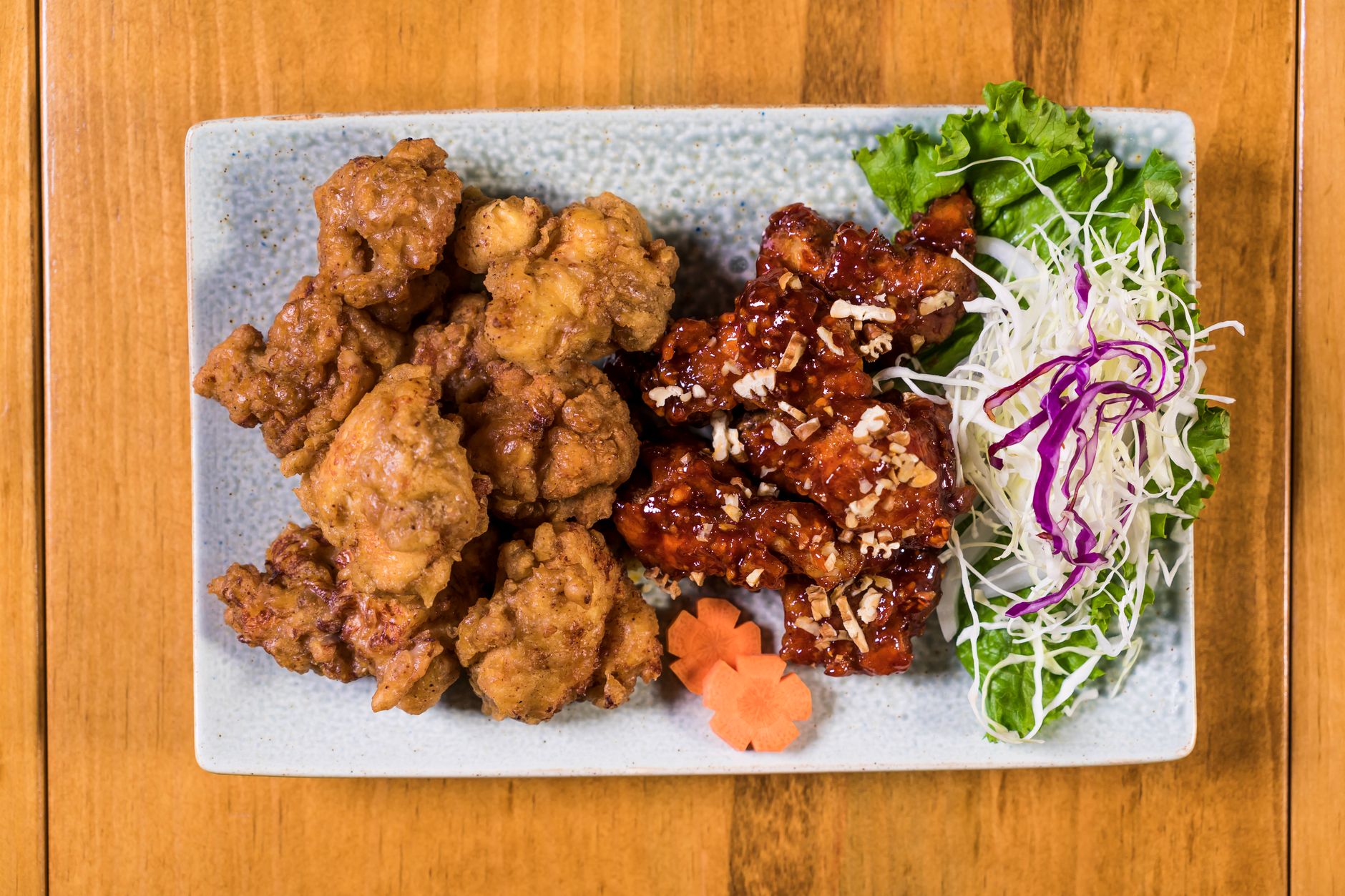
Korean fried chicken achieves its signature glass-like crunch by using a thin potato or cornstarch batter and a strict double-frying method, rather than the thick, single-fried wheat flour breading typical of American fried chicken. This dual-temperature frying process renders out the fat and creates a brittle shell that stays crispy even when coated in heavy sauces.
The Chemistry of the Crust: Starch vs. Flour
The fundamental difference between Korean and American fried chicken lies in the coating. American Southern-style fried chicken relies on a buttermilk or brine marinade followed by a heavy dredge in seasoned all-purpose wheat flour. This creates a thick, craggy, deeply savory crust. However, wheat flour contains gluten, which absorbs oil and moisture, causing the crust to soften relatively quickly—especially if exposed to steam or liquid.
Korean fried chicken takes a completely different chemical approach. Cooks use a wet, exceptionally thin batter made primarily from potato starch, cornstarch, or a blend of both. Water or cold vodka is used to hydrate the starches, accelerating evaporation during the cooking process.
- Potato starch provides a slightly chewy, crackly texture and aggressively absorbs surface moisture from the chicken.
- Cornstarch adds a light, dry snap to the exterior.
- Sweet potato starch is occasionally used in specialized recipes to push the crunch even further, creating a harder, more brittle snap.
- Baking powder is often added to interact with the chicken’s proteins, loosening the skin to allow subcutaneous fat to render out completely.
"Potato starch aggressively absorbs moisture, creating a whisper-thin, glass-like shell that shatters when you bite into it, while keeping the meat underneath perfectly insulated."
This starch-based approach results in a crust that behaves more like a delicate pastry shell than a heavy breading. It is physically lighter but structurally stronger than a flour dredge, allowing it to hold its texture over time.
The Frying Mechanics: Single vs. Double Fry
American fried chicken is almost exclusively single-fried. The chicken goes into oil heated to around 325°F to 350°F (163°C to 175°C) and stays there until the meat is cooked through and the exterior is golden brown.
Korean fried chicken mandates a two-stage frying process. This is not a stylistic choice, but a structural requirement to achieve the desired texture.
The first fry happens at a lower temperature, typically between 300°F and 325°F (150°C to 163°C), lasting 8 to 10 minutes. The sole purpose of this stage is to cook the meat through to the bone without scorching the thin starch coating.
After the first fry, the chicken is removed from the oil and placed on a wire rack to rest for 2 to 10 minutes. This resting period is a critical mechanical step. As the chicken sits, internal moisture turns to steam and escapes through the crust. If you skip this resting phase, that trapped moisture will eventually make the crust soggy from the inside out.
The second fry takes place in much hotter oil, usually between 350°F and 375°F (175°C to 190°C), for just 2 to 3 minutes. This high-heat flash fry violently drives off any remaining surface moisture, polymerizes the starches, and hardens the exterior into a shatteringly crisp shell.
Flavor Delivery and Dining Culture
American fried chicken carries its flavor profile inside the breading. Spices like paprika, garlic powder, celery salt, and MSG are mixed directly into the flour dredge, meaning the chicken is fully seasoned straight out of the fryer. It is typically served with dipping sauces on the side to preserve the integrity of the crust.
Korean fried chicken relies on a relatively unseasoned batter. The flavor is applied after the cooking process is completely finished. Because the double-fried starch shell is so hard and moisture-resistant, the chicken can be vigorously tossed in sticky, heavy sauces without losing its crunch. The most common glazes include yangnyeom (a sweet and spicy sauce made from gochujang, ketchup, soy sauce, and sugar) and a savory soy-garlic reduction.
In South Korea, this dish is deeply embedded in the culture of chimaek—a pairing of chikin (chicken) and maekju (beer). As of 2026, a standard order of a whole Korean fried chicken at a sit-down restaurant in Seoul costs between 18,000 and 25,000 KRW, depending on the neighborhood and the complexity of the sauces chosen. The meal is universally served with chikin-mu (cubed pickled radish). The high acidity of the radish cuts through the fat of the double-fried batter, resetting the palate between bites.
| Feature | Korean Fried Chicken | American Fried Chicken |
|---|---|---|
| Coating Base | Thin, wet batter (potato/cornstarch) | Thick, dry dredge (wheat flour) |
| Frying Method | Double-fried (low heat, rest, high heat) | Single-fried (medium-high heat) |
| Crust Texture | Brittle, glass-like, shatteringly crisp | Craggy, thick, hearty crunch |
| Flavor Source | Glazed or sauced after frying | Spices mixed into the flour dredge |
| Moisture Resistance | High (stays crispy under heavy sauce) | Low (softens quickly if sauced) |
Step-by-Step Guide to Double-Frying at Home
Replicating the Korean fried chicken texture at home requires strict temperature control and patience. Follow these exact steps to achieve the signature glass-like crust.
Step 1: Prepare the Chicken and Batter Pat your chicken pieces completely dry with paper towels. Surface moisture is the enemy of a crisp crust. In a bowl, whisk together equal parts potato starch and cornstarch, a pinch of salt, a pinch of baking powder, and enough cold water to create a thin batter. The consistency should resemble crepe batter, not thick pancake batter. Toss the dried chicken in the batter until lightly coated.
Step 2: Execute the First Fry Heat a heavy-bottomed pot of neutral oil (like canola or peanut oil) to 325°F (163°C). Use a deep-fry thermometer to monitor the temperature. Carefully lower the battered chicken into the oil, working in small batches to prevent the temperature from dropping. Fry for 8 to 10 minutes until the chicken is cooked through and pale golden.
Step 3: Rest the Chicken Remove the chicken from the oil using a spider skimmer and transfer it to a wire cooling rack set over a baking sheet. Let the chicken rest for a minimum of 5 minutes. Do not place the chicken on paper towels, as this traps steam underneath the meat and ruins the crust.
Step 4: Execute the Second Fry Increase the heat under your pot until the oil reaches 375°F (190°C). Carefully return the rested chicken to the hot oil. Fry for 2 to 3 minutes until the exterior turns a deep golden brown and feels hard when tapped with metal tongs.
Step 5: Sauce and Serve Transfer the chicken back to the wire rack to drain excess oil for one minute. Immediately transfer the hot chicken to a large mixing bowl, pour over your warmed gochujang or soy-garlic glaze, and toss vigorously until every piece is evenly coated. Serve immediately alongside cold beer and pickled radish.