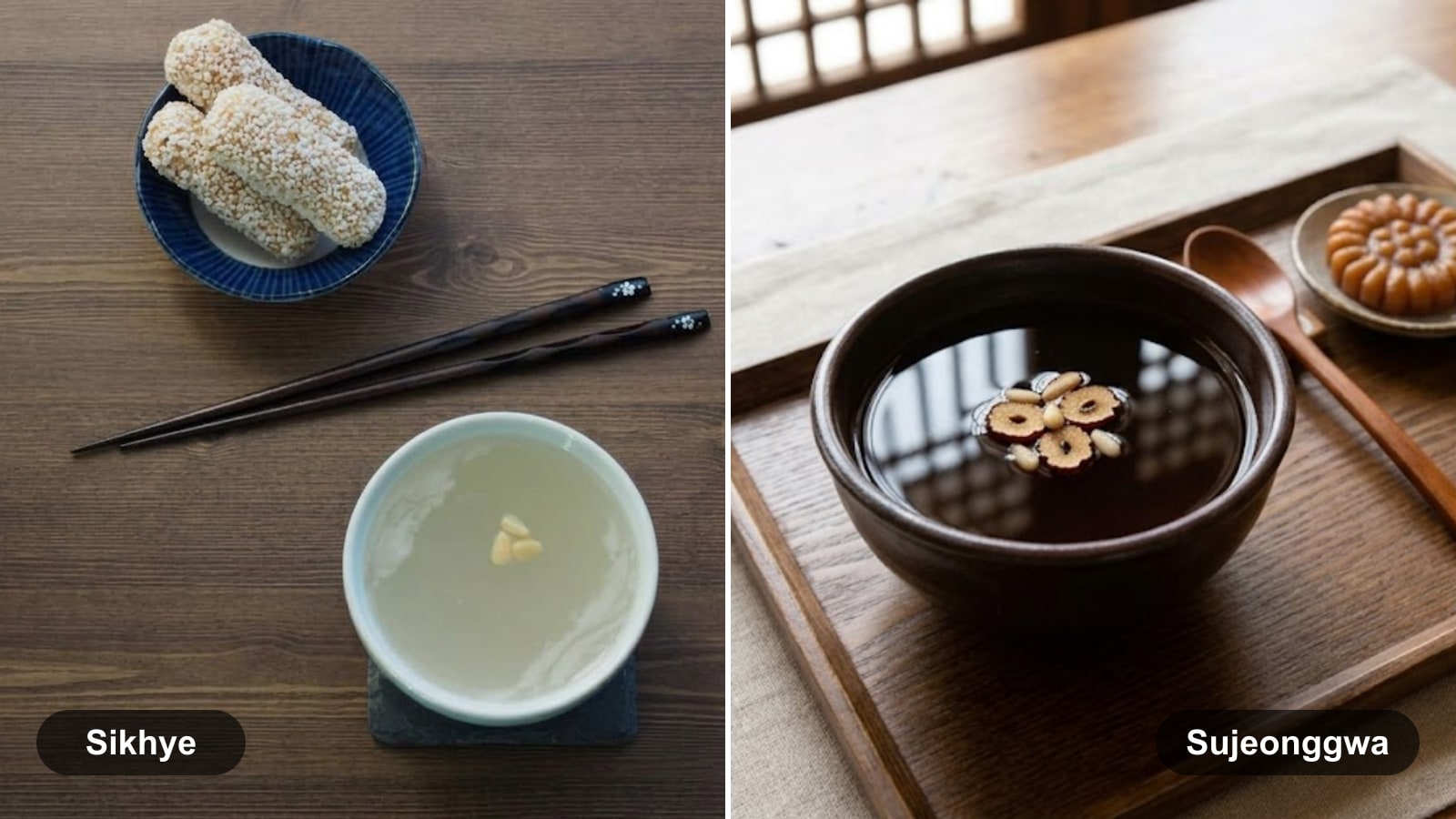
Sikhye (식혜) is a sweet, cold rice drink with grains of rice floating in it, and sujeonggwa (수정과) is a spicy-sweet cinnamon and ginger punch. Both are traditional dessert drinks served after meals and on holidays, and you'll find canned versions in every convenience store.
Key Takeaways
- Sikhye: sweet, malty rice drink, served chilled; a jjimjilbang classic
- Sujeonggwa: cinnamon, ginger and dried persimmon punch, sweet with a spicy kick
- Where: convenience stores (cans), traditional restaurants, holiday tables, bathhouses
- Avoid: expecting alcohol; both drinks are non-alcoholic
Sikhye vs sujeonggwa
| Sikhye (식혜) | Sujeonggwa (수정과) | |
|---|---|---|
| Main ingredients | Cooked rice, malted barley water, sugar | Cinnamon, ginger, sugar, dried persimmon, pine nuts |
| Taste | Sweet, malty, mellow | Sweet, spicy, warming |
| Color | Pale, cloudy, with rice grains | Reddish-brown, clear |
| Served | Chilled | Chilled |
| Best with | Baked eggs at a jjimjilbang, after rich meals | After holiday feasts, with rice cakes |
| Where to buy | Cans and bottles everywhere | Cans, traditional tea houses |
Both drinks are mildly sweet rather than sugary like soda, and both are traditionally seen as good for digestion after a heavy meal. Sikhye's soft rice grains settle at the bottom of the glass, so give it a gentle stir or shake the can before drinking. Sujeonggwa is often finished with a few pine nuts floating on top.
How they're made
Sikhye starts with malted barley (엿기름) soaked in water. The starchy water is mixed with cooked rice and kept warm for several hours, so the enzymes turn rice starch into sugar and the grains float to the top. It's then boiled with extra sugar and chilled. Sujeonggwa is made by simmering cinnamon sticks and sliced ginger, adding sugar, then soaking dried persimmons in the cooled punch and topping it with pine nuts.
Both drinks are traditionally served after the big holiday meals at Seollal and Chuseok, when families gather and eat a lot of rich food.
Other traditional Korean drinks
Sikhye and sujeonggwa belong to a family of traditional drinks called eumcheongnyu (음청류), non-alcoholic beverages served after meals or on special occasions. Several others are easy to find in cafes and tea houses.
- Omija-cha (오미자차): "five-flavor berry" tea, pink and sweet-sour, served hot or cold
- Yuja-cha (유자차): citron marmalade stirred into hot water, a winter favorite for colds
- Daechu-cha (대추차): jujube tea, sweet and warming
- Misu-garu (미숫가루): a roasted multigrain powder drink, mixed with milk or water
- Bori-cha (보리차): roasted barley tea, often served free instead of water in restaurants
Traditional tea houses in Insadong and Bukchon serve many of these, often with rice cakes or traditional sweets like yakgwa (honey cookies).
Where to try them
Look for canned sikhye in the drinks aisle of any convenience store; it's often in a gold or white can. Traditional Korean restaurants sometimes serve a small cup of sikhye or sujeonggwa free after the meal. Tea houses in Insadong serve homemade versions, and markets sell bottled sikhye made fresh.
후식으로 식혜 드릴까요?
Husigeuro sikhye deurilkkayo?
Would you like sikhye for dessert?
네, 좋아요. 수정과도 있어요?
Ne, joayo. Sujeonggwado isseoyo?
Yes, please. Do you have sujeonggwa too?
네, 하나씩 드릴게요.
Ne, hanassik deurilgeyo.
Yes, I'll bring one of each.
감사합니다. 잘 먹었습니다!
Gamsahamnida. Jal meogeotseumnida!
Thank you. That was a lovely meal!
Do
- Try sikhye at a jjimjilbang with baked eggs
- Serve both drinks well chilled
- Look for them after holiday meals
- Try the canned versions at convenience stores
Don't
- Expect alcohol; both are non-alcoholic
- Drink sujeonggwa hot; it's served cold
- Strain out the rice in sikhye; the grains are part of it
- Confuse sujeonggwa with plain cinnamon tea
More food and drink: Korean alcohol, jjimjilbang guide, and Seollal traditions.
Frequently Asked Questions
What does sikhye taste like? Sweet and malty, a little like sweet rice pudding in drink form, with soft rice grains.
Is sikhye alcoholic? No. It's fermented with malt enzymes but not into alcohol, so it's a non-alcoholic drink.
What is sujeonggwa made of? Cinnamon and ginger simmered with sugar, served chilled with dried persimmon and pine nuts.
Where can I buy sikhye in Korea? Every convenience store and supermarket sells canned sikhye, and traditional restaurants and markets sell fresh versions.