Korea celebrates New Year twice. January 1 gets a day off. 설날 — lunar new year, usually late January or February — gets three days, and effectively shuts the country down.
It has a script, and knowing it makes the holiday much easier to be part of.
The greeting
새해 복 많이 받으세요 — receive lots of new year's fortune.
This is the greeting, and you will hear it constantly for about a week. Note that it is a wish for the other person to receive fortune, not a statement about the year being happy.
To someone your age or younger: 새해 복 많이 받아.
Other things people say:
- 건강하세요. — Stay healthy. (especially to older people)
- 올해도 잘 부탁드려요. — Looking forward to another good year together.
세배: the bow
On the morning of Seollal, younger family members perform 세배 — a deep formal bow — to their elders.
The elders respond with a few words of advice or blessing, and then with 세뱃돈 — new year money, in an envelope.
This is a real financial event for Korean children. Amounts vary widely by family, and the total from a large gathering can be substantial.
As a guest you would not normally be expected to perform 세배, but you might be invited to, and going along with it is well received.
떡국: the soup that ages you
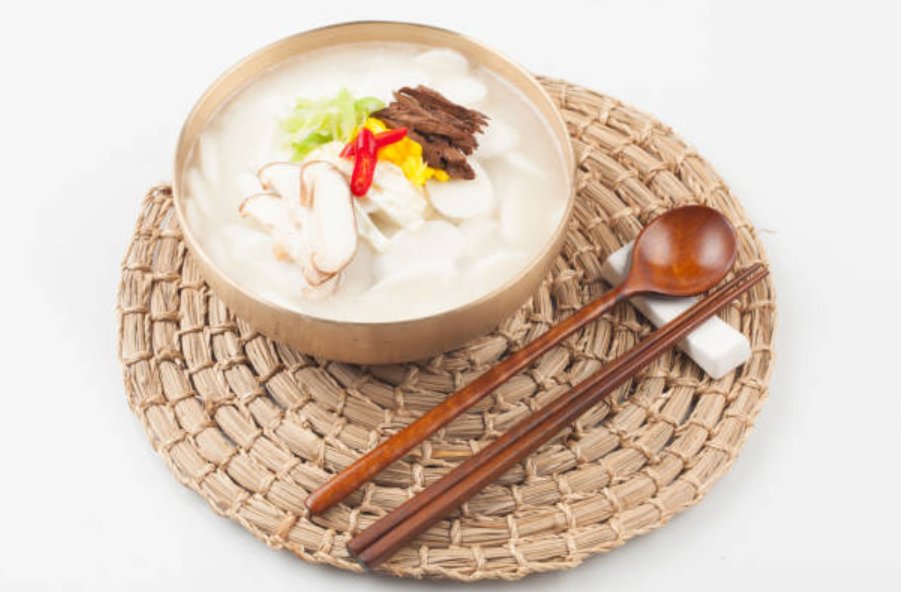
The holiday food is 떡국 — sliced rice cake in beef broth, usually with egg and seaweed.
And there is a saying attached: eating a bowl of 떡국 makes you a year older. This connects directly to the traditional age system, where everyone gained a year on New Year rather than on their birthday.
So the joke, when someone does not want to age, is to refuse the soup.
- 떡국 먹었어요? — Did you eat tteokguk? (meaning: did you have a proper new year)
차례: the ancestral rite
Many families perform 차례, a memorial rite for ancestors, with a table of specific foods arranged in a specific order.
Practice varies enormously. Some families do the full traditional version; others have simplified or dropped it entirely, especially in cities and among younger generations.
What else happens
한복 — traditional clothing, worn by children more than adults now, though it is having a revival.
윷놀이 — a board game played with four wooden sticks, and the standard family activity of the holiday.
Travel — the 민족대이동, "great migration," as most of the country travels to hometowns at once. Roads and trains are packed for days. If you are in Korea during Seollal, book transport well ahead and expect many businesses to be closed.
Holiday vocabulary
| Korean | Meaning |
|---|---|
| 설날 | Lunar New Year |
| 세배 | new year bow |
| 세뱃돈 | new year money |
| 떡국 | rice cake soup |
| 차례 | ancestral rite |
| 한복 | traditional clothing |
| 고향 | hometown |
| 명절 | traditional holiday |
명절 is the general word for a traditional holiday. The other big one is 추석, the autumn harvest festival, which follows a similar shape — travel, family, ancestral rites — with 송편 instead of 떡국.
If you're invited
Bring something. Fruit, 한과 (traditional sweets), or a gift set from a department store are all standard. Holiday gift sets are sold everywhere in the weeks before.
Greet the oldest person first. Use 새해 복 많이 받으세요 with everyone older, and expect to be asked your age, your job, and whether you are married — all within the first ten minutes.
That last part is not specific to foreigners. Koreans dread it too.
Practising the greeting
새해 복 많이 받으세요 is six syllables of formal Korean and worth getting smooth before you need it. It comes up a lot in a short window.
K-PATTO episodes cover the everyday situations around holidays and family, with audio on every line so you can hear the rhythm rather than reading it. The first ten are free at K-PATTO.