Kimchi is the one Korean ingredient most people buy before they know what to do with it. Then it sits in the fridge, gets sharper every week, and at some point you wonder whether it has gone off.
It almost certainly has not. Kimchi is a living ferment, and the stage it is at determines what you should cook with it — not whether you should throw it out.
What is on the shelf
| Korean | What it is |
|---|---|
| 포기김치 | Whole cabbage halves, cut before serving |
| 맛김치 | Same thing, pre-cut. Easier for beginners |
| 깍두기 | Cubed radish, crunchy, good with soups |
| 총각김치 | Small whole radishes with greens attached |
| 겉절이 | Fresh, unfermented, eaten like a salad |
Start with 맛김치. Cutting a whole cabbage half without making a mess takes practice, and there is no flavor difference.
Reading the jar
Look for the production date, not the expiry date. Kimchi sold in Western supermarkets is often already several weeks old and well into fermentation, which is fine but means it will turn sour quickly.
A few things worth checking:
- Fish products. Most kimchi contains 젓갈 — fermented shrimp or anchovy. If you need it vegan, look for 비건 or a vegetarian label specifically; "vegetable kimchi" does not guarantee it.
- Sugar and additives. Some export brands add noticeable sugar. The ingredient list is short in good kimchi.
- Liquid level. The cabbage should be sitting in brine, not dry at the top.
Storing it
Keep it submerged. Press the kimchi down so the brine covers it whenever you take some out. Exposed kimchi at the surface dries, discolors, and grows yeast faster.
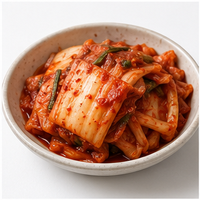
Use a clean utensil. Every time. Kimchi keeps for months precisely because its own environment is hostile to spoilage bacteria, and the usual way people ruin a jar is introducing something else.
Glass or a proper kimchi container. Plastic holds the smell permanently, and kimchi produces gas as it ferments — a container with a bit of headroom is worth it.
It keeps refrigerated for months. It will simply keep getting more sour.
Fresh, ripe, sour: three different ingredients
This is the part that changes how you cook.
Fresh (days old). Crisp, mildly sweet, lightly spicy. Eat it as a side dish. Do not cook with it — heat wastes the crunch and it lacks the acidity that cooked kimchi dishes rely on.
Ripe (2–4 weeks). The everyday stage. Good raw, good in pancakes.
Sour (신김치, 1 month+). Sharp, soft, deeply savory. This is what Korean recipes actually want for kimchi jjigae, kimchi fried rice, and kimchi pancake. Many Korean households deliberately keep a container of sour kimchi for cooking.
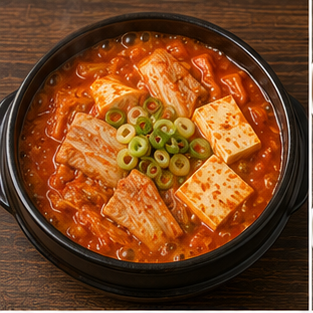
If a kimchi stew you made tasted flat, young kimchi is the usual reason.
When it has actually gone bad
Three signals, in order of how often they worry people unnecessarily.
White film on the surface. Usually 골마지 — a harmless kahm yeast that forms on exposed ferments. Skim it off, push the kimchi back under the brine. It affects flavor slightly and signals that air is getting in.
Fuzzy or colored mold. Green, black, or blue fuzz is different. Discard the jar.
Slimy texture or an off, rotten smell rather than a sour one. Discard.
Sour and strong-smelling on its own is not spoilage. That is the point of the food.
Making sour kimchi easier to eat
If it is too sharp even for cooking, a pinch of sugar in the pan balances the acid. Rinsing kimchi in water is sometimes suggested but strips the seasoning along with the sourness — use it as a last resort.
The kimchi juice at the bottom of the jar is worth keeping. It goes into fried rice, stews, and cold noodle broths, and it is the most concentrated flavor in the container.
The practical summary
Buy pre-cut. Keep it under the brine. Let it get sour and treat that as an upgrade rather than a countdown.
K-Pantry shows what you can cook right now with the kimchi in your fridge and whatever else is in there. Try K-Pantry