Jjigae is the everyday Korean stew — thicker than soup, served bubbling, meant to be shared from the pot with rice. Two of them account for most of what Korean households actually eat, and they taste nothing alike.
If you're going to cook one Korean stew, this is the choice you're making.
The short version
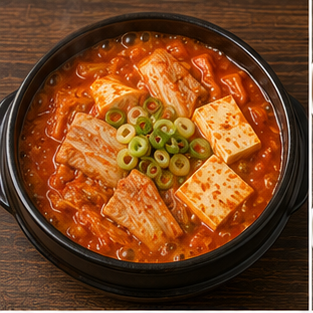
Kimchi jjigae is sour, spicy, and red. The dominant flavor is fermented cabbage, sharpened by chili. It's bold and it announces itself.
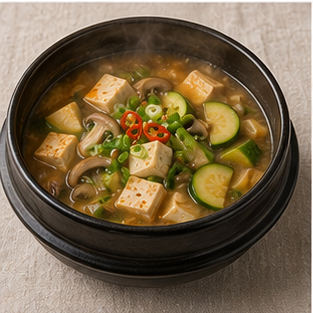
Doenjang jjigae is savory, earthy, and brown. The dominant flavor is fermented soybean paste — nutty, salty, slightly funky, closer to a rich miso soup with more body. It's quieter and more of an everyday dish.
Koreans eat doenjang jjigae far more often. Kimchi jjigae is the one foreigners tend to encounter first.
Which is easier to make
Doenjang jjigae is easier, for one specific reason: it doesn't depend on the quality of your kimchi.
Kimchi jjigae is only as good as the kimchi that goes into it, and it specifically needs old, sour kimchi — the kind that's been in the fridge for weeks and tastes too sharp to eat plain. Fresh kimchi from a supermarket produces a flat, disappointing stew. This catches out a lot of first attempts.
Doenjang jjigae needs a tub of doenjang, some vegetables, and tofu. The paste does the work, and the paste is shelf-stable and consistent.
How to make doenjang jjigae
About twenty minutes.
- Bring roughly 500ml of anchovy stock (or plain water) to a boil with a piece of onion and a potato, cut into chunks.
- Dissolve two heaped tablespoons of doenjang into the liquid. Push it through a spoon or whisk so it doesn't clump.
- Simmer until the potato is nearly tender, around eight minutes.
- Add sliced zucchini, mushrooms, and a block of tofu cut into cubes.
- Simmer another five minutes. Add sliced green chili and green onion at the very end.
Don't boil it aggressively after the doenjang goes in — hard boiling makes it harsh. Keep it at a steady simmer.
How to make kimchi jjigae
Similar time, different order.
- Sauté a cup of well-fermented kimchi, roughly chopped, in a little oil for three or four minutes. This step matters — it deepens the flavor considerably.
- Add pork belly or canned tuna if you're using it, and cook briefly.
- Pour in about 400ml of water or stock, plus two tablespoons of the kimchi juice from the jar.
- Add a teaspoon of gochugaru and a small spoon of gochujang.
- Simmer fifteen minutes, then add tofu and green onion for the last three.
If your kimchi isn't sour enough, a splash of rice vinegar at the end helps, though it isn't a full replacement for proper fermentation.
Which one to start with
Start with doenjang jjigae if you're new to Korean cooking. It's forgiving, it doesn't depend on ingredient quality you can't control, it isn't spicy, and it teaches you the fermented-soybean flavor that runs underneath a great deal of Korean food.
Move to kimchi jjigae once you have a jar of kimchi that's gone properly sour in your fridge — which, conveniently, happens on its own if you just wait.
Not sure which one you have the ingredients for? K-Pantry checks what's in your kitchen and tells you which Korean dishes are ready to cook tonight.