If your Korean soups taste thin compared to what you have eaten in restaurants, the missing piece is usually not a seasoning. It is the stock.
Most Korean soups and stews start from 멸치육수, anchovy and kelp stock. It takes about twenty minutes of mostly unattended time, and the difference between using it and using water is not subtle.
What you need
| Ingredient | Amount per 1 liter water |
|---|---|
| Dried anchovies (국물용) | 10–15, about 20g |
| Dried kelp (다시마) | one 10cm square |
That is the base. Everything else is optional.
Buy the right anchovies. Korean stores sell at least two sizes. The small ones (볶음용, 2–3cm) are for stir-frying as a side dish and will not give you much stock. You want the large ones (국물용, 6–8cm), sold in bigger bags and usually cheaper per gram.
The two mistakes
1. Leaving the guts in
Large dried anchovies have a dark digestive tract along the belly. It is bitter. Pinch the head off, split the body with your thumb, and flick the black strip out.
Opinions differ on the heads — many Korean cooks keep them for depth, some remove them for a cleaner taste. The guts are not optional. Removing them takes about two minutes for a full batch, and you can prep a week's worth at once.
2. Boiling the kelp
Kelp releases glutamates quickly and then releases slime and bitterness. Take it out after about ten minutes, before or just as the water reaches a boil.
This is the single most common reason homemade Korean stock tastes vaguely bitter and looks cloudy.
The method
- Put anchovies and kelp in 1 liter of cold water. Cold start extracts more from the kelp.
- Bring to a gentle simmer over medium heat, about 10 minutes.
- Remove the kelp as it approaches a boil.
- Simmer the anchovies another 10–15 minutes, uncovered.
- Strain.
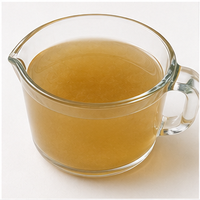
You should end up with roughly 800ml of pale golden stock from 1 liter of water.
Do not boil hard. A rolling boil makes the stock cloudy and pushes bitterness out of the anchovies.
Optional additions
Each of these changes the character. Add one or two, not all.
- Dried shiitake (1–2) — deeper, earthier, good for doenjang jjigae
- Onion, halved — sweetness, rounds out sharp edges
- Green onion roots — mild aromatic lift
- Radish, a few slices — clean sweetness, standard in soup stocks
- Dried shrimp — sharper seafood note
A very standard home version is anchovy, kelp, onion, and radish.
Storage
Refrigerated, three days. It goes off faster than you expect.
Better: freeze it flat in a zip bag, or in an ice cube tray for small amounts. It keeps two to three months and drops straight into a hot pot.
Most Korean home cooks make a large batch on the weekend and freeze it in portions. Two liters covers a week of soups.
The shortcut
Korean grocery stores sell 육수팩 — stock packets, essentially large tea bags with anchovy, kelp, and aromatics already inside. Drop one in boiling water for ten minutes and pull it out.
They are genuinely convenient and reasonably good. The stock is a little flatter than made-from-scratch and you cannot adjust the ratio, but for a weeknight it is a fair trade.
Vegetarian version
Kelp plus dried shiitake plus radish and onion. Same method, and take the kelp out at the same point.
It is lighter than anchovy stock and slightly sweeter. For doenjang jjigae the difference is small. For soups where the seafood note carries the dish, it is noticeable.
What it changes
Swap water for anchovy stock in doenjang jjigae, kimchi jjigae, tteokguk, sundubu, or any noodle soup and the dish gains a savory floor it was missing. It is the closest thing Korean home cooking has to a single trick that improves many dishes at once.
K-Pantry shows which recipes you can make with the ingredients you already have, including the ones that only need stock. Try K-Pantry