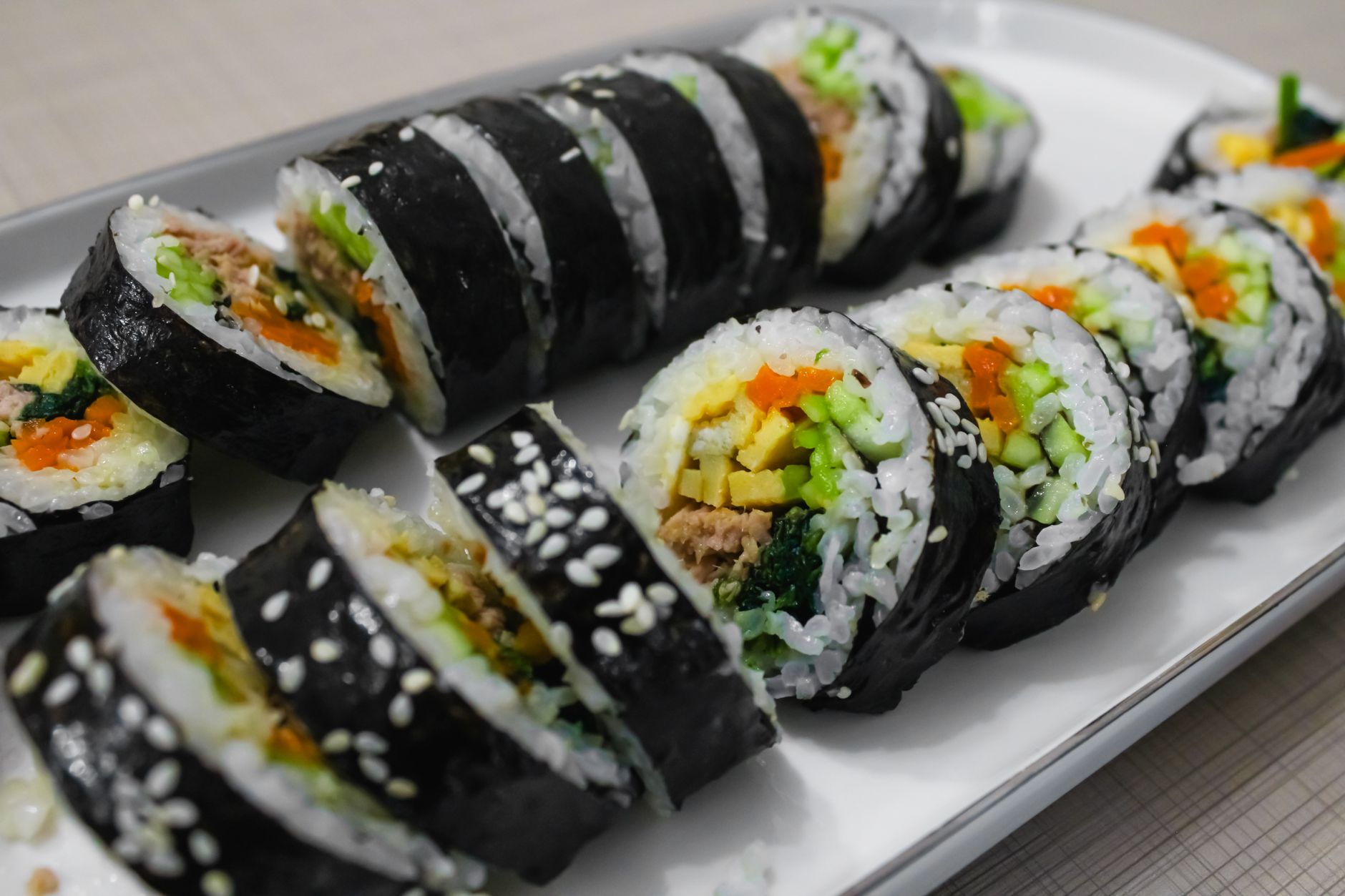
While both gim and nori refer to thin, paper-like sheets of processed red algae, Korean gim is typically thinner, brushed with sesame or perilla oil, and salted, whereas Japanese nori is thicker, unseasoned, and structurally denser. Miyeok (sea mustard) and dasima (kelp) are entirely different species of brown algae used primarily for chewy textures in soups and rich, umami-filled bases for broths, respectively.
Understanding these distinctions is essential for navigating Korean grocery stores, ordering at restaurants, and recreating authentic Korean dishes at home without ruining the texture or flavor profile of your meals.
Gim vs. Nori: The Battle of the Crispy Sheets
Though they come from the same botanical family of red algae (Porphyra), the processing methods, seasoning, and culinary roles of Korean gim (김) and Japanese nori (のり) diverge significantly.
Korean Gim (김)
Korean gim is celebrated for its light, airy, and brittle texture. The sheets are processed to be highly porous, resulting in a lace-like appearance with tiny visible holes. The most common commercial variety is jaerae-gim (traditional gim), which is brushed lightly with sesame oil or perilla oil and sprinkled with fine sea salt before being roasted. This produces a savory, smoky, and highly aromatic snack or side dish.
Another popular variety is dol-gim (rock gim), which has a rougher, coarser texture and a more intense natural seaweed flavor. For those seeking premium options, gopchang-gim—harvested only during a short window in early winter—is thicker, naturally sweet, and highly prized for its chewy yet crispy bite. Unseasoned, raw sheets (parae-gim or green-laver mixed gim) are also widely available; these are typically toasted dry at home and wrapped around plain warm rice, then dipped in a savory soy-sesame sauce (yangnyeom-jang).
Japanese Nori (のり)
In contrast, Japanese nori is processed into uniform, thick, and dense sheets with no visible holes. It is designed to be structurally resilient, allowing it to hold moist sushi rice and fillings together without tearing or dissolving. Traditional nori is unseasoned and unroasted (shin-nori) or toasted dry (yaki-nori). While seasoned versions exist (ajitsuke-nori), they are typically coated with a sweet and savory soy-based glaze rather than oil and salt, giving them a sticky, stiff texture compared to the dry, flaky crispness of Korean seasoned gim.
Miyeok and Dasima: The Pillars of Korean Soups
Moving away from thin sheets, miyeok (미역) and dasima (다시마) are thick, brown seaweeds that form the backbone of Korean home cooking. They are rarely eaten dry and require specific preparation methods to unlock their culinary potential.
Miyeok (Sea Mustard / Wakame)
Miyeok is a highly nutritious seaweed that turns a vibrant green and develops a soft, slightly chewy, and slippery texture when rehydrated. It is the star ingredient of miyeok-guk (seaweed soup), a dish traditionally eaten by mothers after childbirth due to its high iodine and iron content, and subsequently eaten by Koreans on their birthdays to honor their mothers.
Unlike Japanese wakame, which is often served raw in small quantities in miso soup or salads, Korean miyeok is cooked extensively. It is typically sautéed in sesame oil with beef, garlic, or seafood before being simmered for hours to create a rich, milky, comforting broth. It can also be blanched and served cold with a sweet and sour chili dressing (miyeok-cho-muchim).
Dasima (Kelp / Kombu)
Dasima is the thickest, toughest seaweed in the Korean pantry. It is identical to Japanese kombu and is primarily used as a natural flavor enhancer. Dried dasima is covered in a fine white powder; this is not mold, but rather mannitol, a naturally occurring sugar alcohol that provides an intense burst of umami.
Koreans use dasima to make yuksu (anchovy-kelp broth), which serves as the liquid base for almost every Korean stew (jjigae), noodle soup, and braised dish. The kelp is simmered in cold water alongside dried anchovies, white radish, and onions. Beyond broth, fresh or rehydrated dasima can be sliced thin and eaten as a wrap (dasima-ssam) dipped in sweet spicy chili paste (chogochujang), or deep-fried into crispy, sugar-dusted chips (dasima-bugak).
Seaweed Comparison Matrix
| Seaweed Type | Korean Name | Japanese Equivalent | Primary Form & Texture | Common Culinary Uses | Flavor Profile |
|---|---|---|---|---|---|
| Gim | 김 | Nori | Thin, airy, brittle, porous sheets | Table side dish, snack, gimbap | Savory, nutty (sesame oil), salty, smoky |
| Nori | 노리 | Nori | Thick, dense, uniform sheets | Sushi rolls (maki), ramen garnish | Mild, grassy, slightly sweet (if glazed) |
| Miyeok | 미역 | Wakame | Ribbons; soft, slippery, chewy | Miyeok-guk (birthday soup), cold salads | Mildly sweet, oceanic, clean |
| Dasima | 다시마 | Kombu | Thick, leathery, rigid sheets | Broth base (yuksu), fried snacks, wraps | Deeply savory, intense umami, briny |
Step-by-Step Guide: Preparing and Storing Seaweed
To get the best results from your Korean seaweed, follow these practical steps for preparation and preservation.
Step 1: Selecting the Right Product at the Mart
When shopping at a Korean supermarket, look for these specific packaging cues:
- For table-side eating: Buy "seasoned gim" (조미김 - jomi-gim). These come in plastic trays or large multi-packs. Expect to pay roughly 4,000 to 7,000 KRW for a large bundle.
- For making gimbap: Buy "gimbap gim" (김밥김). These are unseasoned, thick, and sturdy sheets designed to hold rice.
- For soups: Buy "dried miyeok" (자른미역 - jareun-miyeok), which comes pre-cut into bite-sized pieces, saving you prep time.
Step 2: Proper Rehydration and Cooking
- For Miyeok: Dried miyeok expands up to ten times its dry volume. Measure carefully. Place a small handful in cold water for 10 to 15 minutes. Once plump and green, squeeze out the excess water thoroughly. Always sauté the rehydrated miyeok in sesame oil for 2 to 3 minutes before adding water; this eliminates any raw, grassy odor.
- For Dasima: Do not wash dried dasima. Gently wipe the surface with a damp paper towel to remove dust while preserving the white umami powder. Place it in cold water and bring to a boil.
Crucial Cooking Tip: Always remove dasima from the pot as soon as the water begins to boil, or after a maximum of 10 minutes of simmering. Boiling dasima for too long releases excess mucilage, making your broth slimy, bitter, and cloudy.
Step 3: Storing to Prevent Sogginess and Spoilage
- Gim: Seasoned gim is highly sensitive to humidity. Store opened packages in an airtight container with a silica gel packet. If it goes soggy, microwave the sheets on a dry plate for 15 to 20 seconds to restore crispiness. For long-term storage, keep unseasoned gim in the freezer.
- Miyeok and Dasima: Keep dried packages in a cool, dark, dry pantry. Once opened, seal them tightly. They can last for over a year if kept completely dry.
Common Mistakes and Cultural Etiquette
- Washing away the umami: The white powder on dried dasima is often mistaken for salt or mold by foreigners, who then scrub it off under running water. Avoid this; wiping it gently with a dry or slightly damp cloth is all that is required.
- The Exam Day Superstition: Never serve or eat miyeok-guk (seaweed soup) on the day of an important exam, job interview, or evaluation. Because miyeok is notoriously slippery, Korean cultural superstition dictates that eating it will cause you to "slip" (fail) the exam. Instead, opt for sticky foods like yeot (traditional taffy) or chapssaltteok (glutinous rice cakes) to help the knowledge "stick."
- Using the wrong sheet for Gimbap: Attempting to roll gimbap using thin, seasoned table gim will result in the sheet tearing immediately upon contact with warm, moist rice. Always use dedicated, unseasoned gimbap-gim.
Essential Korean Phrases for Seaweed Lovers
When dining out or shopping in Korea, use these practical phrases to find exactly what you need.
- "김 더 주실 수 있나요?" (Gim deo jusil su innayo?)
- "Could I please have some more gim?" (Useful at restaurants serving seasoned gim as a side dish).
- "이 미역국에 고기가 들어갔나요?" (I miyeok-guk-e gogi-ga deureogannayo?)
- "Is there meat in this seaweed soup?" (Crucial for vegetarians, as traditional miyeok-guk is almost always brewed with beef beef broth).
- "조미김은 어디에 있나요?" (Jomi-gim-eun eodi-e innayo?)
- "Where is the seasoned seaweed?" (To ask supermarket staff for snack-style gim).
- "육수용 다시마를 찾고 있어요." (Yuksu-yong dasima-reul chatgo issoyo.)
- "I am looking for dasima for making broth."