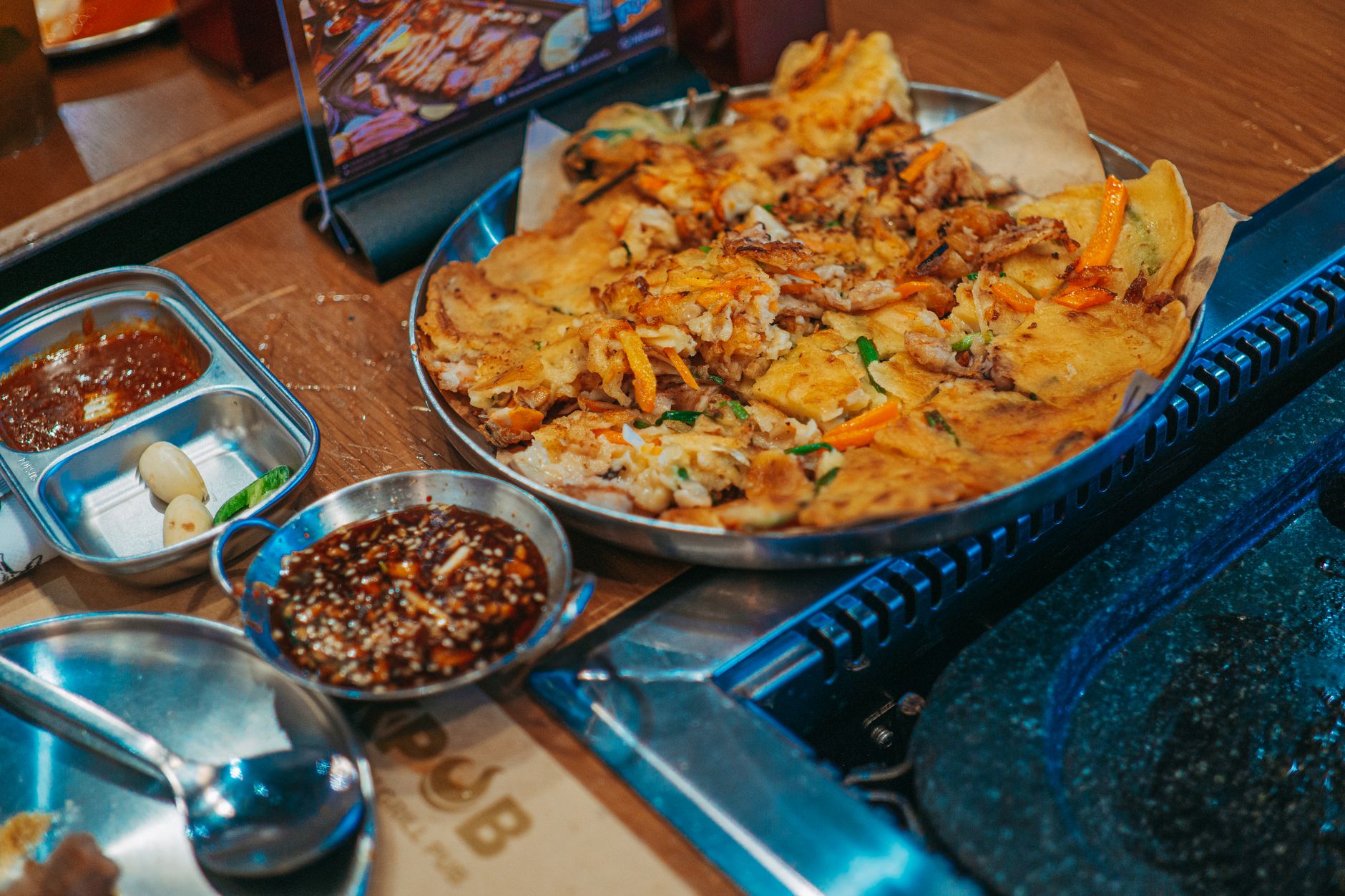
Pajeon is a chewy, scallion-heavy wheat pancake often loaded with seafood, kimchi-jeon is a tangy, fiery wheat pancake made with heavily aged kimchi, and bindaetteok is a thick, gluten-free mung bean fritter deep-fried to a crunch. While all three are traditionally paired with makgeolli (unfiltered rice wine), bindaetteok is an inexpensive market staple, whereas pajeon and kimchi-jeon are larger, shareable dishes served in dedicated pancake houses.
Ingredient Profiles and Textural Differences
The term "jeon" in Korean cuisine refers to ingredients coated in batter and pan-fried, but the three most prominent variations differ significantly in their base components and cooking methods.
Haemul pajeon (seafood scallion pancake) uses a thin, watery batter made from wheat flour, rice flour, and egg. The batter acts merely as a binding agent for a massive quantity of whole, unchopped scallions (pa). Cooks lay the scallions parallel in the pan, pour the batter over them, and top the mixture with chopped squid, shrimp, and sometimes oysters or clams. The resulting pancake is large, thick, and characterized by a soft, slightly gooey center with crispy edges. The long scallions provide a distinct chew and a sweet, aromatic flavor that balances the briny seafood.
Kimchi-jeon relies on mugeunji, which is kimchi that has been fermented for several months until it becomes highly acidic and pungent. Fresh kimchi contains too much water and lacks the necessary depth of flavor for a proper pancake. The aged kimchi is chopped and mixed directly into a wheat flour batter, along with a splash of the kimchi brine, giving the pancake its signature bright red color. Many restaurants add minced pork or canned tuna to the batter to introduce a savory fat that cuts through the acidity. Kimchi-jeon is generally flatter and denser than pajeon, offering a sour, spicy, and savory profile with a slightly chewy texture.
Bindaetteok departs entirely from the wheat-based batter of the other two. It is made from dried mung beans that are soaked and ground into a coarse, gritty paste. This gluten-free batter is mixed with mung bean sprouts, fernbrake (gosari), and minced pork. In traditional markets, vendors fry bindaetteok in shallow pools of soybean oil or pork fat. The high oil volume and the nature of the mung bean batter result in a thick, heavy fritter with a deeply crunchy, golden-brown crust and a crumbly, nutty interior.
| Feature | Pajeon | Kimchi-jeon | Bindaetteok |
|---|---|---|---|
| Base Batter | Wheat flour, rice flour, egg | Wheat flour, kimchi brine | Ground mung beans (gluten-free) |
| Primary Ingredients | Scallions, squid, shrimp, egg | Aged kimchi, minced pork or tuna | Mung bean sprouts, minced pork |
| Texture Profile | Chewy center, crispy edges | Dense, soft, slightly chewy | Thick, gritty, deep-fried crunch |
| Average Price (Seoul) | ₩15,000 – ₩20,000 | ₩12,000 – ₩15,000 | ₩5,000 – ₩8,000 |
| Best Location Type | University districts, Pajeon alleys | Local Makgeolli bars (Jeon-jip) | Traditional street markets |
The Makgeolli Pairing and Rainy Day Tradition
These savory pancakes are rarely consumed with soju or beer. The standard beverage pairing for all three is makgeolli, a traditional, unfiltered Korean rice wine. Makgeolli has a low alcohol by volume (typically 6% to 9%) and a milky, opaque appearance. Its slightly sweet, tart, and carbonated profile acts as a palate cleanser, cutting through the heavy grease of the fried batter.
Consumption of jeon and makgeolli spikes dramatically across South Korea on rainy days. When precipitation begins, specialized pancake houses (jeon-jip) fill up by late afternoon, and wait times can exceed an hour.
The cultural association between rain and savory pancakes stems from sensory mimicry; the sizzling sound of wet batter hitting a hot, oiled pan closely replicates the acoustic frequency of rain hitting the pavement.
Additionally, the high calorie and fat content of the pancakes, combined with the warming effect of the alcohol, provides immediate comfort during damp, overcast weather.
Where to Find the Best Savory Pancakes in Seoul
Seoul features specific neighborhoods and markets dedicated to different types of jeon. Prices and portion sizes vary based on the venue.
- Gwangjang Market for Bindaetteok: Gwangjang Market in Jongno-gu is the epicenter of bindaetteok in South Korea. The central food alley is lined with vendors operating stone grinding wheels to process mung beans on-site. Suni's Bindaetteok (순희네 빈대떡) is the most famous stall, recognizable by the towering stacks of golden pancakes. A standard mung bean pancake here costs around ₩5,000, while a set including a meatball jeon (gogi wanja) costs approximately ₩13,000. The seating is cramped, and turnover is fast.
- Hoegi Pajeon Alley for Haemul Pajeon: Located near Kyung Hee University in Dongdaemun-gu, Hoegi Pajeon Alley has been serving massive, affordable seafood pancakes to students since the 1970s. Restaurants here, such as Yimone Wang Pajeon, serve pancakes that are significantly thicker and more heavily battered than those found elsewhere in the city. A large haemul pajeon costs between ₩15,000 and ₩20,000. Many venues offer set menus for ₩20,000 to ₩40,000 that include side dishes like spicy rice cakes (tteokbokki) and corn cheese.
- Sinsa-dong and Mapo-gu for Kimchi-jeon: Kimchi-jeon is a staple at almost every traditional pub and makgeolli bar across the city. For a modernized experience, Sinsajeon in Gangnam-gu serves high-quality kimchi-jeon (around ₩18,000) alongside their signature honeycomb makgeolli, where servers cut a piece of raw honeycomb directly into your glass. For a more rustic atmosphere, the Jeon Alley in Gongdeok (Mapo-gu) allows you to select various small jeon pieces by weight, alongside made-to-order kimchi-jeon.
How to Order and Eat Jeon Like a Local
Eating Korean savory pancakes involves specific dining etiquette and mechanics. Follow these steps to navigate a traditional jeon-jip or market stall.
Step 1: Secure a table and order your pairing If it is raining, arrive at the restaurant before 6:00 PM to avoid long queues. Order your preferred pancake and a bottle of makgeolli immediately. To sample multiple varieties, order a modum-jeon (assorted pancake platter), which typically includes small portions of kimchi-jeon, bindaetteok, battered zucchini, and perilla leaves stuffed with meat.
Step 2: Prepare the makgeolli and dipping sauce Makgeolli naturally separates in the bottle, with the rice sediment settling at the bottom. Gently invert the bottle two or three times to mix the sediment without shaking it vigorously, which would cause the carbonation to overflow. Pour the makgeolli into the provided brass or aluminum bowls. Ensure your dipping sauce—a mixture of soy sauce, rice vinegar, and diced raw onions—is placed in the center of the table.
Step 3: Tear the pancake with chopsticks and garnish Do not pick up the pancake to bite into it, and do not request a knife. Use your metal chopsticks to pull the pancake apart. Pin the pancake down with one chopstick and pull a bite-sized piece away with the other. Dip the torn piece lightly into the soy-vinegar sauce. For thick pancakes like bindaetteok, use your chopsticks to pick up a piece of the raw, vinegar-soaked onion from the sauce bowl and place it on top of the pancake bite before eating to cut through the heavy oil.