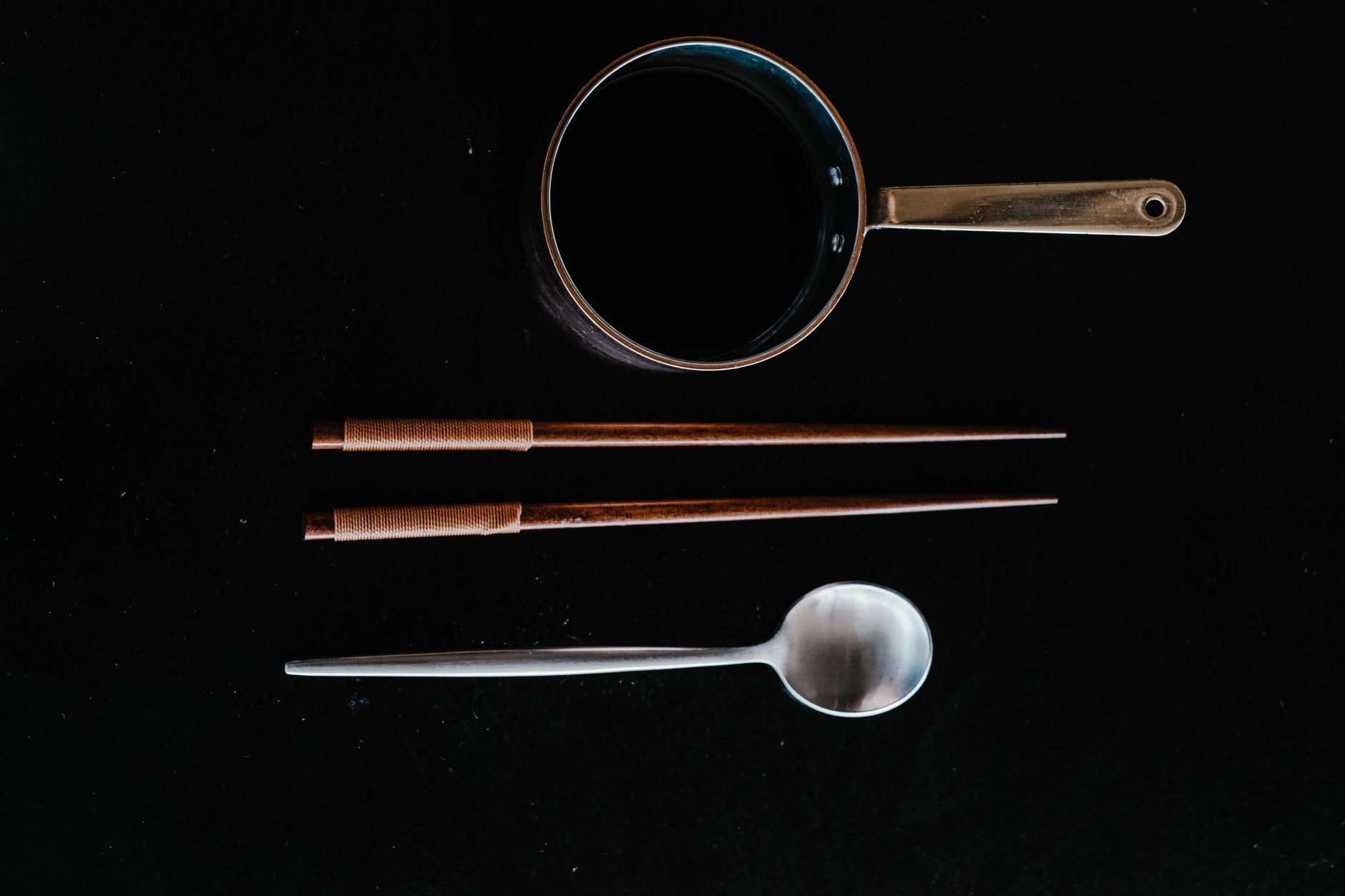
Use the spoon for rice and soup, use the chopsticks for side dishes, and leave your bowls on the table. If you also wait for the eldest person to start eating and pour drinks for others with both hands, you have covered most of Korean table etiquette. Nobody expects a visitor to be perfect, but these habits are noticed and appreciated.
The Utensils: Spoon First, Chopsticks Second
Korean meals use two utensils with separate jobs. The spoon (sutgarak, 숟가락) handles rice, soup, and stew broth. The chopsticks (jeotgarak, 젓가락) handle side dishes (banchan) and anything that can be picked up. Korean chopsticks are usually flat and made of metal, which is slippery at first, so take small bites while you get used to them.
Many restaurants keep the spoons and chopsticks in a drawer built into the table edge. Look for a small slot under the tabletop before you ask staff. Set a paper napkin down first and place the utensils on it.
Bowls stay on the table. Lifting a rice or soup bowl to your mouth is considered poor manners in Korea, which is the opposite of the habit in some neighboring countries. Lean slightly toward the bowl and bring the spoon to your mouth.
Never stand your spoon or chopsticks upright in a bowl of rice. The shape resembles incense sticks used in ancestral memorial rituals, and it is one of the few gestures that can genuinely offend.
Starting, Sharing, and Finishing
At a group meal, the eldest person or the host picks up their spoon first, and everyone else follows. Before eating, it is customary to say 잘 먹겠습니다 (jal meokgesseumnida, "I will eat well"). When you finish, say 잘 먹었습니다 (jal meogeosseumnida, "I ate well").
Korean meals are communal. Stews, grilled meat, and side dishes sit in the middle of the table, and everyone takes from the same plates. Use the serving spoon or tongs if one is provided, and take small portions from the shared dish rather than moving a whole piece onto your own plate. Among close friends, people often dip their own spoons straight into a shared stew. As a visitor, follow what the others do.
Do not leave your utensils resting across a bowl. When you finish, place the spoon and chopsticks back on the napkin where you started.
Pouring and Receiving Drinks
Drinking etiquette is where manners matter most, especially with soju and beer.
- Pour for others, not yourself first. Watch for empty glasses around the table and offer to fill them. Someone will usually fill yours in return.
- Use two hands. Hold the bottle with your right hand and lightly support your right wrist or forearm with your left hand. Receiving a drink works the same way: hold your glass with both hands.
- Turn your head slightly when drinking in front of someone older. Turning your face to the side while you sip is a sign of respect.
- Say no politely by leaving the glass full. An empty glass signals that you want a refill, and a full glass signals that you are done.
| Situation | Do | Avoid |
|---|---|---|
| Starting a meal | Wait for the eldest or host, then say jal meokgesseumnida | Eating before the group has started |
| Rice and soup | Eat with the spoon and keep bowls on the table | Lifting the bowl to your mouth |
| Resting utensils | Lay them on the napkin or a rest | Standing them upright in rice |
| Shared dishes | Use serving utensils and take small portions | Digging through the dish for the best piece |
| Drinks | Pour for others with two hands, receive with two hands | Pouring your own glass first at a group table |
Step-by-Step: Your First Group Meal
- Step 1: Find the utensils. Check the table drawer, then lay a napkin down and set the spoon and chopsticks on it.
- Step 2: Wait, then greet. Let the eldest person start, say jal meokgesseumnida, and begin with the soup or rice.
- Step 3: Share carefully. Take small amounts from the shared plates with the serving utensils and eat them from your own small plate or bowl.
- Step 4: Handle drinks. Fill other glasses with two hands, accept yours with two hands, and turn slightly aside when drinking in front of elders.
- Step 5: Finish cleanly. Put your utensils back on the napkin and say jal meogeosseumnida before you leave the table.
Korean hosts forgive mistakes from visitors, and an attempt to follow the customs is usually met with warmth. Keep the spoon-and-chopsticks rule and the two-hand rule in mind and you will be fine.