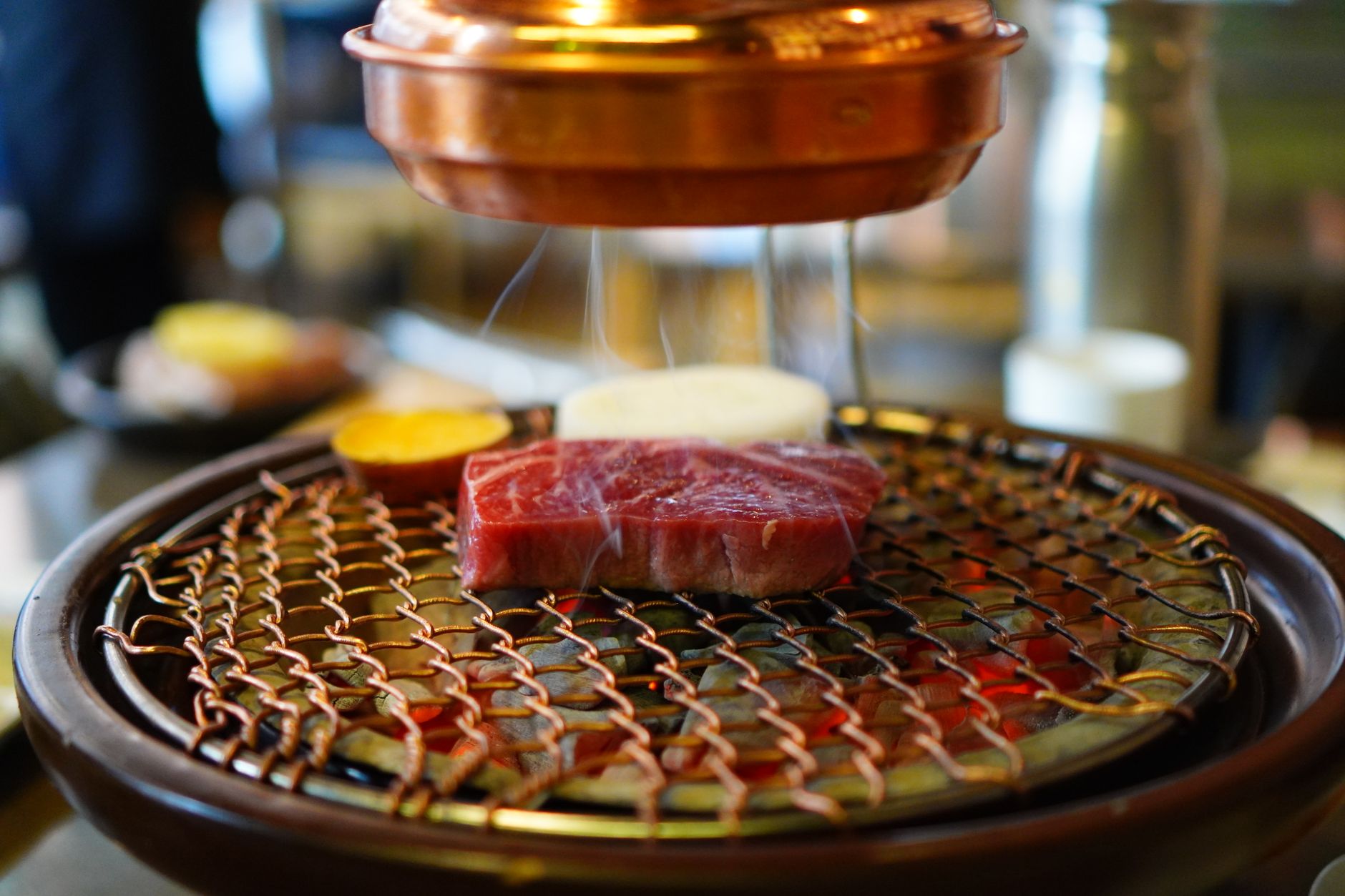
Select samgyeopsal for a casual, high-fat pork dinner that represents the quintessential Korean social dining experience. Choose Hanwoo when seeking a high-end, heavily marbled premium beef feast, or opt for chadolbaegi if you prefer paper-thin, fast-cooking beef brisket slices with a buttery crunch.
Navigating a Korean barbecue menu can be intimidating due to the variety of cuts, meat types, and dining protocols. Understanding the structural differences, flavor profiles, and cultural expectations of these three flagship cuts ensures you order exactly what suits your palate and budget.
Profiling the Three Iconic BBQ Cuts
Each of these three cuts offers a distinct texture, cooking speed, and price point. Choosing the right one depends heavily on the occasion, your budget, and how much time you want to spend managing the grill.
| Cut Name (Hangul) | Meat Type | Texture & Flavor | Cooking Speed | Price Tier | Best Dipping Companion |
|---|---|---|---|---|---|
| Samgyeopsal (삼겹살) | Pork Belly | Rich, fatty, crispy on the outside, tender inside | Medium (5-8 minutes) | Budget to Moderate | Ssamjang (mixed paste) or salted sesame oil |
| Hanwoo (한우) | Premium Beef (various cuts) | Extremely tender, buttery, deep umami, melts in the mouth | Fast (2-4 minutes) | Ultra-Premium | Fine sea salt or a touch of fresh wasabi |
| Chadolbaegi (차돌박이) | Beef Brisket (thinly sliced) | Chewy, nutty, rich in beef fat, slightly crunchy | Very Fast (10-30 seconds) | Moderate to High | Sweet soy-sauce with sliced green chili |
Samgyeopsal (삼겹살)
Samgyeopsal translates literally to "three-layered meat," referring to the visible layers of lean meat and fat in the pork belly. It is the undisputed king of casual dining in Korea. Local restaurants serve it either thick-cut (tong-samgyeopsal) or thin-cut (daepae-samgyeopsal). When grilled correctly, the outer fat renders down into a crunchy crust while the interior remains moist.
For an alternative texture, look for Ogyeopsal (오겹살), which is "five-layered pork" featuring the skin left on the belly cut. This skin layer adds a gelatinous, chewy texture when grilled.
Hanwoo (한우)
Hanwoo refers to a specific breed of native Korean cattle. It is not merely "Korean beef" (which could be imported beef processed locally), but a highly prized, genetically distinct breed. Hanwoo is famous for its high marbling, which sits comfortably between the intense fat of Japanese Wagyu and the robust beefiness of US Prime beef.
Common Hanwoo cuts ordered at barbecue restaurants include Deungsim (등심 - ribeye/sirloin), Anshim (안심 - tenderloin), and Galbisal (갈비살 - ribbed meat). Because of its high price and premium status, locals reserve Hanwoo for business dinners, family celebrations, or special occasions.
Chadolbaegi (차돌박이)
Chadolbaegi consists of thinly sliced, unmarinated beef brisket. Because the brisket muscle is naturally tough, Korean butchers freeze the meat and slice it paper-thin. When these frozen curls hit a hot grill plate, they unfurl and cook almost instantly.
The high concentration of white fat in chadolbaegi gives it a dense, slightly firm chew and a highly concentrated beef flavor. It is an excellent choice if you are hungry and want to start eating immediately while thicker cuts cook on the side.
Grilling Mechanics and Table Etiquette
The style of meat you order dictates the type of grill plate placed on your table and how you should manage the fire. Mixing these styles without understanding the mechanics can ruin the meat or create excessive smoke.
Never use the same grill surface for pork and beef without asking the staff to change the plate. Pork belly releases heavy grease that requires a solid, slanted plate with a drain hole. Premium beef cuts like Hanwoo require a clean wire mesh over charcoal to absorb the smoky aroma without flaring up.
When dining at a Korean barbecue restaurant, keep these cultural protocols in mind:
- The Griller Role: In high-end Hanwoo establishments, trained servers usually grill the meat for you to ensure it is not overcooked. In casual samgyeopsal or chadolbaegi joints, you are expected to grill the meat yourself. The person sitting closest to the tongs and scissors typically takes charge of the cooking.
- The Scissors Rule: Do not try to bite through large pieces of meat. Use the provided metal shears to cut the meat into bite-sized pieces while it is on the grill. For samgyeopsal, cut the strips into bite-sized rectangles only after the bottom side has fully browned.
- The Order of Consumption: If you plan to order multiple types of meat in one sitting, always order beef before pork. Start with the delicate flavor of Hanwoo, move to the quick-cooking chadolbaegi, and finish with the heavy, greasy samgyeopsal. Starting with pork coats your palate in grease, making it impossible to appreciate the subtle flavors of expensive Hanwoo.
Step-by-Step Guide to Ordering and Eating K-BBQ
Follow this sequence to navigate your restaurant visit from arrival to the final dish.
Step 1: Understand the Portion System
Most Korean BBQ restaurants require a minimum order of two portions (인분 - inbun) of the same meat to start, especially if you are dining in a group of two or more. Look at the menu for the weight per portion, which usually ranges from 150g to 200g.
To order, use this phrasing:
- "여기 삼겹살 2인분 주세요" (Yeogi samgyeopsal i-inbun juseyo) — "Please give us two portions of pork belly here."
- "한우 등심 2인분 주세요" (Hanwoo deungsim i-inbun juseyo) — "Please give us two portions of Hanwoo ribeye."
Step 2: Set Up Your Dipping Station
As soon as you order, the table will be filled with side dishes (banchan). Match your meat to the correct seasoning:
- For Samgyeopsal: Dab a small amount of ssamjang (the thick, orange paste made of fermented soybeans and chili) onto the meat.
- For Hanwoo: Touch the meat lightly to the coarse salt. Do not drench it in sauce; high-quality Hanwoo should be tasted with minimal interference.
- For Chadolbaegi: Dip the entire slice into the sweet, acidic soy-and-vinegar sauce provided. The acid cuts through the brisket's surface fat.
Step 3: Construct the Perfect Ssam (Wrap)
Do not eat the meat exclusively on its own. Balance the fat by making a lettuce or perilla leaf wrap (ssam):
- Place a flat lettuce leaf or perilla leaf (kkaennip) in your palm.
- Place a piece of grilled meat in the center.
- Add a slice of grilled garlic (grill the raw garlic slices on the plate first).
- Add a pinch of pajori (seasoned green scallion salad).
- Fold the leaf into a single, bite-sized parcel.
- Eat the entire wrap in one single bite. It is considered bad etiquette to bite a wrap in half, as the contents will spill out.
Step 4: Order the Post-Meat Carb (Siksa)
Locals rarely finish a meal with just meat. Once you are finished grilling, order a carbohydrate-heavy dish to cleanse your palate.
If you ate pork, order Bokkeumbap (볶음밥 - fried rice). The server will fry rice, seaweed, and seasoning directly on your greasy grill plate. Say:
- "볶음밥 2인분 볶아주세요" (Bokkeumbap i-inbun bokkeo-juseyo) — "Please fry two portions of fried rice."
If you ate beef, order Mul-naengmyeon (물냉면 - cold buckwheat noodles in icy broth). The cold, vinegary broth cuts through the lingering beef fat in your mouth. Say:
- "물냉면 하나 주세요" (Mul-naengmyeon hana juseyo) — "Please give us one cold noodle soup."
Common Mistakes to Avoid at the Table
To blend in with locals and get the best flavor out of your meat, avoid these common pitfalls:
- Flipping Hanwoo too often: Treat Hanwoo like a premium steak. Let one side develop a brown crust, flip it once, and eat it medium-rare. Overcooking Hanwoo turns an expensive, tender cut into tough, dry leather.
- Crowding the grill with Chadolbaegi: Because chadolbaegi cooks in seconds, do not dump the entire plate onto the grill at once. It will burn, shrivel, and become tough. Instead, lay down two or three slices at a time, flip them as soon as they change color, and eat them immediately.
- Burning the garlic: Do not drop raw garlic slices directly onto a wire mesh grill, as they will fall through into the charcoal. Use the small metal cups filled with sesame oil provided by the restaurant, or ask for one by saying: "마늘 기름장 주세요" (Maneul gireumjang juseyo). This boils the garlic safely in oil on top of the grate.
- Allowing the grill to burn black: If you see black residue building up on your grill plate, do not keep cooking on it. The carbon will transfer to your fresh meat, ruining the flavor. Flag down a staff member and ask for a plate change:
- "불판 갈아주세요" (Bulpan garajuseyo) — "Please change the grill plate."