Menus in Jeju list black pork at roughly double the price of ordinary pork belly, and visitors reasonably ask what they are paying for. The confusion usually comes from comparing the wrong things: black pork is a breed, samgyeopsal is a cut. You can have black pork samgyeopsal, and you can have ordinary samgyeopsal, and the comparison people actually want is between those two.
Black pork is a breed, not a cut
Jeju black pig is a native Korean breed with dark bristles, raised on the island and protected as a regional product. It grows slower and smaller than the white commercial breeds that supply most Korean pork.
| Regular pork | Jeju black pork | |
|---|---|---|
| Breed | Commercial white hybrids | Native Jeju black pig |
| Growth | Fast | Slower, smaller animal |
| Fat | Softer, renders quickly | Firmer, renders slower |
| Meat texture | Tender, can go dry | Chewier, holds moisture |
| Skin | Usually removed | Often left on |
| Typical price | Baseline | Roughly double in Jeju |
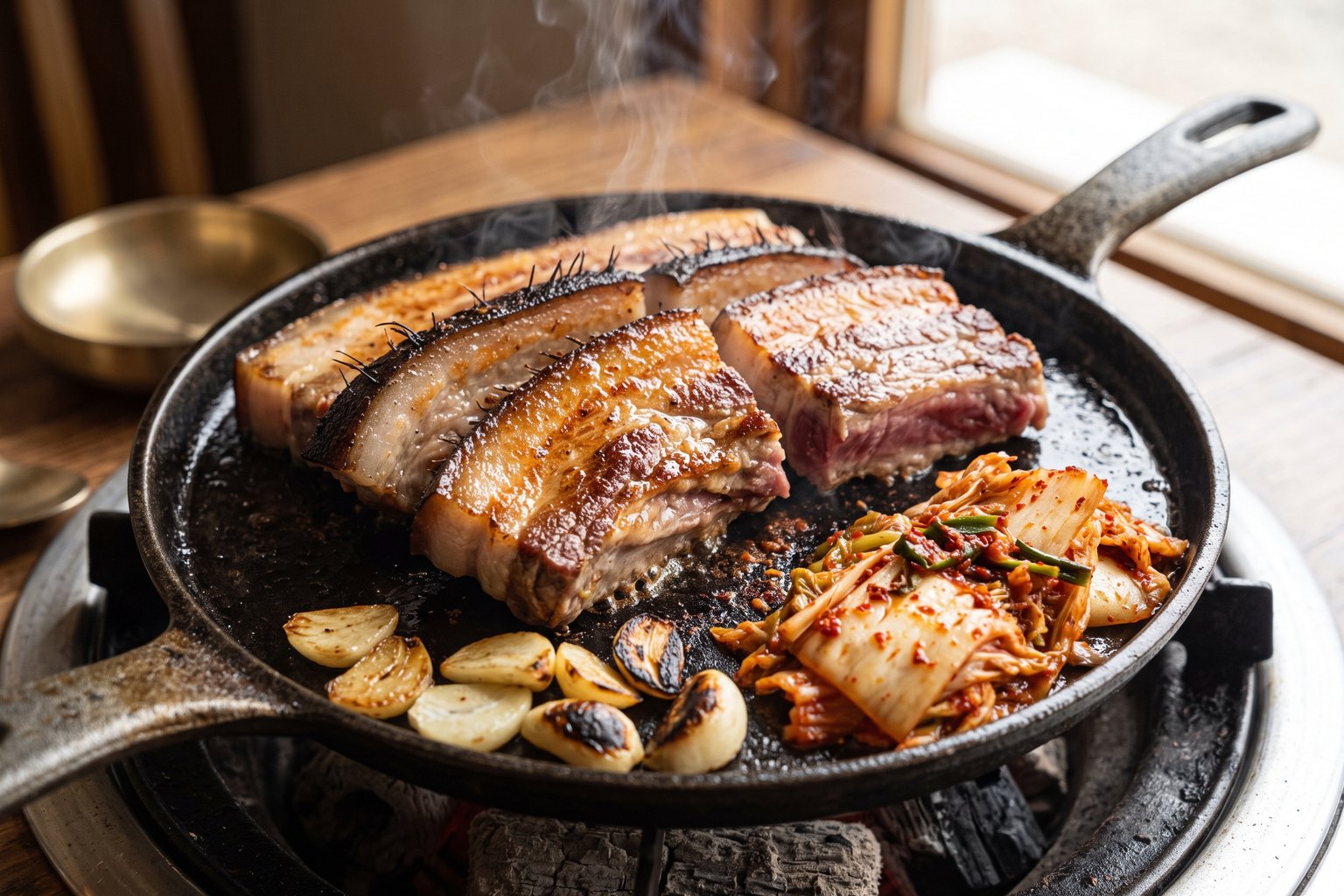
The practical difference on the grill is the fat. Black pork fat holds its shape longer, so a thick cut can cook through without the outside collapsing. That is why it is served thick — often two or three centimeters — where ordinary samgyeopsal is sliced thin.
The cut is usually ogyeopsal, not samgyeopsal
Sam means three; samgyeopsal is the three-layer cut of belly. O means five. Ogyeopsal is the same belly with the skin left on, counted as five layers.
Jeju restaurants commonly serve ogyeopsal, and the skin is the point. Grilled slowly, it goes from rubbery to chewy-crisp. If you have only eaten skinless pork belly, this texture is the most unfamiliar part of the meal, more than the breed.
Order it skin-side down first and leave it alone longer than feels right. Skin that is flipped early stays tough.
The dipping sauce is the real surprise
Mainland pork belly comes with ssamjang and sesame oil with salt. Jeju adds myeoljeot — fermented anchovy sauce, served warm, dark, and pungent.
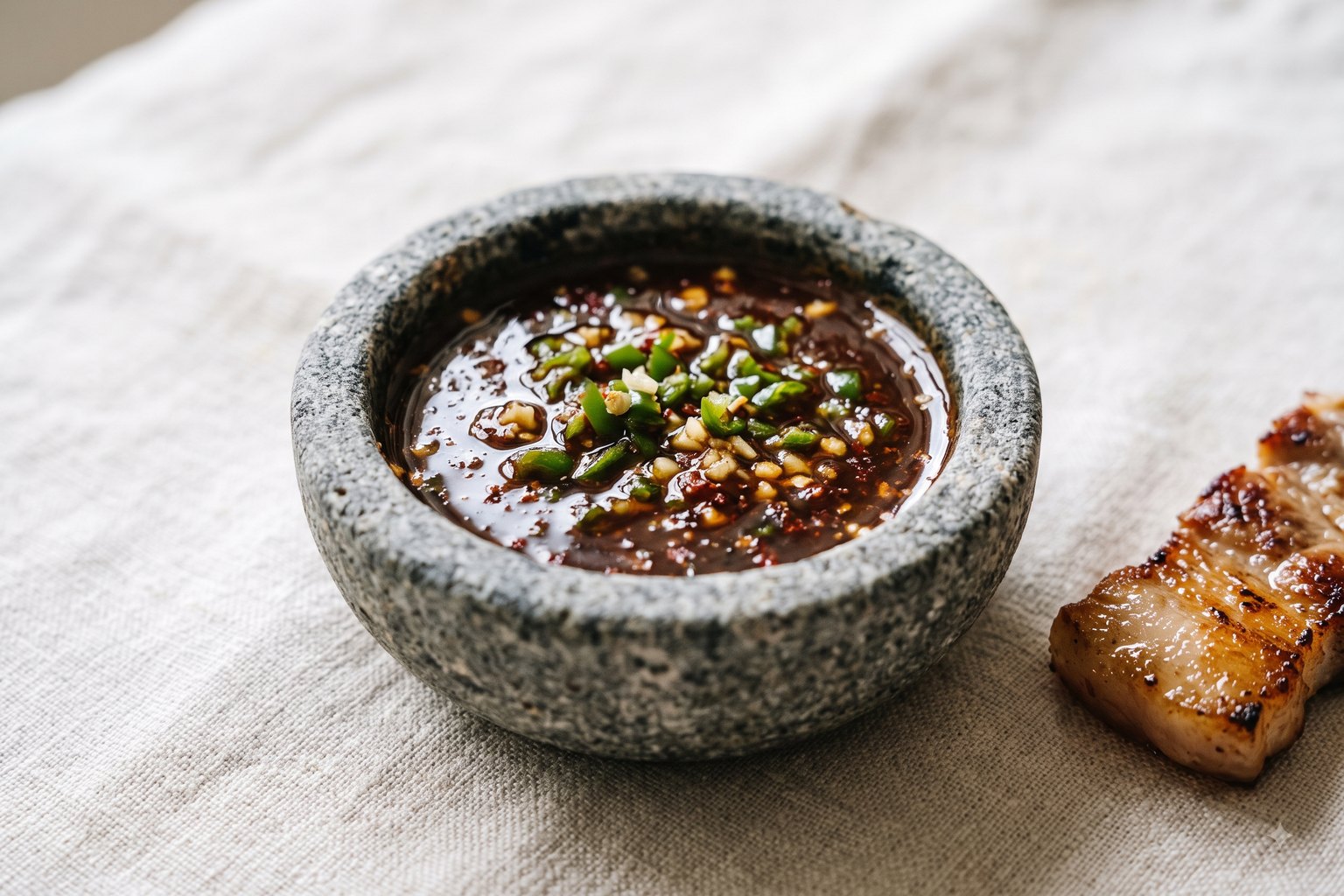
It is salty and deeply fishy, and it is not a condiment most visitors expect next to pork. It also works, because the salt and funk cut fat in a way that sesame oil does not. If the smell puts you off, dip a corner of one piece before deciding. Restaurants will not be offended if you leave it, but skipping it means missing what makes the meal regional rather than just expensive.
Is it worth it?
If you are in Jeju, once, yes — the combination of thick cut, skin on, and myeoljeot is genuinely a different meal, not a premium version of the same one.
If you are choosing between black pork and ordinary pork at a Seoul restaurant, the gap narrows. The breed advantage shows up most in thick cuts cooked slowly. At thin-slice thickness, most of what you notice is the cook and the grill, not the pig.
Buying pork for Korean grilling outside Korea
Jeju black pork is rarely exported, so this is not usually a choice you get to make. What you can control matters more:
- Ask for skin-on belly at a butcher if you want the ogyeopsal texture. Many will do it with notice, and it is often cheaper than skinless.
- Buy it thick. Cutting your own from a slab lets you go past what pre-packaged trays offer.
- Look for firm, white fat. Soft, yellowish fat renders too fast and the piece falls apart before the outside browns.
- Skip marinated belly if you want the Jeju experience. That style is meant to be eaten plain with dipping sauce.
Myeoljeot is sold in jars at Korean groceries, usually labeled anchovy sauce, and a small amount warmed in a bowl gets you close.
Cooking Korean food at home and not sure what to buy first? K-Pantry walks you through Korean ingredients one at a time — what they taste like, what to substitute, and what to skip until later.