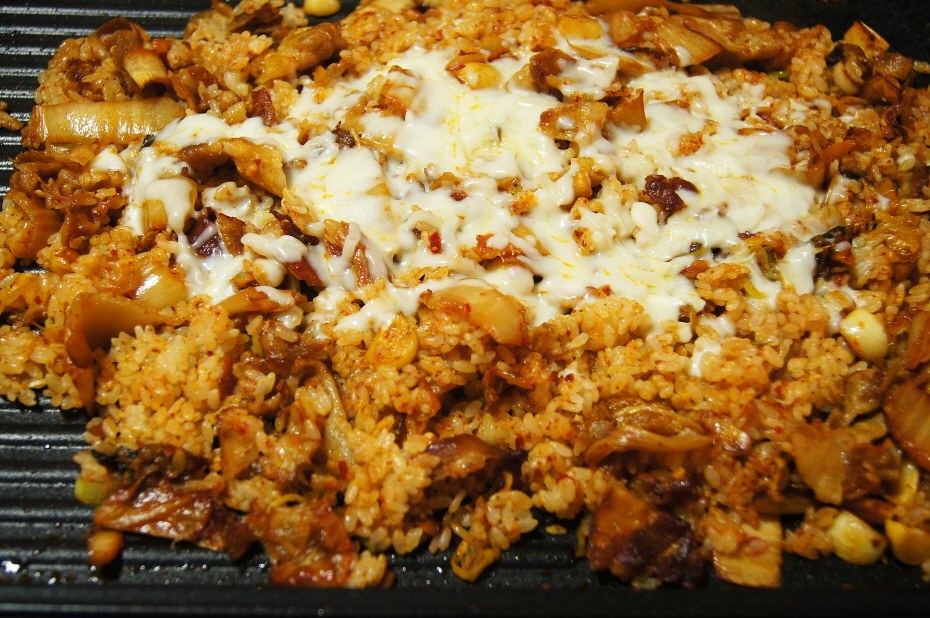
Ordering fried rice (bokkeumbap) at the end of a Korean BBQ meal is an essential culinary course that uses the rendered pork and beef fats remaining on the grill to emulsify carbs and produce a crisp, caramelized crust known as nurungji. Treating it as a mere carbohydrate filler misses the food science: the rendered animal fat, high-heat conduction, and lacto-fermented acidity work together to cleanse the palate after heavy proteins.
The Flavor Mechanics of the Tabletop Finale
Unlike Western multi-course meals that finish with high-sugar dairy or pastries, Korean dining prioritizes settling the palate with starch, acid, and concentrated umami.
"Residual animal fats on the iron plate serve as a seasoned cooking medium. Pairing those lipids with the lactic acid of aged kimchi and the inosinic acid of seasoned seaweed neutralizes palate fatigue from grilled meats."
- Lipid-Starch Emulsification: Rendered lard or beef tallow coats individual rice grains, sealing in steam while preventing the rice from becoming a soggy mass.
- Maillard Reaction & Controlled Scorching: Direct thermal conduction against the cast-iron plate drives out surface moisture, initiating sugar caramelization and crisping the lower layer.
- Acidic Palate Cleanse: Sour aged kimchi (mugeunji), chopped perilla leaves, and gochujang cut straight through lingering grease, leaving a clean, savory finish.
White Rice Pairing vs. Tabletop Bokkeumbap
Deciding when to consume your rice fundamentally alters the texture and flavor trajectory of the meal.
| Evaluation Metric | Steamed White Rice (Mid-Meal) | Post-Meat Bokkeumbap (Finale) |
|---|---|---|
| Cooking Medium | Plain water vapor; unseasoned grains | Rendered grill fat, meat trimmings, kimchi juices |
| Texture Profile | Soft, moist, and pillowy throughout | Dual-texture: crisp crackling bottom, chewy top |
| Flavor Density | Neutral buffer to soften salty ssamjang | Complex savory profile with toasted sesame oil notes |
| Ordering Window | Requested with initial raw meat cuts | Ordered when 2–3 pieces of cooked meat remain |
3-Step Protocol for Optimal Tabletop Fried Rice
Follow these operational steps to achieve an evenly scorched crust without burning the rice.
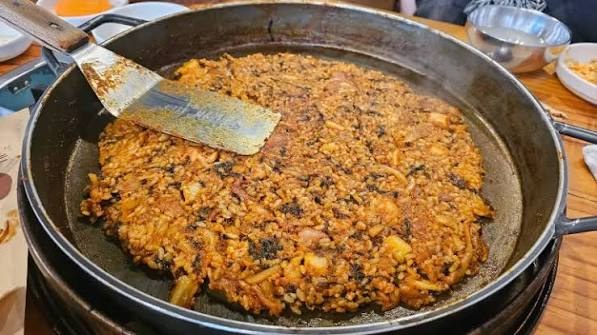
- Step 1: Reserve Anchor Proteins and Aromatics Do not finish every cut of meat. Leave two to three slices of cooked pork belly or brisket on the edge of the grill. Use kitchen shears to dice the meat into pea-sized cubes alongside grilled garlic and kimchi before the staff adds the rice.
- Step 2: Compress the Rice to Sub-Centimeter Thickness Once the rice, seasoned seaweed (gim), and sesame oil are mixed on the heat, use the back of a flat metal spoon to press the mixture outward. Flatten the layer across the entire surface until it is under 1 centimeter thick, eliminating air pockets to guarantee maximum pan contact.
- Step 3: Hold Heat for 120 Seconds and Scrape Lower the flame to medium-low. Do not stir or flip the rice. Wait roughly two minutes until a distinct crackling sound emerges and the aroma turns nutty. Use the edge of a stainless steel spoon to scrape the golden-brown crust directly off the iron plate.