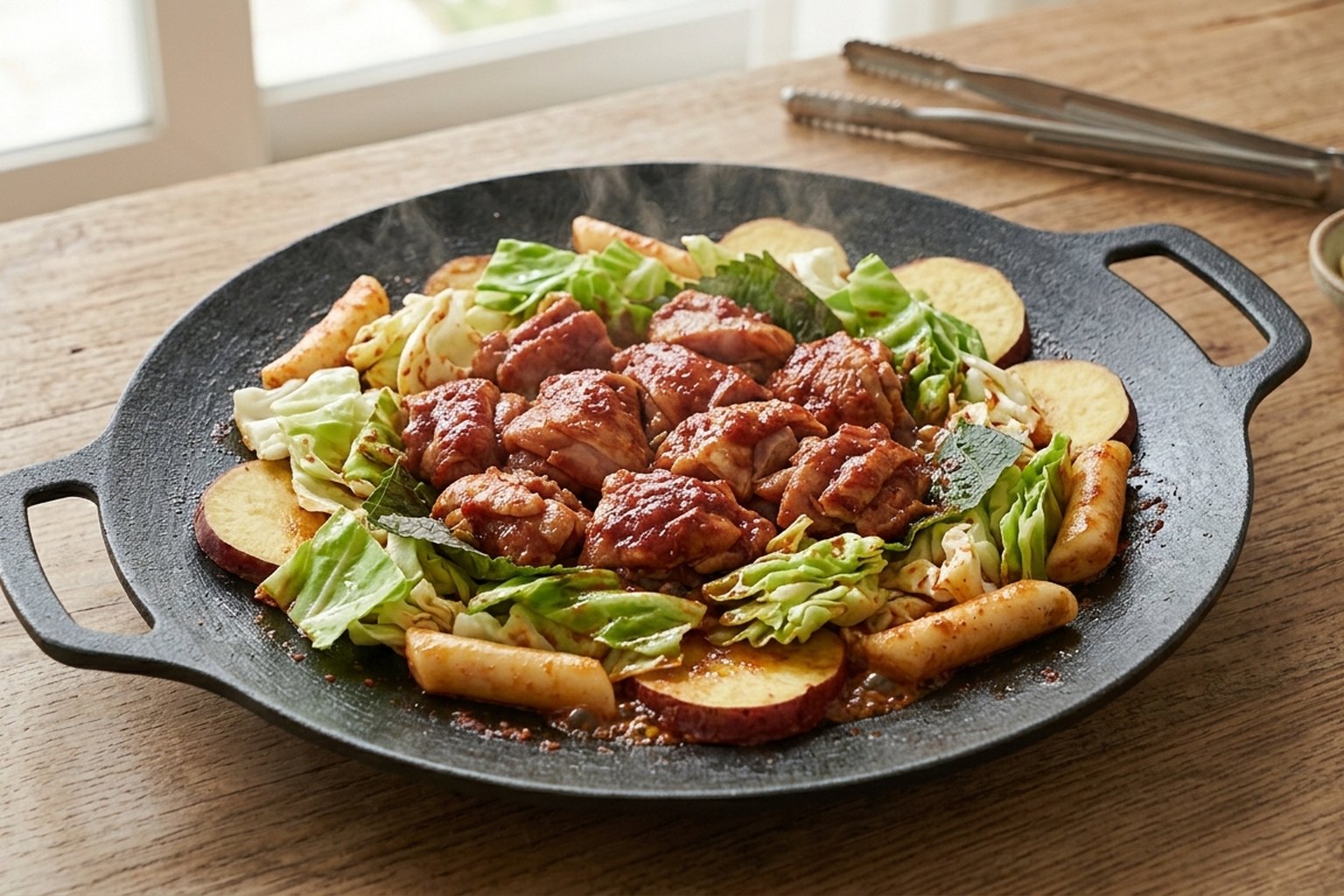
Dakgalbi is chicken stir-fried in gochujang sauce with cabbage, sweet potato, and rice cakes. Nothing in that description explains why it tastes different at home, and the answer is equipment: in Chuncheon it is cooked on a wide, flat, very hot griddle set into the table, and a home pan is neither wide enough nor flat enough.
You can work around it. You cannot ignore it.
What makes it dakgalbi
It is not just spicy chicken stir-fry. Three things define it:
- Boneless chicken thigh, cut in large chunks — not breast, not small pieces
- Cabbage in quantity — enough that it releases water and steams the chicken
- A sauce that is sweet and fermented before it is hot — gochujang plus curry powder, which surprises people
That curry powder is standard in Chuncheon and is often left out of recipes abroad. It is a small amount and it does not make the dish taste of curry. It fills in a gap underneath the gochujang.
The sauce
| Ingredient | Amount (for 600g chicken) |
|---|---|
| Gochujang | 3 tbsp |
| Gochugaru | 2 tbsp |
| Soy sauce | 2 tbsp |
| Rice syrup or sugar | 2 tbsp |
| Minced garlic | 1.5 tbsp |
| Curry powder | 1 tsp |
| Grated onion or apple | 3 tbsp |
| Black pepper | to taste |
Mix and rest the chicken in it for at least thirty minutes; two hours is better. The grated fruit is doing tenderizing work, not just sweetening.
The pan problem, and the fix
A home burner heats the center of a pan and leaves the edge cool. Pile in chicken, cabbage, sweet potato, and rice cakes at once and the whole thing drops in temperature, releases water, and simmers. You get dakgalbi-flavored stew.
Three adjustments solve most of it:
- Use your widest pan and accept cooking in two rounds rather than crowding one.
- Sear the chicken alone first, in a single layer, until it takes color. Remove it.
- Cook the vegetables next, then return the chicken. The chicken finishes in the sauce rather than boiling in vegetable water.
Cast iron holds heat far better than thin nonstick here, and the difference is visible.
Order of the vegetables
Sweet potato takes longest, so slice it thin — three millimeters — or par-cook it in the microwave for two minutes. Rice cakes need soaking in cold water if they are refrigerated or frozen, or they stay hard in the middle.
Cabbage goes in last and should still have some structure when you serve. Overcooked cabbage is the most common home failure: it collapses, floods the pan, and dilutes everything.
Perilla leaves, torn in at the very end, are worth finding. They are the aroma most people cannot place when they eat dakgalbi in Chuncheon.
Do not skip the fried rice
In a restaurant, when the pan is nearly empty, a server scrapes it and adds rice, seaweed flakes, and sesame oil, pressing it flat until a crust forms on the bottom. This is bokkeumbap, and for a lot of Koreans it is the actual reason to order dakgalbi.
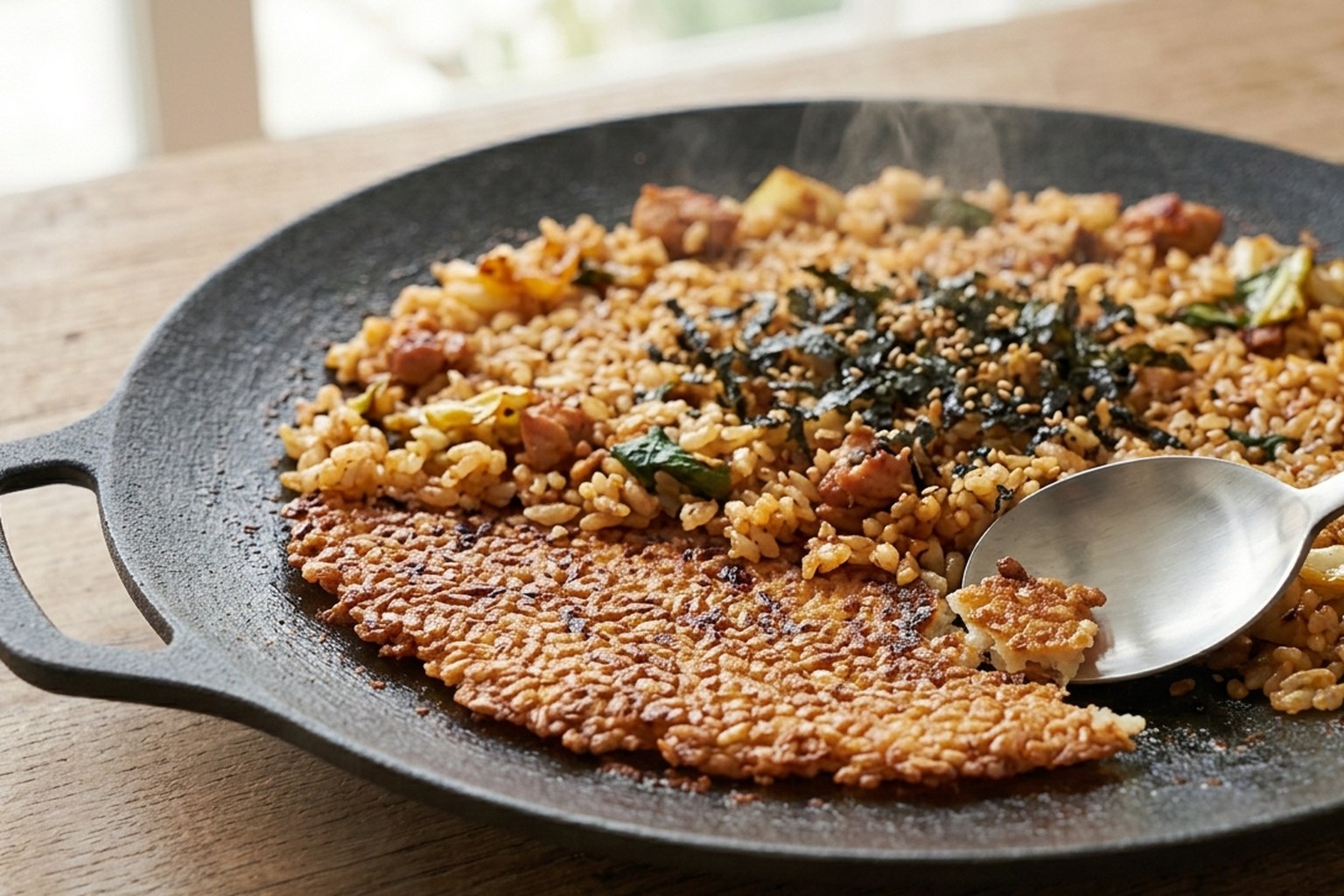
At home, leave roughly a fifth of the food in the pan. Add cold cooked rice — day-old rice, not fresh, which is too wet — with a tablespoon of sesame oil and a handful of crumbled roasted seaweed. Press it into a flat layer and leave it alone for two or three minutes over medium heat.
The crust at the bottom is the goal. Resist stirring.
Serving
Dakgalbi is eaten straight from the pan at the table, wrapped in lettuce or perilla leaves if you want to stretch it. Pickled radish and cold broth are the standard sides, and both exist to reset your mouth between bites of a dish that gets progressively hotter as it reduces.
Cooking Korean food at home and not sure what to buy first? K-Pantry walks you through Korean ingredients one at a time — what they taste like, what to substitute, and what to skip until later.