Korean restaurants abroad mostly serve a Seoul-shaped menu. Inside Korea, the food changes noticeably every couple of hours by train — different chili levels, different fermentation, different fish. This is a guide to what is actually regional and where to start.
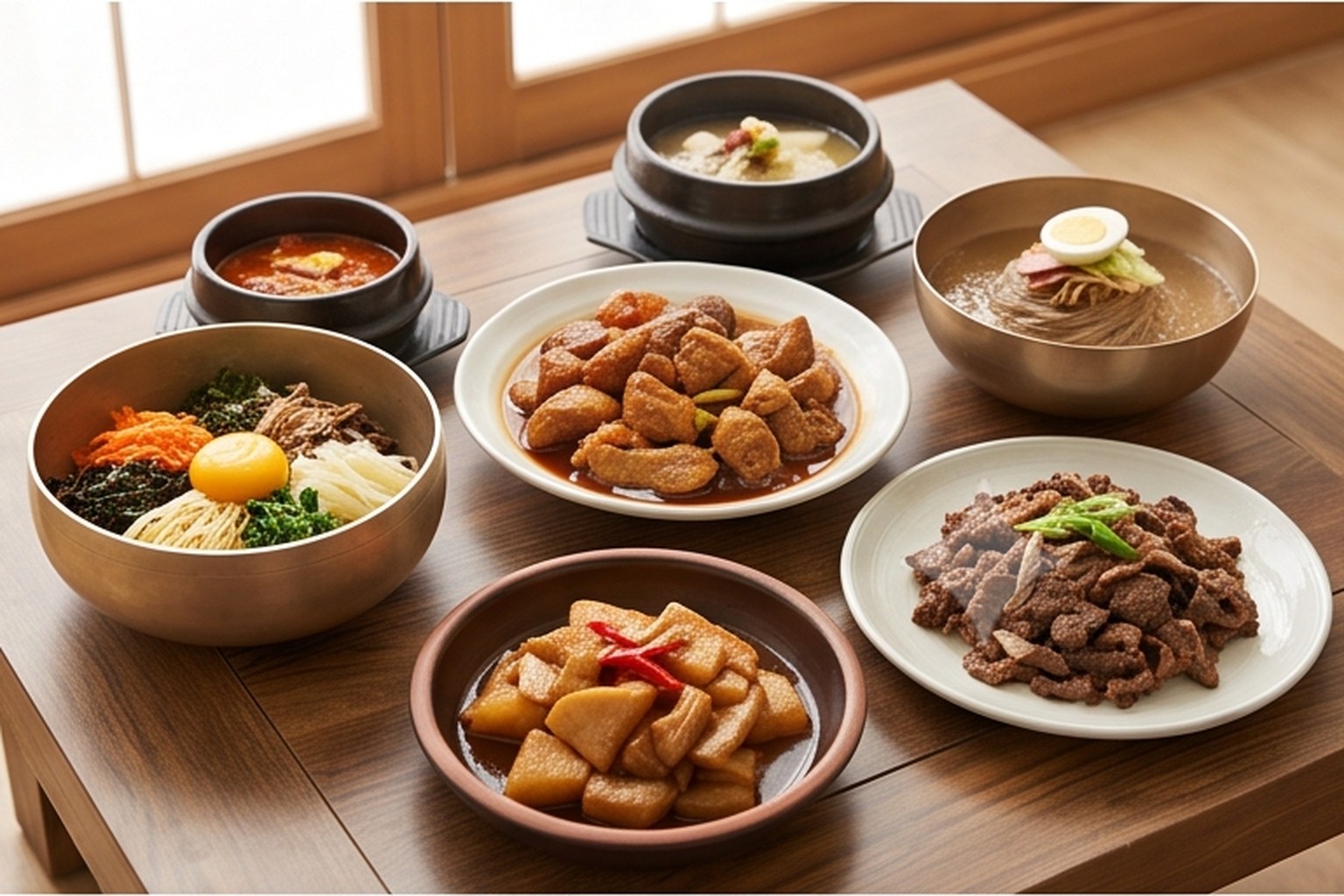
The map
| Region | The dish | What makes it local |
|---|---|---|
| Jeonju (Jeolla) | Bibimbap | Rice cooked in beef broth, raw beef, yellow mung bean jelly |
| Andong (Gyeongsang) | Jjimdak | Soy-based, not chili-based, with glass noodles |
| Andong (Gyeongsang) | Salted mackerel | Inland city, so the fish arrived salted |
| Busan (Gyeongsang) | Milmyeon | Wheat noodles born from wartime flour aid |
| Chuncheon (Gangwon) | Dakgalbi | Cooked on a wide flat griddle at the table |
| Jeju | Black pork | Native breed, skin on, anchovy dipping sauce |
| Jeju | Hairtail | Caught local, cooked fresh rather than salted |
| Gyeongju | Ssambap | Old capital, so a full traditional table |
| Everywhere | Kimchi | Saltier and redder the further south you go |
| Everywhere | Sundae | The dipping sauce changes by province |
The pattern behind the map
Three forces explain most of it.
Climate. Warm southern winters meant food had to be salted and spiced hard to survive. Cold northern winters did the preserving, so northern food is milder and wetter. This single fact explains regional kimchi, salted mackerel, and why Gyeongsang food startles people who learned Korean cooking in Seoul.
Distance from the sea. Coastal regions eat fish fresh. Inland regions ate it salted or not at all, and substituted beef and fermented paste for the depth that seafood would have provided.
History, recently. Some of the most famous regional dishes are not old. Milmyeon comes out of the Korean War. Dakgalbi and jjimdak spread nationwide in the 1980s and 1990s. Regional does not automatically mean ancient.
If you are traveling
A practical route that covers the most ground: Seoul → Jeonju → Busan → Jeju. Jeonju gives you the Jeolla table, Busan gives you cold noodles and the Gyeongsang chili level, Jeju gives you an island cuisine that barely overlaps with the mainland.
Chuncheon is a day trip from Seoul. Andong and Gyeongju sit together and are worth pairing if you have three extra days.
If you are cooking at home
Ranked by how well each survives a home kitchen:
Straightforward — Jorim, ssambap. Both are assembly plus a simple sauce, and neither needs special equipment.
Doable with adjustments — Dakgalbi needs your widest pan and cooking in stages. Jjimdak is genuinely easy once you stop trying to thicken the sauce.
Partial at best — Jeonju bibimbap without the mung bean jelly is still good. Milmyeon depends on a broth recipe shops keep secret.
Buy, don't make — Sundae and kimchi, at least the first few times. Both reward starting with a good store-bought version and learning what you want to change.
Where to start
If you are cooking one thing this week, make jjimdak. It uses ingredients you can find anywhere, it forgives mistakes, and it tastes distinctly regional rather than generically Korean — which is the whole point of eating regionally in the first place.
Cooking Korean food at home and not sure what to buy first? K-Pantry walks you through Korean ingredients one at a time — what they taste like, what to substitute, and what to skip until later.