Order cold noodles in Busan and you will often get milmyeon rather than naengmyeon. The bowl looks nearly identical — icy broth, sliced cucumber, half a boiled egg, a smear of chili paste. The noodle underneath is a different grain, and it changes the whole thing.
Where milmyeon came from
Naengmyeon is a northern dish, built on buckwheat. During the Korean War, refugees from the north settled in and around Busan and wanted the cold noodles they had eaten at home. Buckwheat was scarce. Wheat flour, supplied heavily as aid, was not.
Milmyeon is what happened when cooks made naengmyeon out of what was available. The name is literal: mil is wheat, myeon is noodle. It stayed in Busan and became a regional dish in its own right rather than a substitute.
The noodle is the whole difference
| Naengmyeon | Milmyeon | |
|---|---|---|
| Main flour | Buckwheat, with starch | Wheat, with starch |
| Color | Grey-brown, translucent | Pale, closer to beige |
| Texture | Firm, snaps when bitten | Springy, stretches before it breaks |
| Bite through | Cuts cleanly | Needs a bit more chew |
| Flavor of noodle itself | Nutty, distinct | Mild, mostly neutral |
| Scissors at the table | Usually offered | Usually offered |
Buckwheat noodles resist. That firm snap is why naengmyeon comes with scissors and why some people find the texture strange the first time. Wheat noodles stretch instead — softer, bouncier, more familiar if you have eaten a lot of ramen or udon.
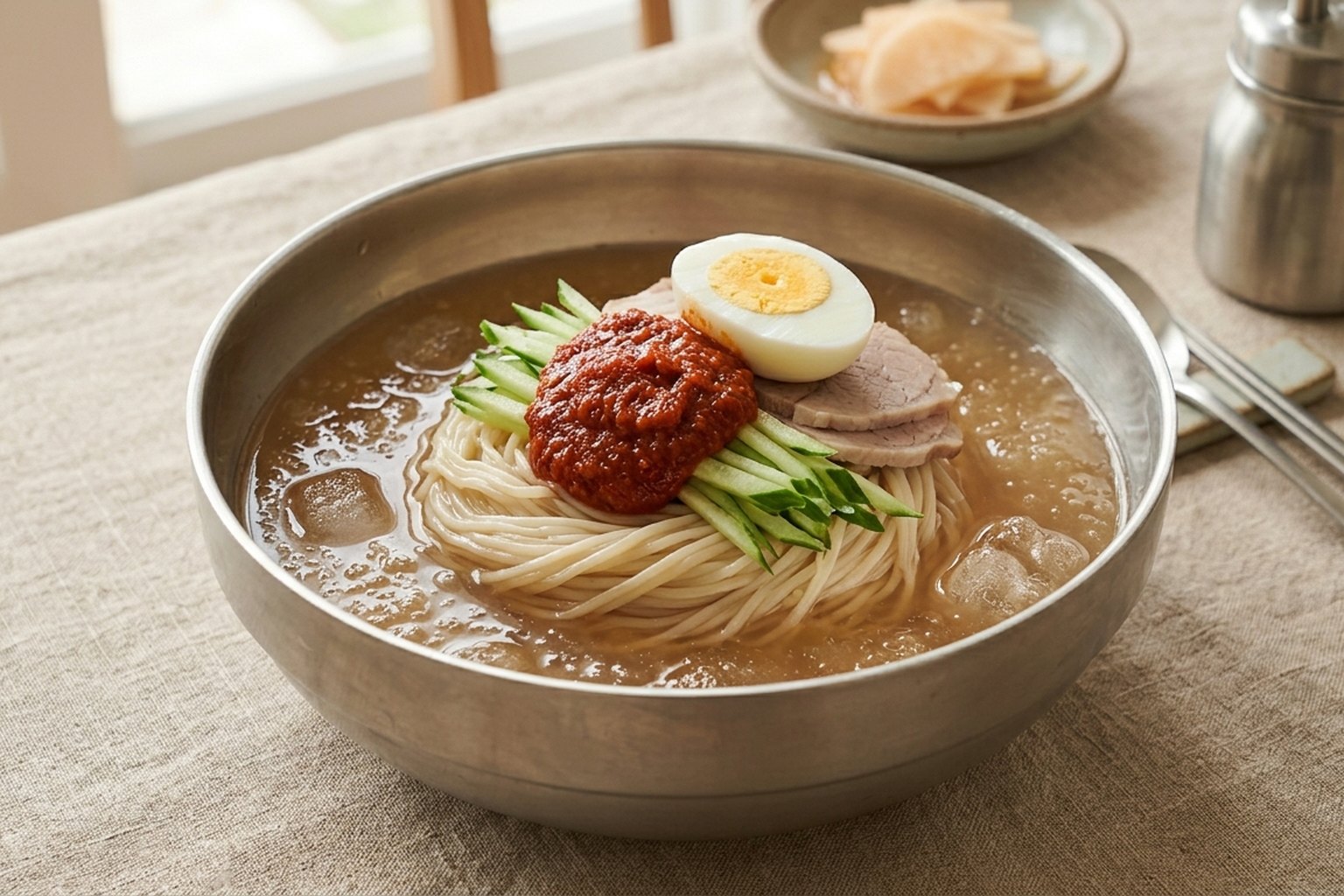
Because the milmyeon noodle tastes of less on its own, the broth and the sauce carry more of the bowl.
The broth is usually sweeter
Naengmyeon broth is traditionally beef, sometimes with dongchimi radish water, and it leans clean and tart. Milmyeon broth in Busan is typically beef or pork with a noticeable addition: herbs and spices steeped into it — cinnamon and licorice root appear in many shop recipes — plus more sugar.
The result is rounder and sweeter, with a warm spiced edge you would not expect in a cold noodle. Shops guard their exact blend, and locals pick a favorite milmyeon place largely on broth rather than noodle.
Mul and bibim apply to both
Both dishes split into two forms, and the labels work the same way.
Mul means water: the noodles sit in cold broth, sometimes with slush ice. Bibim means mixed: no broth, a heap of chili sauce, and you stir it together yourself. A common order for two people is one of each, so you can alternate.
If you are trying milmyeon for the first time, mul-milmyeon shows you what makes it regional. Bibim buries the noodle under sauce.
How to tell them apart in the bowl
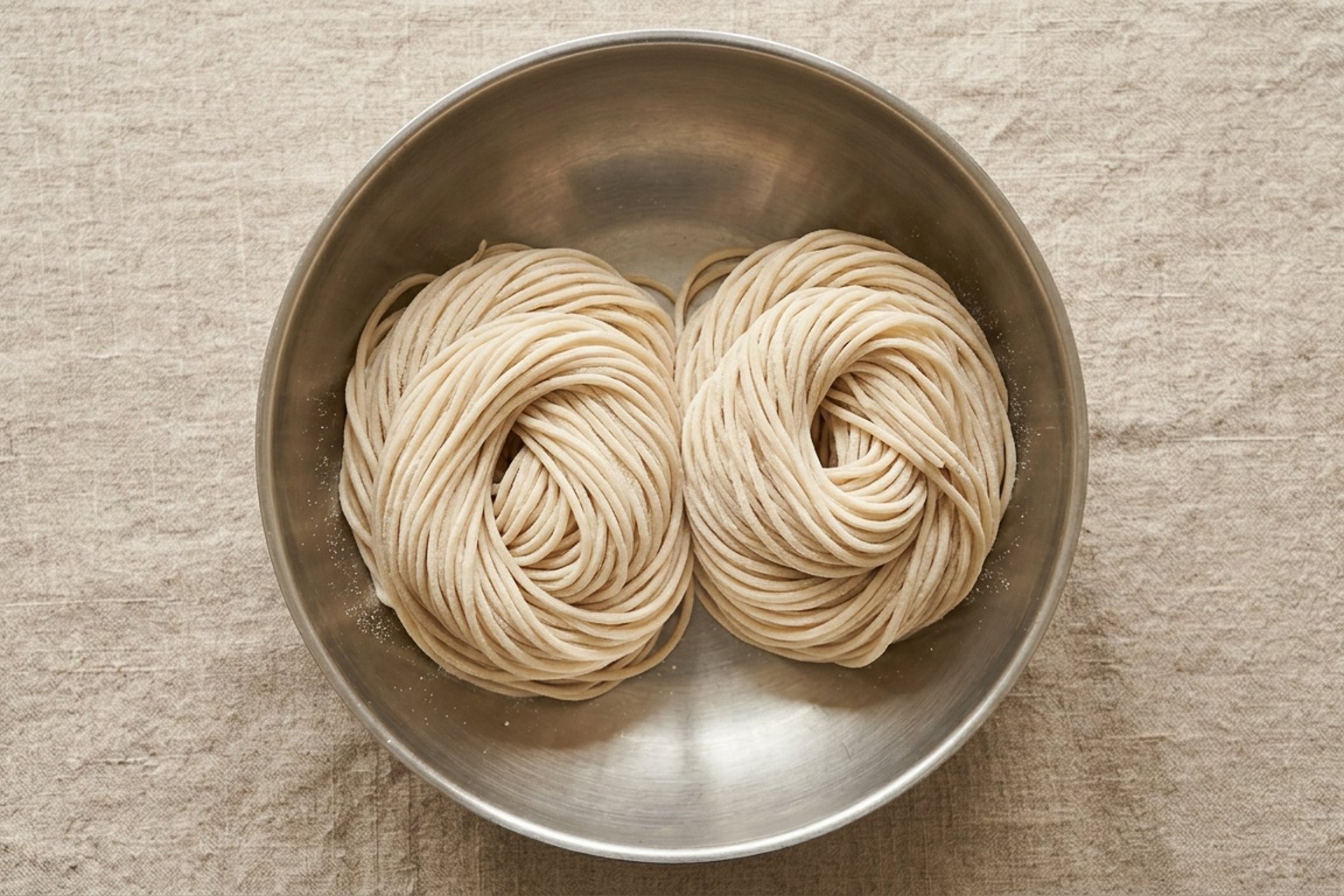
Lift a strand. A grey, slightly rough noodle that hangs straight is buckwheat. A pale, glossy noodle that curls and springs back is wheat. If you are still unsure, bite it — buckwheat breaks, wheat pulls.
Buying it outside Korea
Dried and refrigerated milmyeon kits exist at larger Korean groceries, usually labeled in Korean only. Look for 밀면 on the package; naengmyeon kits will say 냉면 and are far more common.
If you can only find naengmyeon kits, note that many of them are already mostly wheat and starch with a small percentage of buckwheat, especially the cheap ones. Check the ingredient list. A kit that lists wheat first is closer to milmyeon than to the buckwheat noodle it claims to be, which is worth knowing before you decide the texture disappointed you.
Cooking Korean food at home and not sure what to buy first? K-Pantry walks you through Korean ingredients one at a time — what they taste like, what to substitute, and what to skip until later.