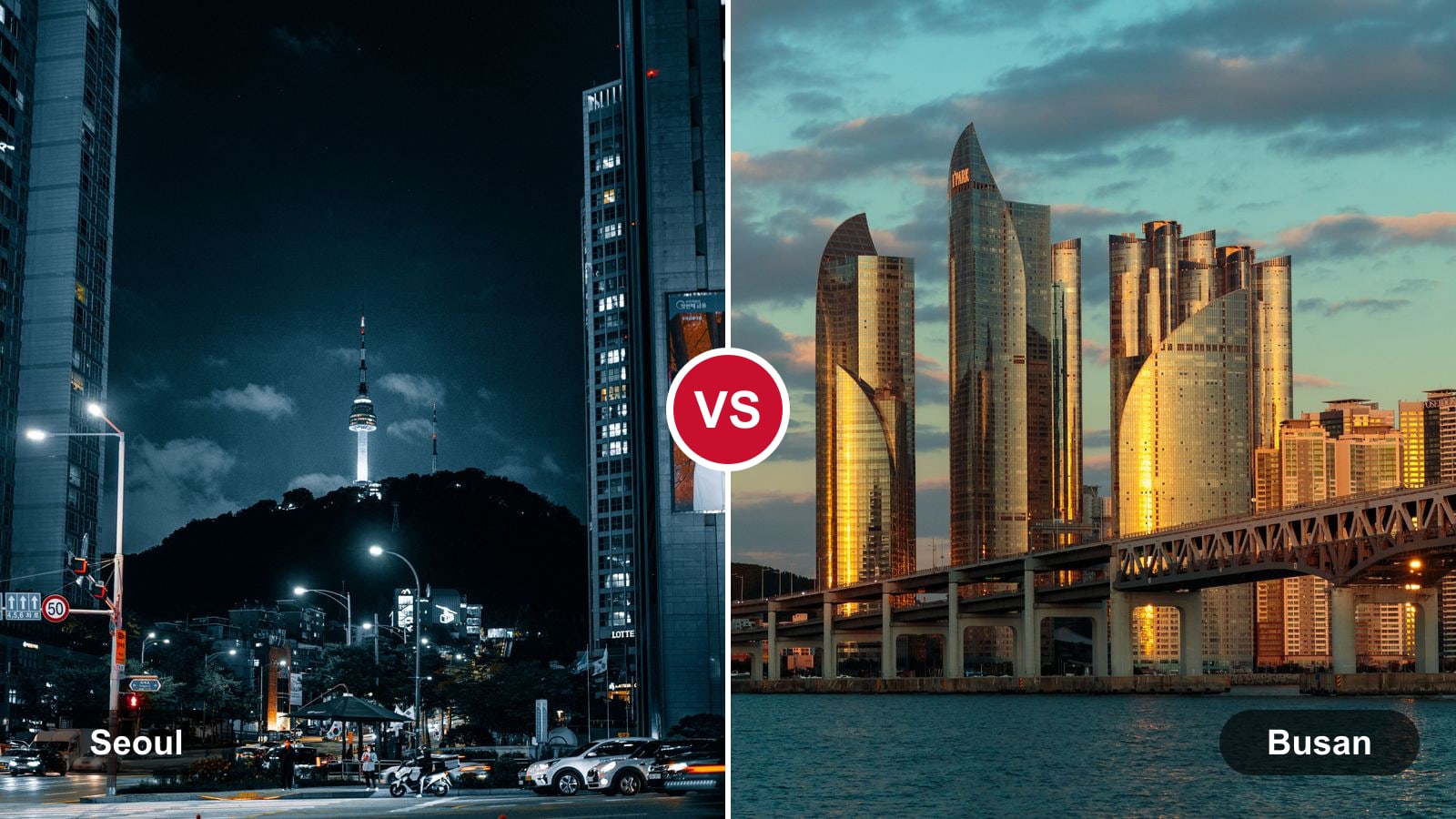
First-time visitors seeking a fast-paced, high-tech metropolis filled with imperial palaces, endless shopping districts, and 24-hour urban life should choose Seoul. Those prioritizing coastal views, a laid-back maritime culture, sandy beaches, and fresh seafood should head to Busan.
While both cities showcase South Korea's ultra-modern infrastructure, they offer fundamentally different cultural experiences, geographical layouts, and paces of life.
The Core Differences: Vibe, Geography, and Pace
Seoul is South Korea’s political, economic, and cultural heart. It is a landlocked, sprawling megacity bisected by the wide Han River and surrounded by granite mountains. The city operates on a high-energy, 24-hour cycle where ancient Joseon-era palaces sit directly adjacent to glass-and-steel skyscrapers. It is highly centralized, polished, and globally oriented, making it incredibly easy to navigate for non-Korean speakers.
Busan, located on the southeastern tip of the Korean Peninsula, is the country’s largest port city. Its geography is defined by a rugged coastline where steep mountains meet the East Sea. This topography forces the city to stretch out linearly along the coast rather than clustering in a single central core. The atmosphere in Busan is noticeably more relaxed, the climate is milder, and the locals speak with a distinct, expressive regional dialect (satoori).
"While Seoul represents the hyper-efficient, polished face of modern Korea, Busan offers a raw, maritime energy where the mountains meet the sea. To understand Korea, one must experience how these two urban giants contrast."
Cost, Accommodation, and Transit Comparison
Navigating and budgeting for these two cities requires understanding their distinct infrastructures. Seoul features one of the world's most dense and efficient subway networks, while Busan's transit relies more heavily on a combination of subways, coastal buses, and taxis due to its mountainous terrain.
| Feature | Seoul | Busan |
|---|---|---|
| Primary Vibe | Hyper-modern, historical, fast-paced | Coastal, laid-back, industrial-maritime |
| Top Attractions | Gyeongbokgung Palace, Bukchon Hanok Village, Myeongdong, N Seoul Tower | Haeundae Beach, Gamcheon Culture Village, Jagalchi Fish Market, Haedong Yonggungsa |
| Transit System | 20+ subway lines, highly dense bus network | 4 subway lines, extensive coastal bus routes |
| Average Daily Budget | Approx. 80,000–150,000 KRW (mid-range) | Approx. 60,000–120,000 KRW (mid-range) |
| Signature Culinary Style | Global dining, royal temple cuisine, diverse street food | Fresh seafood, pork broth soups, street-side wheat noodles |
| English Accessibility | Very high; English signage and English-speaking staff are standard | Moderate; highly accessible in tourist zones, less so in local markets |
Transit Differences
In Seoul, you can reach almost any destination via the subway system. Trains run frequently, and transfers between lines are seamless.
In Busan, the subway system connects major hubs like Busan Station, Seomyeon, and Haeundae, but reaching scenic coastal spots—such as Taejongdae or Haedong Yonggungsa Temple—frequently requires transferring to a local bus or taking a taxi. Because Busan's roads wind through steep mountain passes, bus rides here can be remarkably fast-paced and bumpy.
How to Plan Your Route: A Step-by-Step Transition Guide
For many first-time visitors, the ideal trip does not require choosing one city over the other, but rather split-booking both. High-speed rail makes traveling between Seoul and Busan remarkably simple.
Step 1: Secure Your KTX Tickets In Advance
The Korea Train Express (KTX) connects Seoul Station to Busan Station in approximately 2.5 hours. Tickets cost roughly 50,000 to 65,000 KRW one way. During Korean national holidays (such as Chuseok or Lunar New Year) and summer weekends, these trains sell out weeks in advance. Book your tickets up to 30 days ahead using the official Korail website or the "KorailTalk" app. Avoid third-party booking platforms that charge high convenience fees.
Step 2: Acquire and Charge a Unified Transit Card
Purchase a T-money card or a Cashbee card at any convenience store (CU, GS25, 7-Eleven) upon arrival at Incheon International Airport or Seoul Station. These cards work seamlessly on subways, public buses, and taxis in both Seoul and Busan. Load the card with cash (Korean Won) at any subway station kiosk or convenience store. Note that transit cards cannot be reloaded using foreign credit cards; you must use cash.
Step 3: Optimize Your Luggage Logistics
If you are traveling with heavy bags, utilize Korea's highly efficient luggage delivery services (such as ZimCarry) or use the lockers available inside major train stations. Alternatively, you can send large suitcases ahead to your Busan or Seoul hotel using domestic courier services (taekbae) arranged through your hotel front desk, allowing you to travel on the KTX with only a light daypack.
Key Attractions and Culinary Profiles
Seoul: Imperial History and Global Trends
Seoul's attractions focus heavily on historical preservation and modern lifestyle trends.
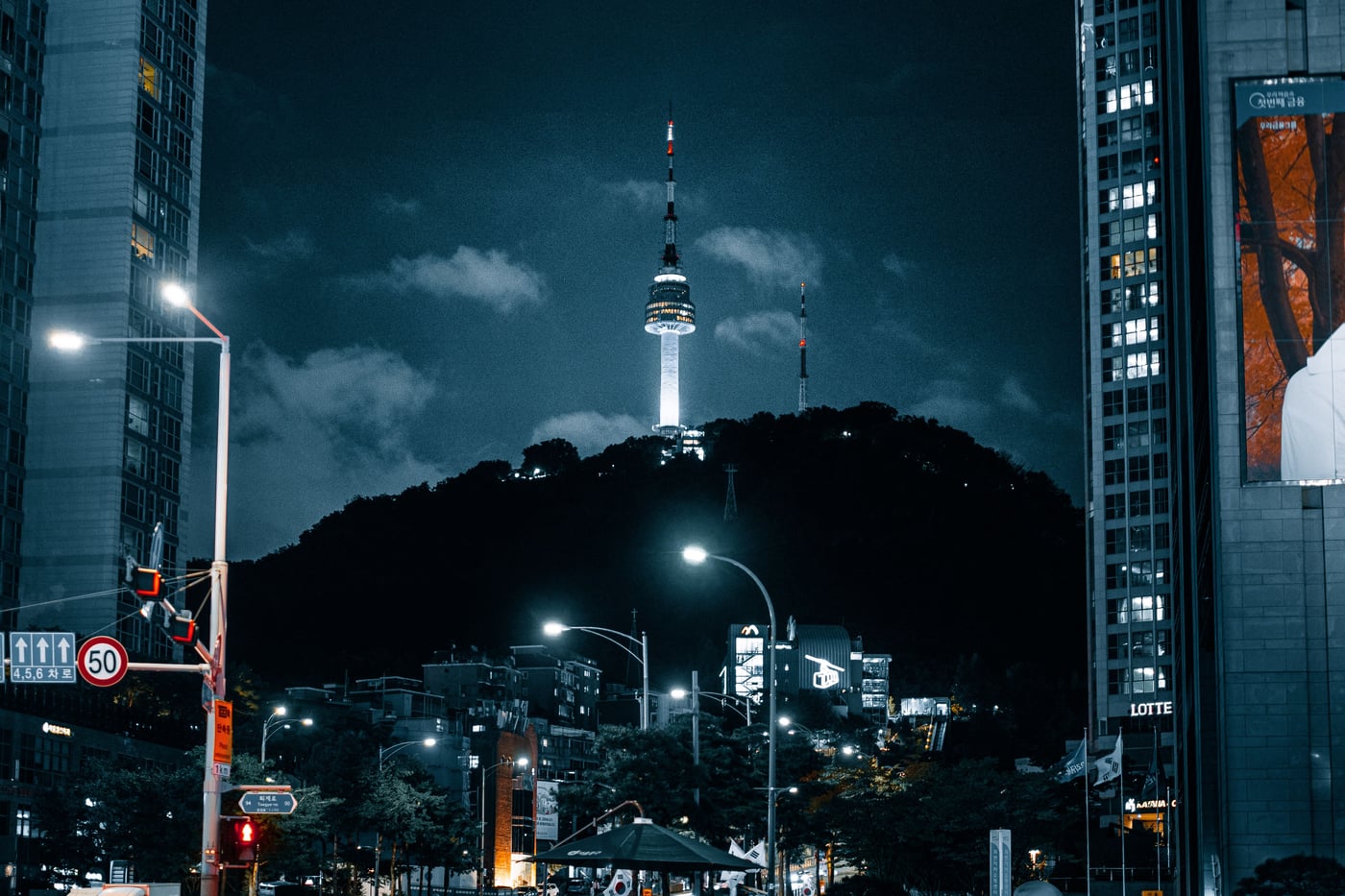
- The Historic Core: The northern side of the Han River (Gangbuk) houses the five grand palaces of the Joseon Dynasty. Gyeongbokgung and Changdeokgung (featuring the Secret Garden) are essential stops.
- The Trend Centers: Neighborhoods like Hongdae cater to youth culture, indie music, and affordable shopping, while Gangnam offers upscale boutiques, futuristic architecture, and high-end dining.
- The Food Scene: Seoul is the place to experience high-end Korean barbecue, traditional royal court cuisine (Hanjeongsik), and diverse international food. Gwangjang Market is the premier destination for classic street foods like mungbean pancakes (bindaetteok) and hand-cut noodles (kalguksu).
Busan: Ocean Temples and Seafood Markets
Busan’s appeal lies in its dramatic natural landscapes and distinct culinary traditions shaped by the Korean War.
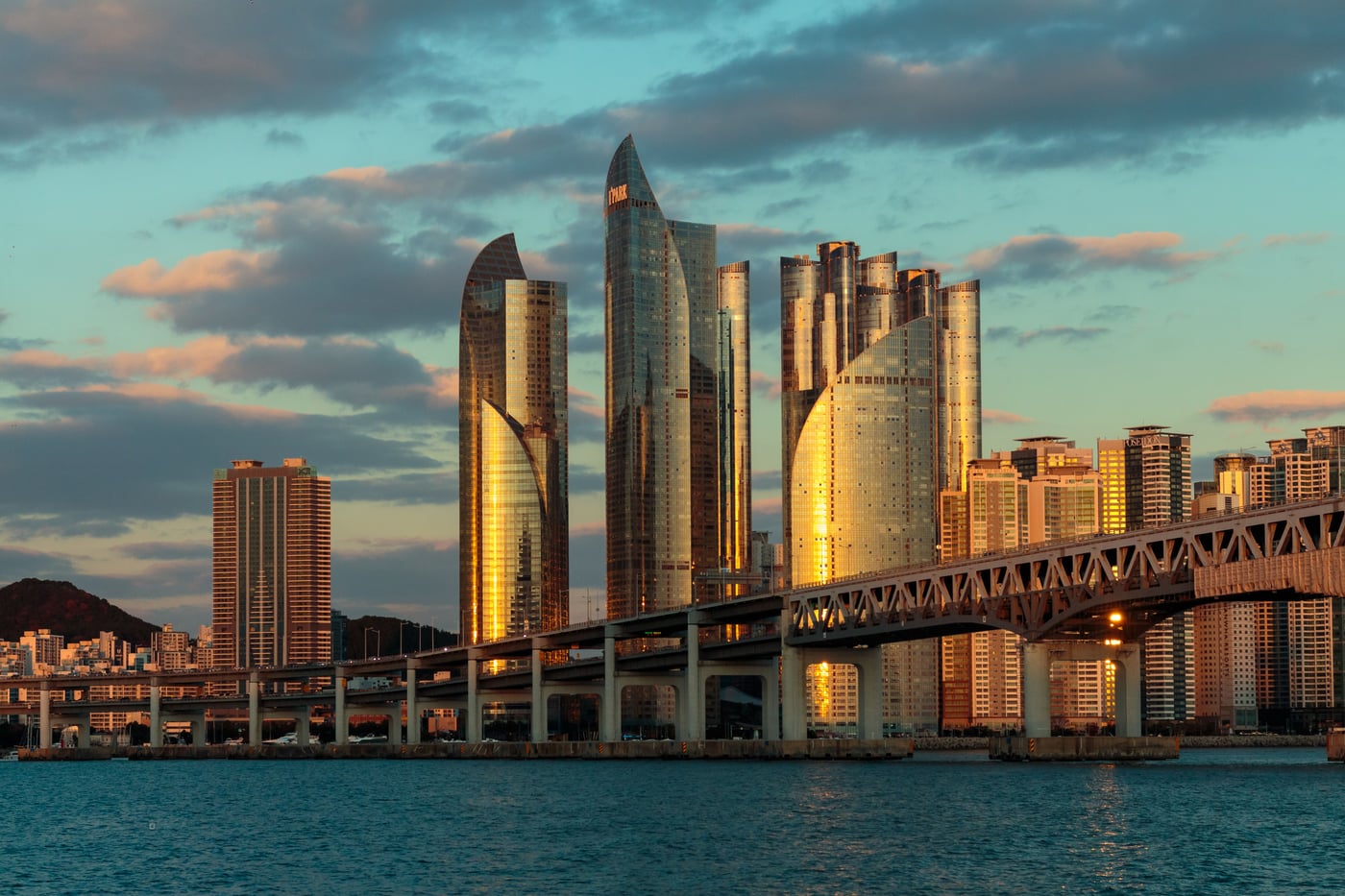
- The Coastal Wonders: Haedong Yonggungsa Temple is one of the few Buddhist temples in Korea built directly on the rocky coastline. Beaches like Haeundae and Gwangalli offer wide sandy shores bordered by modern high-rises and craft beer bars.
- The Historic Refuge: Gamcheon Culture Village, a hillside neighborhood of brightly painted houses, began as a refugee settlement during the Korean War and has transformed into an open-air art district.
- The Food Scene: Busan's cuisine is hearty and unpretentious. Jagalchi Market, the largest seafood market in Korea, allows you to select live fish on the first floor and have it prepared to eat immediately on the second floor.
Common Mistakes and Local Etiquette
To ensure a smooth trip, avoid these common pitfalls in both cities:
- Do not use Google Maps for walking directions: Google Maps does not function properly for pedestrian navigation in South Korea due to national security data laws. Download Naver Map or KakaoMap before arriving. Both apps offer highly accurate English interfaces, real-time bus arrival times, and subway exit details.
- Do not board buses with open drink containers: In both Seoul and Busan, bus drivers will refuse to let you board if you are holding an open cup of coffee, soda, or take-out food. Ensure all drinks are finished or sealed in a bag before boarding.
- Do not stand on the left side of escalators: In subway stations, stand on the right side of the escalator to allow commuters to walk past you on the left.
- Prepare for steep hills in Busan: Busan is incredibly hilly. When booking accommodation in older neighborhoods (like Choryang or parts of Yeongdo), check map street views. A hotel that appears close to a subway station on a flat map may actually require climbing a steep, 15-degree incline.
Essential Korean Phrases for Travelers
While English is widely spoken in tourist districts, using basic Korean phrases is highly appreciated, especially in Busan's traditional markets.
- 안녕하세요 (An-nyeong-ha-se-yo)
- Meaning: Hello (polite). Use this when entering shops, restaurants, and taxis.
- 감사합니다 (Gam-sa-ham-ni-da)
- Meaning: Thank you. Use this in all service interactions.
- 이거 얼마예요? (I-geo eol-ma-ye-yo?)
- Meaning: How much is this? Essential for shopping in traditional markets like Gwangjang or Jagalchi.
- 카드로 결제할게요 (Ka-deu-ro gyeol-je-hal-ge-yo)
- Meaning: I will pay by card. South Korea is highly cashless; credit and debit cards are accepted almost everywhere, including in taxis.
- 돼지국밥 주세요 (Dwae-ji-guk-bap ju-se-yo)
- Meaning: Please give me pork soup. (A must-use phrase when dining in Busan's local diners).