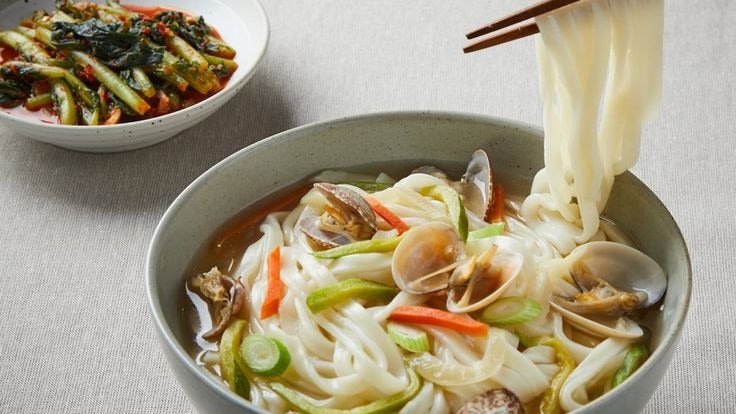
Kalguksu (칼국수) is a comforting Korean noodle soup made with hand-cut wheat noodles simmered right in the broth. Pick a broth from the table below, order with one simple sentence, and pair every bite with the shop's fresh kimchi.
Key Takeaways
- Price: around 8,000–14,000 KRW a bowl
- Not spicy by default: only the 얼큰 (eolkeun) version is hot
- The kimchi matters: locals judge a shop by its fresh geotjeori kimchi
- Avoid: adding salt or chili before tasting; the broth is already seasoned
What makes kalguksu different
The name means "knife noodles": kal (knife) plus guksu (noodles). The dough is rolled into a thin sheet, folded and sliced by hand. Because the noodles cook directly in the soup instead of being rinsed first, their flour coating thickens the broth into something silky.
Wheat was scarce in Korea for centuries. It became an everyday staple only after the Korean War, when flour arrived in large quantities, and kalguksu turned from a special-occasion dish into a cheap, filling lunch.
Watch: how knife-cut noodles are rolled, cut and served at a Gwangjang Market stall (video: Vibe Bern).
The six broths compared
| Menu (Korean / English) | Flavor | Broth base | Spice | Best for |
|---|---|---|---|---|
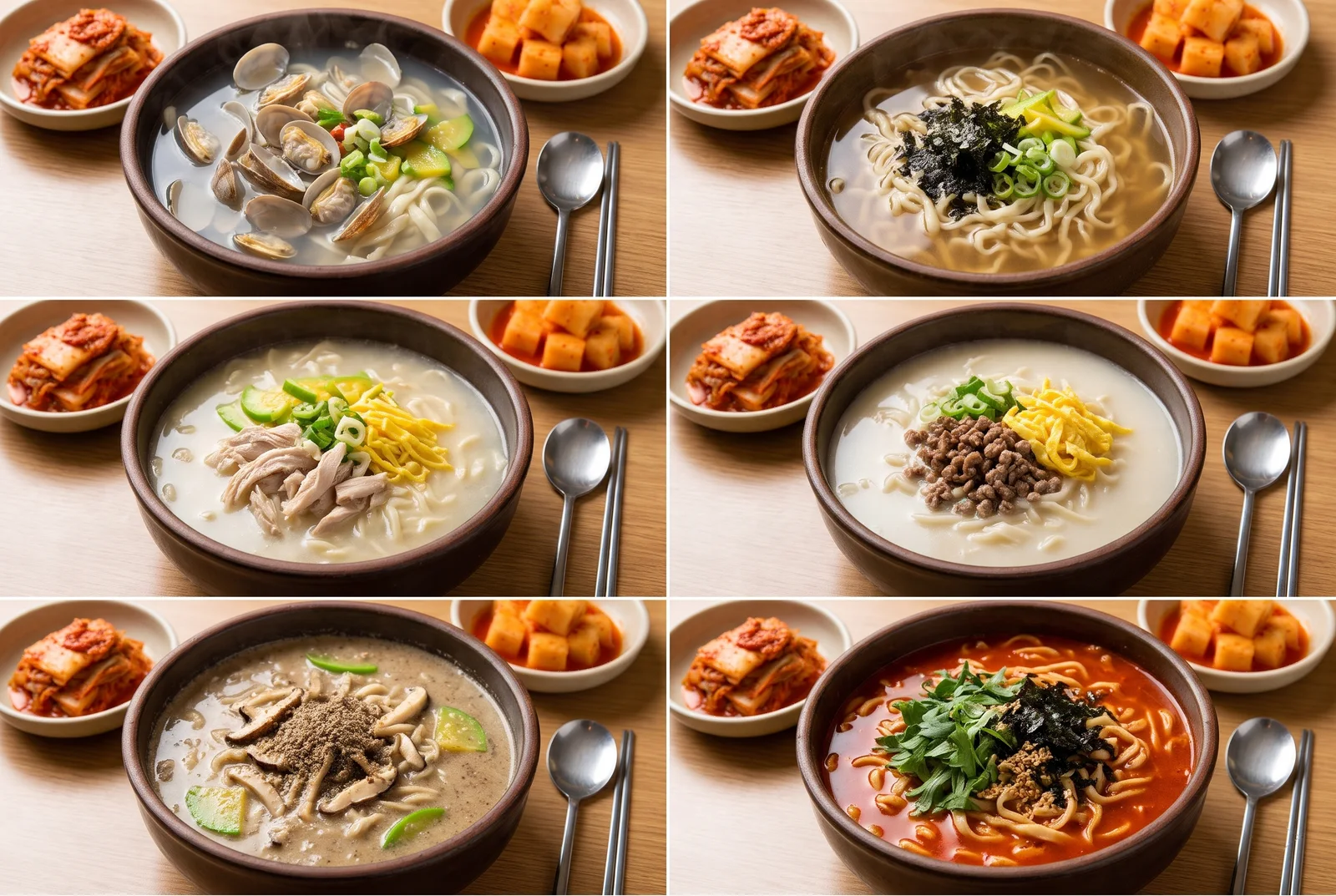
| 바지락칼국수 Bajirak (Manila clam) | Clean, briny, light | Clam and kelp | None | Seafood lovers who want a light, clear bowl |
| 멸치칼국수 Myeolchi (anchovy) | Savory, simple, everyday | Dried anchovy and kelp | None | First-timers and budget meals |
| 닭칼국수 Dak (chicken) | Rich, garlicky, comforting | Whole-chicken stock | None | Cold days and comfort-food cravings |
| 사골칼국수 Sagol (ox bone) | Milky, mild, rounded | Long-simmered ox bone | None | Mild palates, kids, Korean-soup beginners |
| 들깨칼국수 Deulkkae (perilla seed) | Thick, nutty, earthy | Anchovy or vegetable stock with ground perilla | None | Fans of creamy, nutty flavors |
| 얼큰칼국수 Eolkeun (spicy) | Bold, fiery, savory | Seafood or beef stock with chili | Hot | Spice lovers, cold weather, hangover mornings |
Any bowl can be made hotter at the table with a spoon of dadaegi (chili seasoning).
How to order and eat, step by step
| Step | What to do | Tip |
|---|---|---|
| 1. Order | Pick a broth from the wall menu or kiosk | For two or more people, clam kalguksu often comes in one shared pot |
| 2. Set up the kimchi | Take a little geotjeori from the table jar and snip it with the scissors | Take small amounts and go back for more |
| 3. Taste first | Try the broth before adding anything | Add dadaegi or chopped chili only if you want heat |
| 4. Finish the broth | Ask for a small bowl of rice (공깃밥, gonggibap) to mix into the leftover soup | Some shops give rice or extra noodles free |
저기요, 바지락칼국수 두 개 주세요.
Jeogiyo, bajirak-kalguksu du gae juseyo.
Excuse me, two clam kalguksu, please.
만두도 드릴까요?
Mandudo deurilkkayo?
Would you like dumplings too?
네, 만두 한 판 주세요.
Ne, mandu han pan juseyo.
Yes, one plate of dumplings, please.
김치 좀 더 주세요.
Gimchi jom deo juseyo.
Could we have a bit more kimchi?
Side dishes locals add
| Side dish | What it is | Rough price |
|---|---|---|
| 만두 Mandu | Large steamed dumplings with pork, glass noodles and chives | 6,000–9,000 KRW a plate |
| 해물파전 Haemul pajeon | Crispy seafood and green onion pancake, popular at clam kalguksu shops | 12,000–18,000 KRW |
| 보리밥 Boribap | A small bowl of barley rice some shops serve before the noodles | Often free |
Table etiquette
Do
- Use the self-service kimchi bar if there is one (look for 셀프, "self")
- Ladle shared pots into your own small bowl (앞접시, apjeopsi)
- Check the wall for 사리 리필 무료 (free noodle refills) before ordering extra
Don't
- Pile up kimchi you won't finish; staff make it fresh every day
- Season the broth before tasting it; clams add plenty of salt
- Eat straight from a shared pot with your own spoon
For more on eating out, see our guides to ordering at a Korean restaurant and Korean table etiquette.
Frequently Asked Questions
Is kalguksu spicy? Most versions, including clam, anchovy, chicken, ox bone and perilla, are not spicy at all. Only eolkeun kalguksu is chili-red, and you can ask for it less spicy. The table kimchi and dadaegi are hot, so add them gradually.
Can vegetarians eat kalguksu? It's difficult. Even vegetable-heavy bowls usually use anchovy or seafood stock. Ask 고기나 해산물 육수예요? (gogina haesanmul yuksuyeyo?, is the broth made with meat or seafood?), or look for a dedicated vegetarian restaurant.
What is the difference between kalguksu and sujebi? They use the same dough and broths. Kalguksu dough is cut into long noodles with a knife, while sujebi (수제비) is torn by hand into flat pieces. Many shops sell kaljebi (칼제비), a bowl with both.
Do I pay before or after eating? At most kalguksu shops you pay at the counter after eating. Places with a kiosk at the entrance are the exception: order and pay there first.