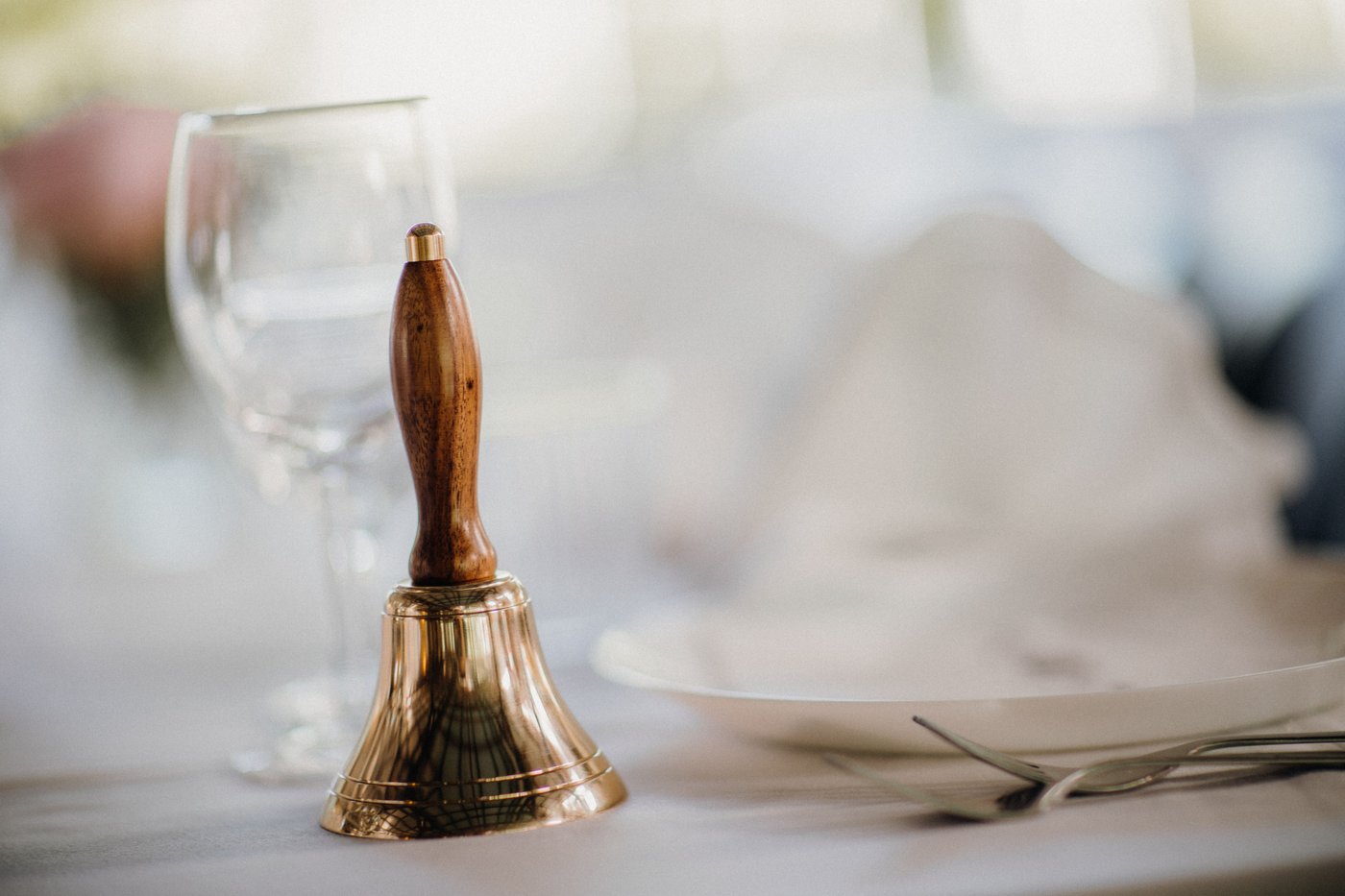
Waiting passively for eye contact from waitstaff in a Korean restaurant results in indefinite delays. Table service in South Korea relies entirely on customer-initiated signals: pressing wireless call buttons, verbal prompts, and accessing hidden table hardware independently.
The Active Summons Rule: Buttons and Verbal Cues
Unlike Western restaurants where dedicated servers periodically check on each table, Korean restaurant staff prioritize operational efficiency over constant table-side presence. Staff intentionally leave patrons alone until summoned, meaning no one approaches until a clear request is made.
Raising a hand silently is commonly interpreted as preparing to order rather than an active request for service. Always use the table button or a clear verbal prompt to initiate service.
- The Call Button (호출 벨): Embedded in the table corner, mounted on the wall, or built into digital ordering pads. Pressing it immediately sends your table number to the central digital display and the staff's wearable pagers.
- Verbal Calling ("Jeogiyo"): In traditional venues lacking electronic buttons, raise one hand and call out firmly: "Jeogiyo!" (Excuse me / Over here) or "Sajangnim!" (Owner/Boss).
- Tablet Menus (T-Order / V-Dispenser): Touchscreen terminals installed on tables handle browsing, custom modifications, extra side dish requests, and payment options directly.
Dining Flow Comparison: Western vs. Korean Casual Dining
| Operational Element | Standard Western Protocol | Korean Restaurant Protocol |
|---|---|---|
| Server Interaction | Assigned server checks in periodically | Staff respond strictly when summoned |
| Table Calling | Eye contact, patient hand raises | Wireless call buttons or verbal callout ("Jeogiyo") |
| Cutlery Access | Preset on table before seating | Self-retrieved from hidden side drawers |
| Water & Side Dishes | Poured and refilled by server | Initial serve by staff; self-refills at central bar |
| Settling the Bill | Check brought to the table with tipping | Take receipt clip to front counter; strictly zero tips |
3-Step Setup Routine Before Food Arrives
Execute these steps immediately upon seating to ensure a seamless meal.
- Step 1: Locate the Hidden Cutlery Drawer If chopsticks, spoons, and napkins are not sitting in containers on the table surface, check the edges of the table frame. Slide open the under-table drawer along the right or left rail to retrieve metal utensils, paper napkins, wet wipes, and bottle openers.
- Step 2: Check the "Self-Service" (셀프) Signs Look for signs reading "물은 셀프입니다" (Water is self-service) or central display counters marked "추가 반찬 셀프" (Additional side dishes self-service). If marked, retrieve water bottles, stainless steel cups, and banchan refills directly from refrigerators or central stations.
- Step 3: Carry the Bill Clip to the Register Staff slide an acrylic clipboard or paper slip onto your table corner after delivering food. Take this ticket directly to the exit register to pay when finished. Leaving payment on the dining table creates operational confusion, and tipping is neither accepted nor expected.