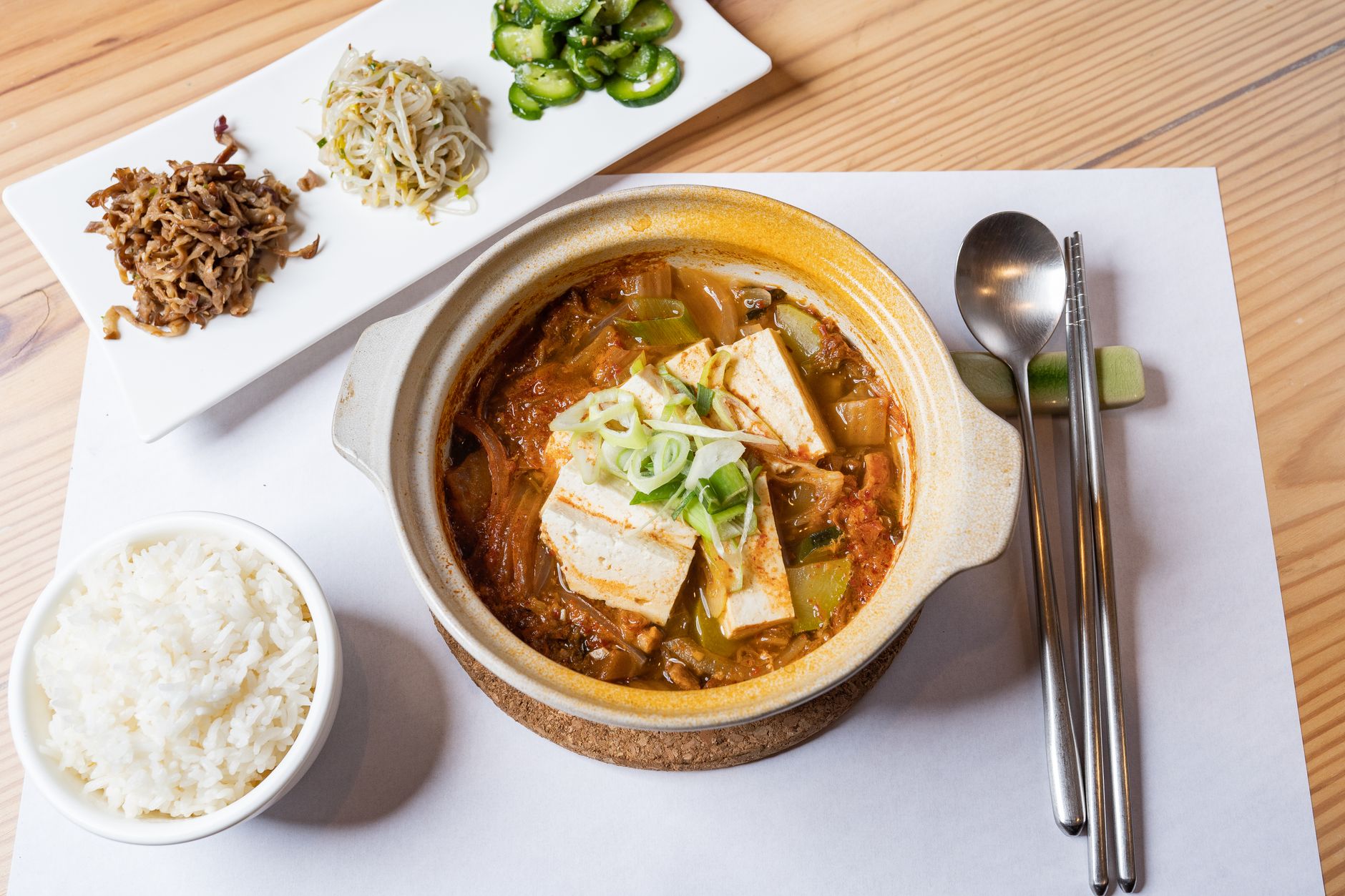
Gukbap (rice soup) is a robust, high-energy meal featuring hot, savory broth and distinct rice grains, ideal for quick fuel and hangover recovery. Juk (rice porridge) is a thick, slow-simmered dish designed for easy digestion, therapeutic recovery, or light, comforting dining. While both dishes rely on rice and broth as their structural foundation, they occupy entirely different spaces in Korean culinary culture, daily routines, and dietary health.
Origins and Cultural Roles of Korea's Rice Staples
To navigate a Korean menu effectively, you must understand the historical and culinary foundations of these two staple dishes. They represent two fundamentally different approaches to cooking grain in broth.
The term gukbap is a compound of guk (soup) and bap (cooked rice). Historically, gukbap was the ultimate fast food of the Joseon Dynasty. It was served at jumak (roadside taverns) to travelers, merchants, and laborers who required a quick, hot, and calorie-dense meal. In a traditional gukbap preparation, cooked rice is placed in a ceramic bowl, and boiling broth is poured over and drained out multiple times—a process called toryeom—to warm the rice through without overcooking it. Today, the dish is served boiling hot, offering an efficient way to consume protein, carbohydrates, and hot broth in a single sitting. It is highly associated with blue-collar labor, casual dining, and late-night drinking culture.
Juk is a traditional grain dish where rice is boiled with several times its volume of water or broth over low heat for an extended period. This slow-cooking process breaks down the starch, resulting in a thick, velvety texture that requires minimal chewing and is exceptionally easy on the stomach. Historically, juk served dual purposes. It was a luxury food for royalty—kings were often served a light juk early in the morning to stimulate the appetite—and a practical way to stretch scarce grain resources during times of food scarcity. In modern Korea, juk is the premier wellness food. It is the default meal for anyone recovering from illness, dental surgery, or digestive issues, but it has also evolved into a mainstream healthy dining option.
Textures, Flavors, and Key Varieties
The choice between gukbap and juk often comes down to your physical condition and the desired sensory experience. Gukbap offers intense, savory, and often spicy flavors with distinct textures. Juk offers a smooth, homogeneous texture with subtle, earthy, or savory notes.
| Attribute | Gukbap (Korean Rice Soup) | Juk (Korean Rice Porridge) |
|---|---|---|
| Primary Texture | Liquid broth with distinct, firm grains of rice | Thick, creamy, and semi-liquid; grains are fully broken down |
| Common Proteins | Pork slices, beef brisket, blood sausage, ox tripe | Abalone, minced beef, chicken breast, oysters |
| Spiciness | Highly customizable; ranges from mild to very spicy | Generally mild and savory; sweet options also exist |
| Key Side Dishes | Kkakdugi (radish kimchi), fresh green chilies, raw onions | Jangjorim (salted beef), salted fish tripe, water kimchi |
| Average Price Range | Approx. 9,000 to 13,000 KRW | Approx. 10,000 to 16,000 KRW |
Key Gukbap Varieties
- Dwaeji Gukbap (Pork Rice Soup): A specialty of Busan, featuring a rich, milky broth made from boiling pork bones for hours, loaded with tender slices of pork belly and shoulder.
- Sundaeguk (Blood Sausage Soup): A hearty soup containing slices of sundae (Korean blood sausage) and various pork offal, seasoned with wild sesame powder.
- Kongnamul Gukbap (Bean Sprout Rice Soup): A light, clear soup from Jeonju made with anchovy broth and a mountain of yellow bean sprouts. It is highly regarded as a hangover cure due to the high concentration of asparagine in the sprouts.
Key Juk Varieties
- Jeonbok-juk (Abalone Porridge): Often called the "king of juk," this dish uses minced abalone. High-end versions include the abalone entrails, which turn the porridge a rich, earthy green color.
- Sogogi Beoseot Juk (Beef and Mushroom Porridge): A highly approachable, savory option made with finely minced beef and shiitake mushrooms simmered in a light soy-based broth.
- Hobak-juk (Pumpkin Porridge): A sweet, vibrant orange porridge made from steamed pumpkin and glutinous rice flour, often containing small rice cake balls. It is eaten as a snack or dessert.
How to Order and Customize Gukbap
Gukbap is rarely eaten exactly as it is served. It is designed to be a canvas for personal seasoning. Follow these steps to customize your bowl like a local.
- Choose Your Rice Style: When ordering, you may be asked if you want ttaro-gukbap (separately served rice and soup) or regular gukbap (rice already submerged). If you prefer your rice grains to stay firm, order ttaro-gukbap (따로국밥).
- Season the Broth: Your gukbap will arrive boiling hot and largely unseasoned. Do not use plain table salt immediately. Add saeujeot (tiny fermented salted shrimp) for umami, dadegi (spicy red pepper paste) for heat, and deolkkae-garu (wild sesame powder) for a nutty finish.
- Add Chives: Dump a generous handful of fresh bu-chu (chives) directly into the hot soup; they will wilt instantly and add a sharp, fresh bite.
- Eat the Meat First: Use your chopsticks to dip the meat slices into the provided sauce. Once you have eaten half the meat, dump your rice into the broth, stir well, and eat with your spoon.
How to Order and Customize Juk
Juk is served in large portions at specialty restaurants like Bonjuk, the most common juk chain in Korea. Because it is thick and retains heat exceptionally well, you must handle it differently than standard soups.
- Customize the Grind: If you are eating at a modern juk chain, you can ask the staff to grind the rice grains finer (goun-juk) if you prefer a smoother texture.
- Request Portioning: Portions are often very large. You can ask the staff to split the meal into two or three smaller containers (so-bun) at the time of ordering.
- Use the Side Bowl: Never eat directly from the main, boiling-hot serving bowl. Use the provided small ladle (gukja) to scoop a manageable portion into the small side bowl (ap-jeopshi). This prevents the porridge from cooling too slowly and keeps your saliva from thinning the starch.
- Pair with Sides: Consume the provided jangjorim (shredded beef) on top of your spoonful of porridge and sip the dongchimi (cold radish water kimchi) between bites to cleanse your palate.
Cultural Etiquette and Common Mistakes
Understanding the social context of these dishes will help you avoid awkward dining situations.
"Gukbap represents the fast-paced, communal energy of Korean daily life—it is loud, steaming, and intensely savory. Juk, conversely, represents quiet care, recovery, and mindful eating. To understand both is to understand the dual speeds of Korean culture."
- Double-dipping: If sharing a bowl of juk with companions, never dip your personal spoon directly into the main bowl. Always use the serving ladle.
- Ignoring the side dishes: The kkakdugi (radish kimchi) served at gukbap restaurants is specifically fermented to be sweeter and sourer than standard cabbage kimchi. It is designed to cut through the heavy, fatty broth. Drink a spoonful of soup, eat a piece of meat, and follow it with a crunchy piece of radish.
- Over-salting: Always taste the broth of your gukbap before adding salt or shrimp. Some shops pre-season their broth, and it can easily become too salty if you add extra seasoning prematurely.
Essential Korean Phrases
Use these phrases to customize your dining experience at local establishments:
- "따로국밥으로 주세요." (Ttaro-gukbap-euro juseyo.) — "Please serve the rice and soup in separate bowls."
- "다대기는 빼주세요." (Dadegi-neun pae-juseyo.) — "Please omit the spicy red pepper paste."
- "남은 것은 포장해 주세요." (Nameun geoseun pojang-hae juseyo.) — "Please pack the leftovers to go."
- "두 개로 나눠서 포장해 주세요." (Du gaero nanwoseo pojang-hae juseyo.) — "Please divide it into two containers for takeout."