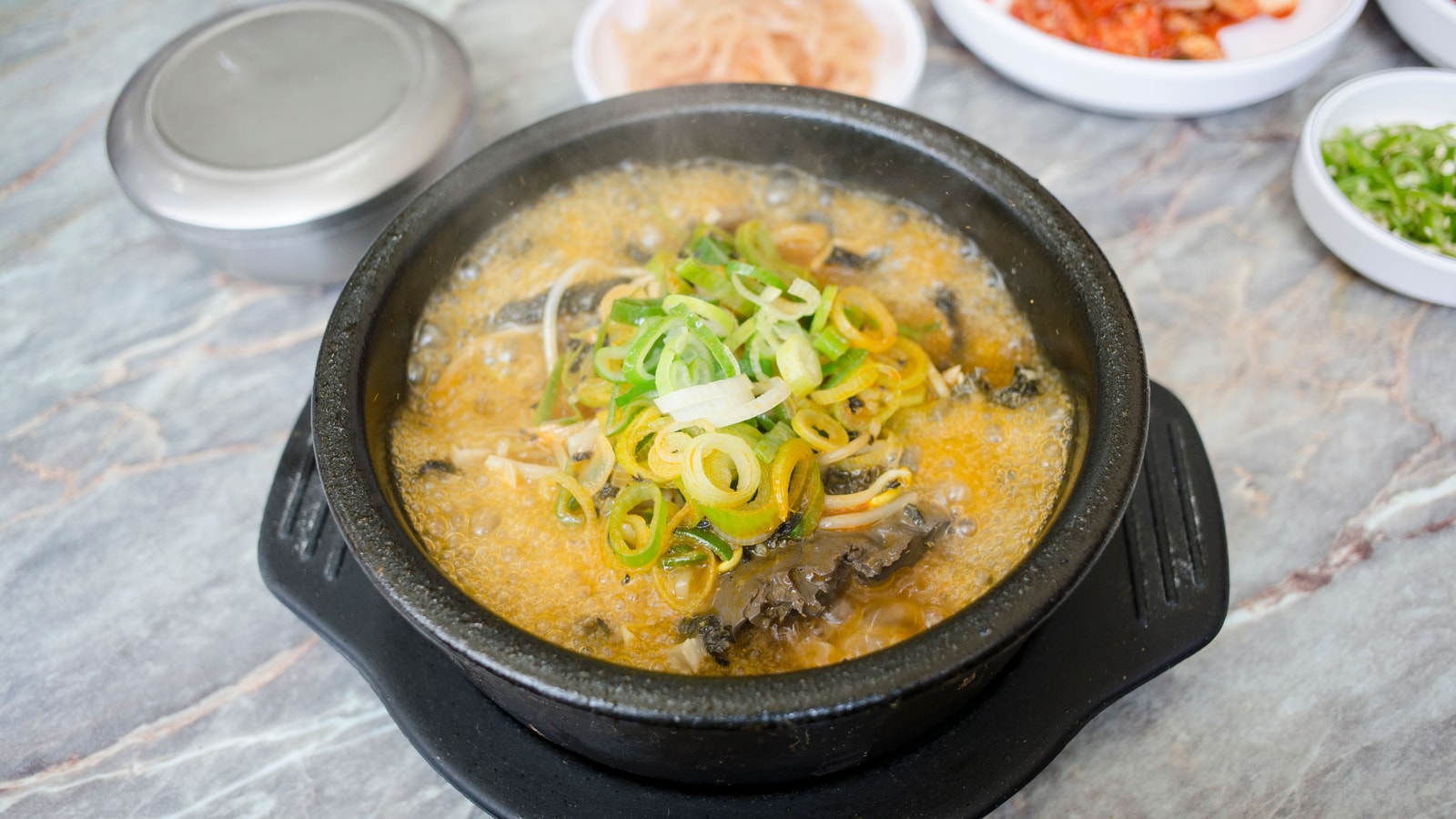
Haejangguk (해장국) means "soup to cure a hangover", and Koreans take it seriously: restaurants open early in the morning to serve warm, brothy soups after a night out. Pick a mild bean sprout or pollack soup for a gentle morning, or a richer haejangguk if you're hungry.
Key Takeaways
- What it is: a family of warm soups eaten after drinking
- When: late at night or early the next morning; many shops open around the clock
- Price: around 9,000–12,000 KRW with rice
- Avoid: the spiciest versions if your stomach is sensitive the morning after
Hangover soups compared
| Soup | Korean | Main ingredients | Taste | Spice |
|---|---|---|---|---|
| Haejangguk | 해장국 | Napa cabbage, beef broth, often congealed ox blood | Hearty, deep | Mild to medium |
| Bean sprout soup | 콩나물국밥 | Soybean sprouts, rice, sometimes a raw egg | Clean, refreshing | Mild |
| Dried pollack soup | 북엇국 | Dried pollack, egg, radish | Light, savory | None |
| Pork bone soup | 뼈해장국 | Pork spine, potato, cabbage | Rich, meaty | Medium |
| Seolleongtang | 설렁탕 | Beef bone broth, noodles | Milky, mild | None |
Bean sprout soup and dried pollack soup are the gentlest choices; pork bone soup is the heartiest.
Why soup after drinking?
Warm, salty broth helps rehydrate, and many ingredients in hangover soups, such as bean sprouts and dried pollack, are traditionally believed to ease hangovers. Whatever the science, a hot bowl of soup with rice is how many Koreans start the morning after a work dinner.
Famous hangover soup areas
Some neighborhoods are famous for their hangover soup restaurants, many of them decades old. Cheongjin-dong near Jongno in Seoul has long-running haejangguk restaurants that open early for office workers. Jeonju is known nationwide for kongnamul gukbap (bean sprout soup with rice), often served with a soft-boiled egg and seaweed on the side. Busan has pork-based soups, and coastal towns serve fish-based hangover soups.
Convenience stores also sell hangover drinks (숙취해소제), small bottles or jellies that many Koreans drink before or after a night out. They're easy to find near the counter, often in the refrigerator section.
- Morning after a work dinner: bean sprout soup or dried pollack soup are popular, gentle choices
- Late night: 24-hour gukbap and haejangguk shops near nightlife areas fill up after midnight
- At home: instant ramyeon is the unofficial hangover food for many young Koreans
Ordering
Hangover soup restaurants are simple, fast and cheap, usually with a short menu on the wall and kimchi and radish kimchi on every table. Many are open early, late or around the clock, especially near nightlife areas and office districts.
해장국 하나 주세요. 덜 맵게요.
Haejangguk hana juseyo. Deol maepgeyo.
One haejangguk, please. Less spicy.
선지 넣어 드릴까요?
Seonji neoeo deurilkkayo?
Would you like blood cubes in it?
아니요, 빼 주세요.
Aniyo, ppae juseyo.
No, please leave them out.
네, 금방 나와요.
Ne, geumbang nawayo.
Sure, it'll be right out.
Seonji (선지) is congealed ox blood, common in haejangguk. It's mild and tender, but you can ask to leave it out. Most bowls come with rice on the side, which you can add to the soup.
Do
- Choose bean sprout or pollack soup for a gentle morning
- Drink water along with your soup
- Look for 24-hour soup restaurants near nightlife areas
- Ask for seonji to be left out if you'd prefer
Don't
- Order the spiciest bowl if your stomach is unsettled
- Skip the rice; soup with rice is the classic combination
- Assume all hangover soups are the same; flavors vary a lot
- Rely on soup alone; rest and water matter too
More soups: seolleongtang, gukbap and juk, and soju and Korean alcohol.
Frequently Asked Questions
What is haejangguk? A Korean hangover soup, most often a hearty cabbage and beef broth soup, sometimes with ox blood.
What's the mildest hangover soup? Bean sprout soup with rice or dried pollack soup. Both are light and not spicy.
When do Koreans eat hangover soup? Late at night after drinking or early the next morning. Many restaurants open early or around the clock.
What is seonji? Congealed ox blood, a common ingredient in haejangguk. You can ask to leave it out.