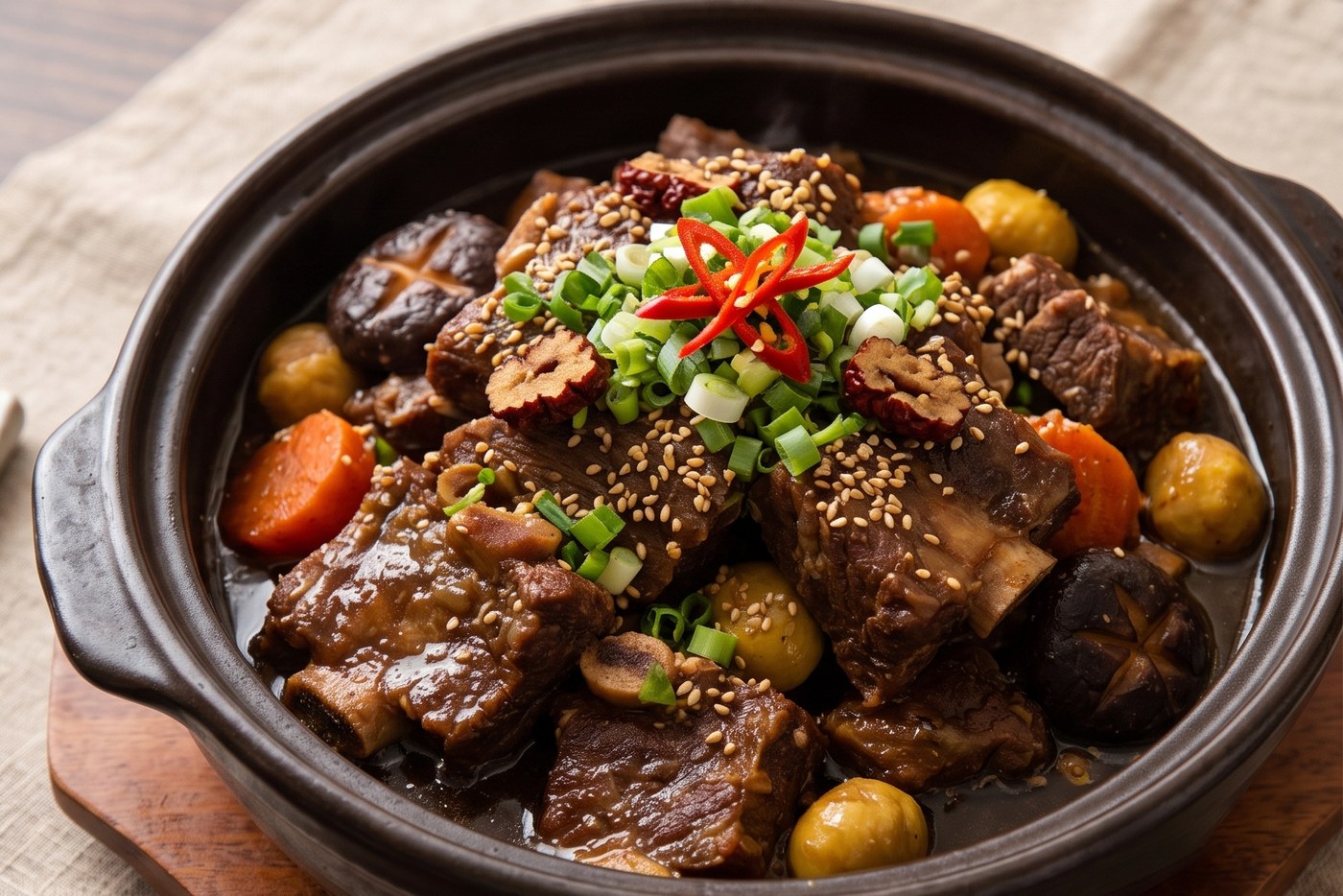
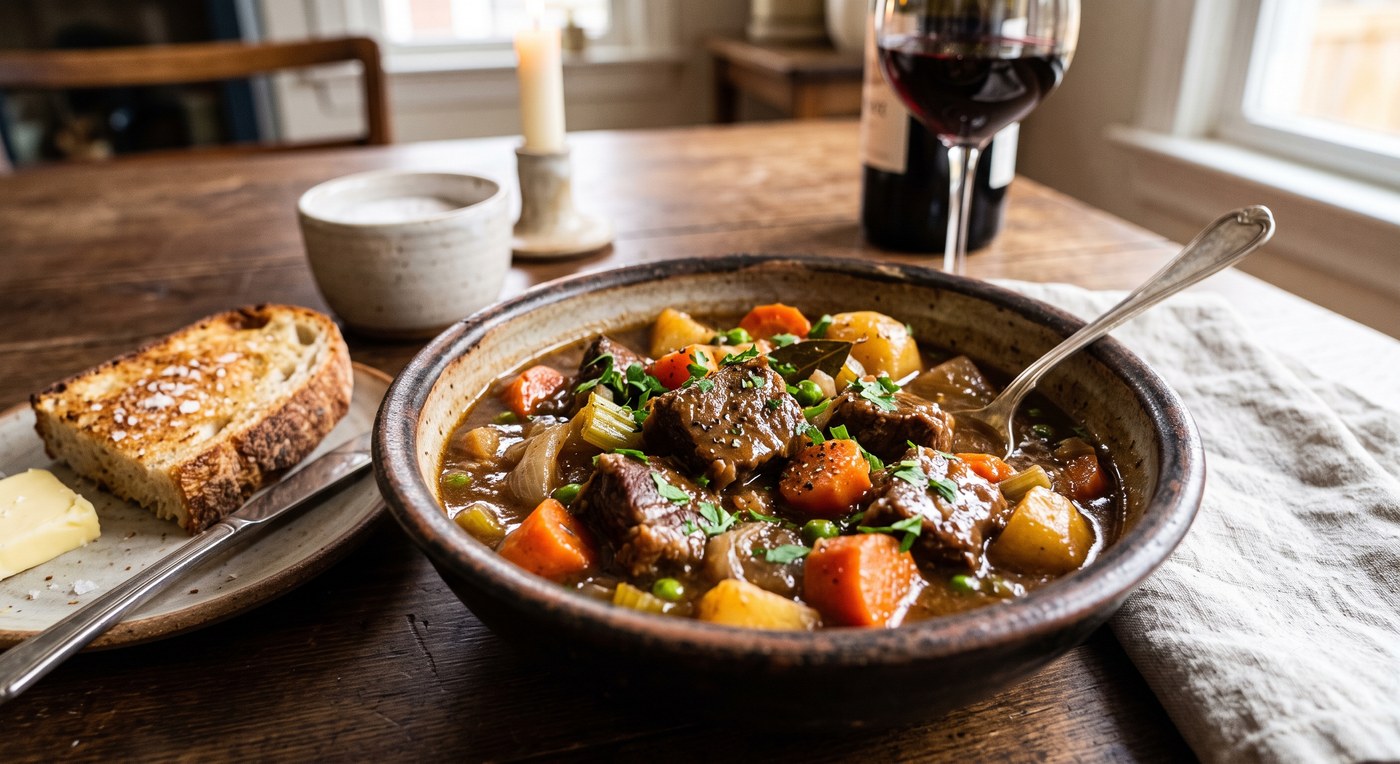
Korean galbi-jjim (braised short ribs) and Western beef stew share the fundamental technique of slow braising tough collagen-rich cuts, yet they operate on opposite chemical paradigms. While Western stews rely on acid hydrolysis from dry red wine and gelatin extraction via long simmering, galbi-jjim achieves melt-in-the-mouth tenderness through fruit-based enzymatic proteolysis and a dense emulsion of soy sauce, alliums, and toasted sesame oil.
Enzymatic Tenderization vs. Acidic Deglazing
The mechanical breakdown of connective muscle tissue in galbi-jjim begins hours before the beef touches heat.
Western beef stew utilizes low-pH liquids such as dry red wine (Cabernet Sauvignon or Pinot Noir) alongside tomato paste to weaken muscle fibers gradually while deglazing fond from a heavy seared crust. In contrast, authentic galbi-jjim relies on raw pureed Korean pear (bae), apple, or grated radish added directly into the raw meat marinade.
"Korean pear contains calpain and actinidin-like cysteine proteases that chemically cleave peptide bonds in rigid beef collagen. This biological breakdown softens thick cross-cut ribs without dissolving the meat into a stringy mush during cooking."
- Cold-Soak Blood Purge: Beef ribs undergo an initial 1 to 2-hour cold water bath to extract oxidized bone marrow blood, eliminating gamey notes before cooking starts.
- Rapid Pre-Boil Blanch: Short ribs are boiled vigorously for 5 to 7 minutes with whole ginger and scallions, then immediately scrubbed under running water to purge coagulated albumin.
- Thermal Emulsion: Unrefined sugars, grated fruit enzymes, and aged soy sauce caramelize on the surface of the bone-in cut rather than dissolving into a loose, flour-thickened brown gravy.
Comparative Matrix: Galbi-jjim vs. Classic Beef Stew
| Culinary Dimension | Korean Holiday Galbi-jjim | Western Classic Beef Stew (Boeuf Bourguignon) |
|---|---|---|
| Primary Cut Used | Bone-in beef short ribs (galbi), thick cross-cut | Boneless chuck roast, shank, or brisket chunks |
| Primary Tenderizer | Raw Korean pear puree (enzymatic protease) | Dry red wine and tomato acid (acid hydrolysis) |
| Thickening Medium | Natural gelatin from bones + reduced fruit sugars | Flour roux (singer method) or starch slurry |
| Dominant Flavor Matrix | Sweet-savory umami (fermented soy, garlic, sesame oil) | Earthy, herbaceous, acidic (wine tannins, thyme, bay) |
| Vegetable Shaping | Hand-rounded edges (dollyeokkakgi) | Rough rustic dice or mirepoix rough chop |
| Finished Texture | Glossy glaze clinging directly to intact meat blocks | Shred-tender beef chunks floating in a thick broth |
The Physics of Edge-Rounding (Dollyeokkakgi)
A signature hallmark of festive galbi-jjim is the deliberate carving of carrots, radishes, and chestnuts into rounded spheres before braising.
In Western stews, root vegetables often break down into the cooking liquid, thickening the sauce. In royal Korean culinary traditions, root vegetables must remain visibly pristine and structurally whole inside the final serving bowl.
By shaving off the 90-degree angular corners of firm root chunks, cooks prevent vegetables from colliding and fracturing during bubbling convection. The rounded contours let simmering ribs roll smoothly past carrots and daikon, ensuring the braising liquid remains transparent and unclouded by floating vegetable debris.
3-Step Execution Protocol for Authentic Galbi-jjim
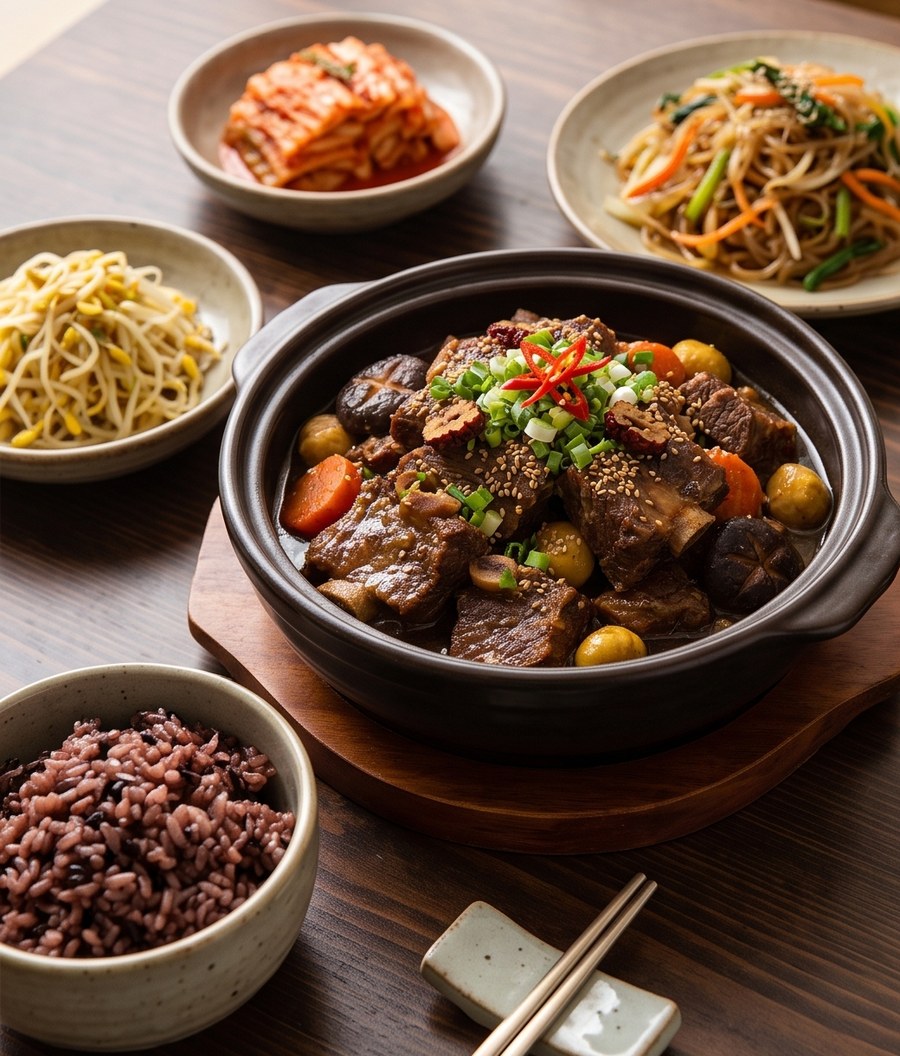
- Step 1: Execute the Cold Soak and Blanch Sequence Submerge 1.2kg of thick-cut bone-in short ribs in cold water for 90 minutes, changing the water twice to purge residual bone dust and myoglobin. Transfer the ribs to a pot of rolling boiling water for 6 minutes, drain immediately, and rinse each rib under cold water to clean the bone surface.
- Step 2: Blend the Fruit Marinade Base Puree half a Korean pear, half an onion, and 6 garlic cloves until smooth. Whisk the puree into 100ml of dark soy sauce, 2 tablespoons of brown sugar, 1 tablespoon of mirin, and 1 tablespoon of toasted sesame oil. Coat the blanched ribs evenly and marinate chilled for at least 2 hours to activate enzymatic breakdown.
- Step 3: Two-Phase Simmer with Rounded Aromatics Bring the marinated ribs and 300ml of water to a boil, then reduce heat to medium-low, cover, and braise undisturbed for 45 minutes. Add round-trimmed carrots, daikon rounds, dried jujubes, and peeled whole chestnuts; simmer covered for another 25 minutes. Uncover, raise the heat to medium-high, and baste continuously for 8 minutes until the liquid reduces into a sticky, mirror-like glaze.