The small side dishes that arrive with a Korean meal look like a lot of separate cooking. Most of them are the same three steps applied to different vegetables.
Once you have the method, spinach, bean sprouts, zucchini, and radish are variations rather than new recipes.
The method
- Blanch briefly in salted water
- Shock in cold water to stop cooking
- Squeeze out the water — hard
- Season by hand with garlic, sesame oil, salt, sesame seeds
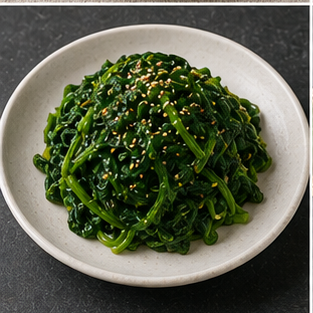
That is it. The seasoning is close to identical across vegetables, and the differences are in blanching time and how firmly you squeeze.
The step people skip
Squeezing. It feels excessive and it is not.
Blanched spinach holds an enormous amount of water. If you leave it in, the seasoning dilutes, the dish weeps in the fridge, and it tastes flat no matter how much sesame oil you add.
Gather the vegetable into a ball in both hands and press until water stops running. Then press again. Spinach should reduce to a fraction of its blanched volume.
This single step is the difference between namul that tastes seasoned and namul that tastes wet.
Season with your hands
Korean cooks mix namul by hand, not with a spoon, and it is not superstition. Hands distribute a small amount of oil and salt across a large volume of leafy vegetable in a way utensils do not, and you can feel when the coating is even.
Start with less seasoning than you think, taste, and add. Namul should taste like the vegetable with support, not like sesame oil.
Blanching times
| Vegetable | Time | Notes |
|---|---|---|
| Spinach (시금치) | 20–30 sec | Stems first if thick |
| Soybean sprouts (콩나물) | 5–7 min | See the lid rule below |
| Mung bean sprouts (숙주) | 30 sec | Much faster than soybean |
| Zucchini (애호박) | Not blanched — salted, then pan-fried | |
| Radish (무) | Not blanched — salted, then simmered in its own water |
Spinach in particular is over-blanched constantly. Thirty seconds is enough; the residual heat finishes it.
The bean sprout lid rule
Soybean sprouts have a rule that sounds like folklore and is worth following: either keep the lid on the whole time or leave it off the whole time. Lifting it partway through is said to produce a beany, raw smell.
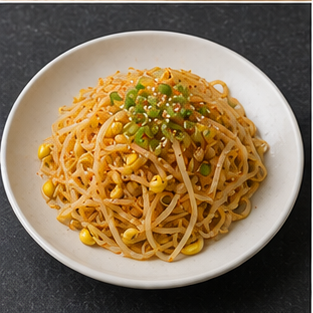
The usual explanation is that opening the pot drops the temperature and interrupts cooking unevenly. Whatever the mechanism, the outcome is consistent enough that every Korean cook follows it.
Soybean sprouts (콩나물, with the yellow head) need real cooking time. Mung bean sprouts (숙주) do not — treat them like spinach.
The base seasoning
For one bunch of spinach or one large handful of blanched vegetable:
- 1 clove garlic, minced
- 1 tsp sesame oil
- 1/4 tsp salt, or 1 tsp guk ganjang
- 1 tsp toasted sesame seeds
- Optional: a little chopped green onion
Salt gives a cleaner result, soup soy sauce gives a deeper, more fermented one. Both are correct.
For stronger or dried vegetables, perilla oil in place of sesame oil is standard and tastes markedly different.
How long they keep
Three to four days refrigerated. Namul is made in batches for exactly this reason — two or three at once on a weekend covers a week of meals.
They are also the components of bibimbap. If you have three namul in the fridge, bibimbap is rice, an egg, and gochujang away.
Why it is worth learning first
Namul is the cheapest and fastest part of Korean home cooking, it uses vegetables you can buy anywhere, and it needs almost nothing from the Korean aisle — garlic, sesame oil, salt.
It is the part of a Korean meal you can start making before your pantry is stocked.
K-Pantry shows which dishes your current vegetables already cover. Try K-Pantry