Sundae is Korean blood sausage — pig intestine stuffed with a filling and steamed. Ask two Koreans from different provinces what to dip it in and you will get two confident, different answers, and both of them will find the other one strange.
What sundae is
The casing is pig intestine. The filling is where regions start to disagree, but the common versions are:
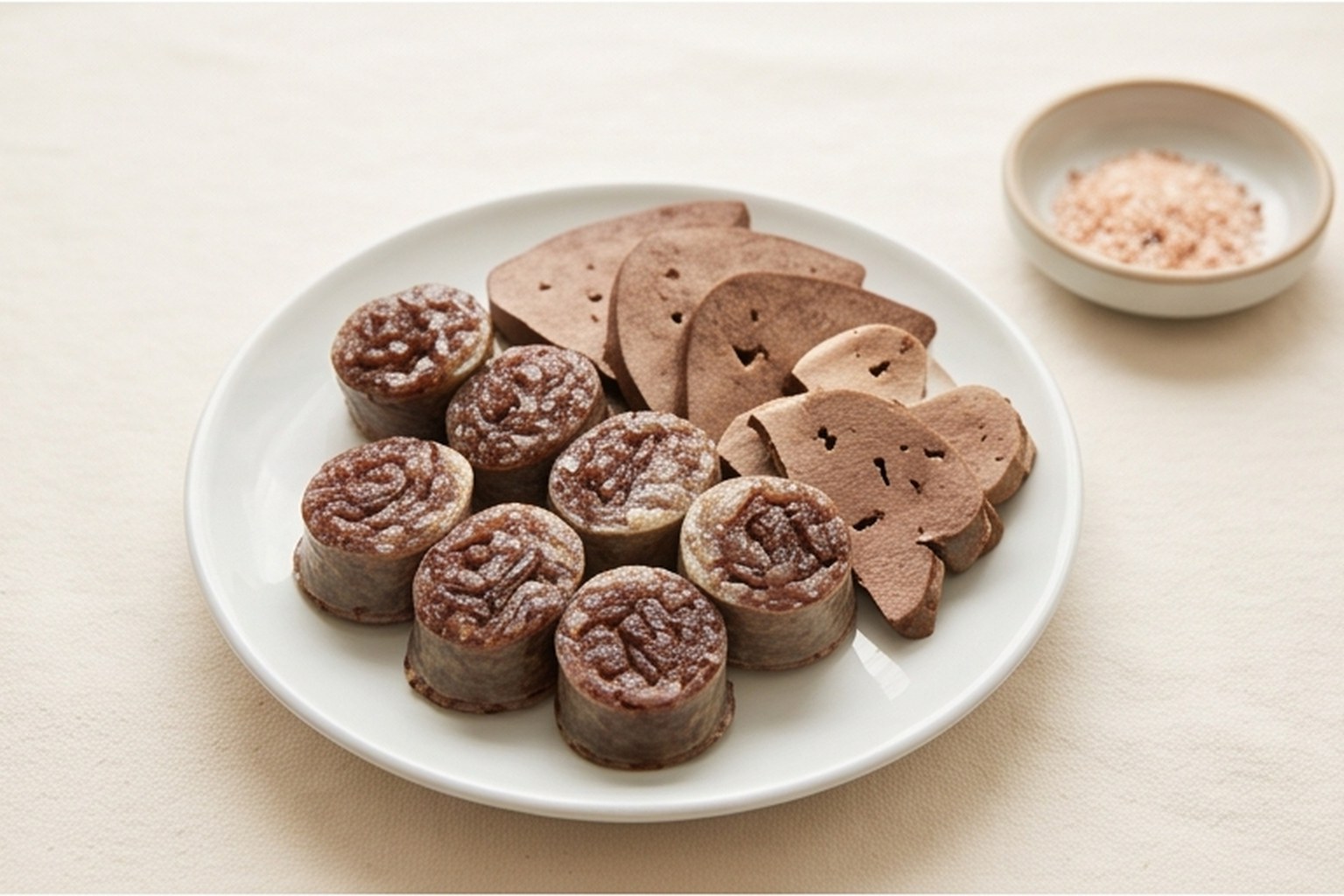
- Dangmyeon sundae — sweet potato glass noodles, blood, vegetables. The most widespread version and the one sold at street stalls
- Chapssal sundae — glutinous rice instead of noodles. Denser, chewier, considered more traditional
- Abai sundae — a northern style from Sokcho, made with squid rather than intestine, stuffed thick
Sundae is usually served sliced, steamed, and warm, with a portion of boiled pork offal alongside. The offal is standard, not an upsell.
The dipping map
| Region | Dip |
|---|---|
| Seoul / Gyeonggi | Fine salt, often with pepper |
| Busan / Gyeongsang | Ssamjang or makjang, a soybean paste blend |
| Jeolla | Chojang — chili paste thinned with vinegar |
| Chungcheong | Saeujeot, salted shrimp |
| Gangwon | Salt, sometimes with sesame |
Salt is the neutral default and lets the filling taste of itself. Ssamjang is heavier and savory, and it dominates a mild sausage. Chojang is sharp and sour and cuts richness hard. Salted shrimp sits between salt and paste — briny, but with more going on.
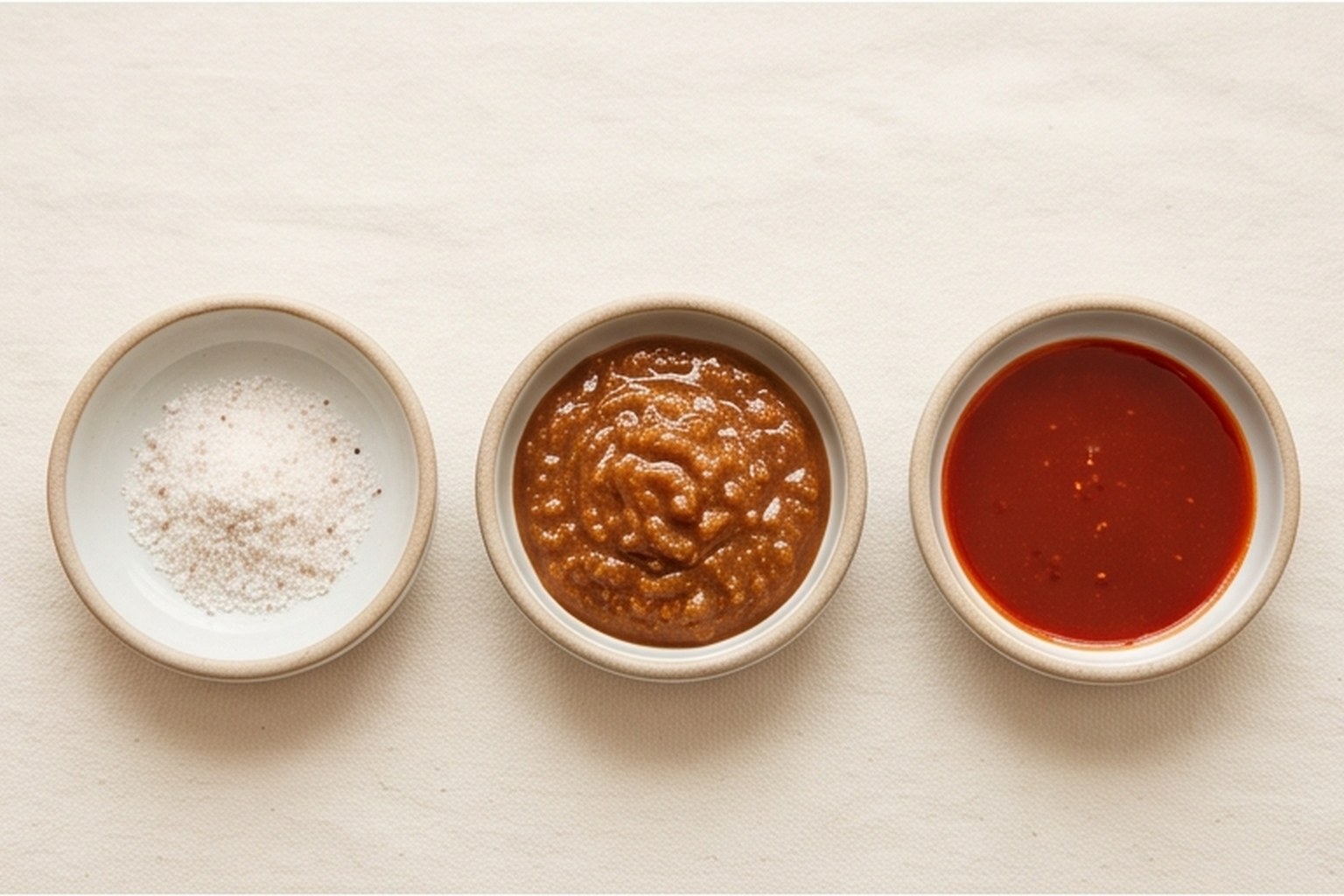
None of these is wrong. If you are eating sundae for the first time, start with salt to learn what the sausage tastes like, then try the others.
Why the differences exist
The pattern follows the same logic as regional kimchi. Areas with strong fermented-seafood traditions dip in fermented seafood; areas with strong paste traditions dip in paste. Jeolla's chojang reflects a cuisine that leans on vinegar and chili to balance rich food.
Seoul's plain salt is the outlier that needs the least explanation. In a city eating food from everywhere, the neutral option won.
Ordering and eating it
Street stalls sell sundae by weight and will ask if you want offal mixed in. Saying yes gets you liver, lung, and stomach, boiled and sliced. Liver is dry and mineral, and eating it with a piece of sausage in the same bite is the standard approach rather than eating it alone.
Sundae is also a stew and a stir-fry. Sundaeguk is the sausage in a cloudy pork broth, and sundae bokkeum is stir-fried with vegetables and gochujang. If plain sliced sundae does not appeal, the stir-fry usually does.
Buying it outside Korea
Frozen sundae is available at most Korean groceries. Steam it rather than microwaving — microwaved casing turns rubbery and the filling dries.
Ten minutes in a steamer basket over boiling water is enough. Slice after steaming, not before, or the filling falls out.
For dipping, coarse salt with a little ground black pepper is the easiest place to start, and it is what most of Seoul would hand you anyway.
Cooking Korean food at home and not sure what to buy first? K-Pantry walks you through Korean ingredients one at a time — what they taste like, what to substitute, and what to skip until later.