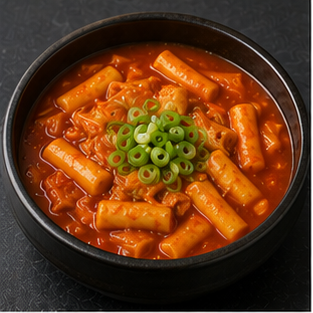
You've seen it in dramas and in every Korean street food video: a shallow pan of orange-red sauce with thick white cylinders bobbing in it, being ladled into paper cups. That's tteokbokki, and it's probably the single most recognizable piece of Korean street food.
If you're wondering whether you'd actually like it, here's a straight answer.
What it is
Tteok are rice cakes — made from short-grain rice flour, steamed and pounded into a dense, chewy dough, then shaped into cylinders. Bokki means stir-fried, though modern tteokbokki is really simmered in sauce rather than fried.
The texture is the thing people either love or don't. It's genuinely chewy, springy, and substantial — closer to a very dense mochi than to pasta or dumplings. Rice cakes have almost no flavor of their own; they're a vehicle for the sauce.
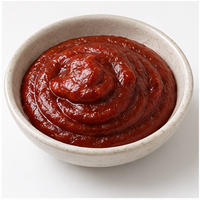
The sauce is gochujang, gochugaru, sugar, soy sauce, and stock, reduced until it clings. The dominant note is sweet before spicy, which surprises people.
How spicy is it, honestly
Standard street tteokbokki sits somewhere around a medium — noticeably hot, building as you eat, but not painful. The sugar in the sauce blunts the chili considerably. If you comfortably eat Thai curry or a hot salsa, you'll be fine.
The variation is enormous though. Some shops sell a mild version aimed at children. Others sell versions specifically marketed as extreme. If you're buying from a street stall, the color is a decent guide — deeper, darker red usually means more gochugaru.
Homemade is where you have full control, and it's the reason a lot of people who found street tteokbokki too hot end up liking their own.
The common variations
Gungjung tteokbokki is the older, royal court version. Soy sauce based, no chili at all, with beef and vegetables. If you can't handle heat and want to try rice cakes, this is the one.
Rosé tteokbokki adds cream and milk to the standard sauce. Now extremely common in Korea, mild, and probably the easiest entry point.
Cheese tteokbokki is standard sauce with melted mozzarella over the top.
Rabokki combines tteokbokki with instant ramyeon noodles in the same pan.
Making it milder without ruining it
The sauce is easy to adjust because the heat comes from two separate ingredients.
- Cut the gochugaru first, keep the gochujang. Gochujang carries the fermented flavor and color; gochugaru carries most of the raw heat. Halving the flakes changes the heat a lot and the flavor a little.
- Add more sugar or a spoon of honey. This is what commercial mild versions do.
- Stir in milk or cream at the end for a rosé version.
- Add a slice of cheese off the heat.
A note on buying rice cakes
Fresh tteok is soft and ready to cook. Frozen or refrigerated tteok has usually hardened and should be soaked in cold water for twenty to thirty minutes before cooking, or it'll stay tough in the middle.
This is the most common reason homemade tteokbokki disappoints. The sauce is right, the rice cakes are stiff.
What it's usually eaten with
Fish cake sheets (eomuk), boiled eggs, and cabbage go straight into the pan. Fried mandu or a portion of gimbap on the side, dipped into the leftover sauce, is the standard street-stall combination.
Don't throw out the remaining sauce. Rice stirred into it is the accepted ending.
Want to try making it? K-Pantry tells you whether you have what you need for tteokbokki tonight, and what to substitute if you don't.