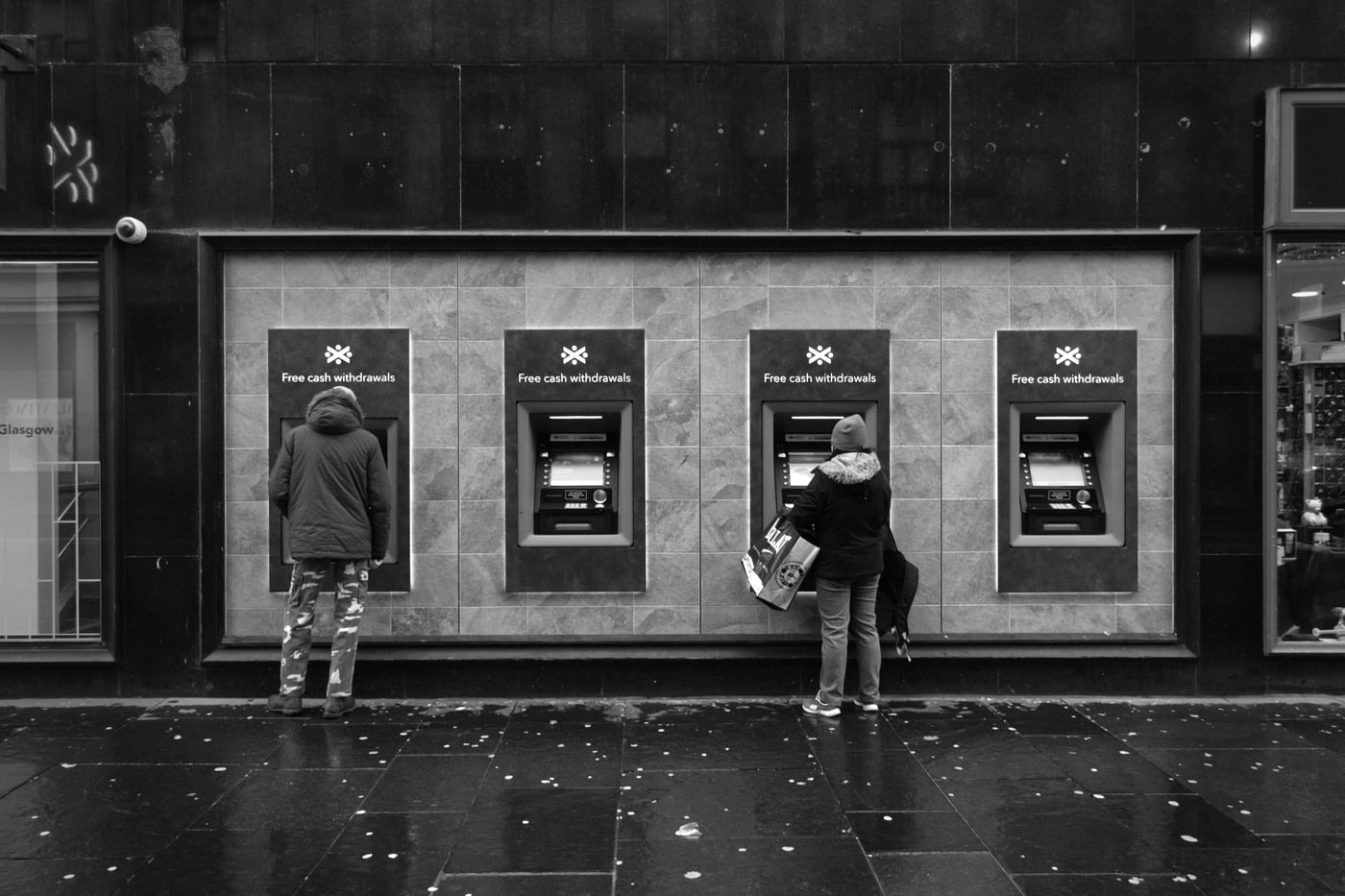
While South Korea is widely recognized as a virtually cashless society, travelers relying solely on foreign-issued credit cards frequently encounter system errors at local kiosks and transit terminals. Due to local acquiring networks and statutory financial regulations, public transit cards (T-Money) can only be recharged using physical Korean won banknotes, and older point-of-sale systems routinely reject foreign cards lacking domestic 3D Secure verification. Maintaining an emergency buffer of physical cash and knowing how to identify dedicated "Global ATMs" prevents sudden payment lockouts.
The T-Money Cash-Only Rule and Local POS Rejections
Foreign Visa, Mastercard, and American Express cards commonly fail at self-service kiosks, unattended parking gates, and coin-operated facilities because these terminals operate exclusively on closed domestic VAN networks.
The most critical barrier occurs on the public transit grid. Under the Specialized Credit Finance Business Act, recharging physical transit cards like T-Money or the Climate Card is classified as a cash-equivalent purchase. Consequently, card recharges are strictly prohibited by law at subway ticket dispensers and convenience store counters; these machines accept physical Korean won banknotes only.
"Credit cards cannot be used to top up standard Korean public transit passes under any circumstances. Automated subway recharge machines and convenience store registers accept 1,000, 5,000, 10,000, and 50,000 KRW physical bills only."
- Transit Top-Up Mandate: Secure at least 30,000 KRW to 50,000 KRW in physical bills immediately upon landing to ensure your subway and bus passes remain funded.
- Unattended Kiosk Failures: Self-photo booths, laundromats, and legacy ticket dispensers frequently lack international acquiring gateways, declining non-Korean cards outright.
- Account Transfer Roadblocks: Traditional market stalls and street food vendors often request direct domestic bank transfers via KakaoPay instead of card payments—a method unavailable to short-term tourists without a domestic resident registration number.
Standard Domestic ATMs vs. Global Service Terminals
Inserting an international debit or credit card into a standard Korean ATM will trigger an immediate card ejection or a transaction error. Travelers must locate designated Global Terminals.
| Service Feature | Standard Domestic ATM | Global ATM (글로벌 ATM) |
|---|---|---|
| External Labeling | Labeled simply as "ATM" or "현금지급기" | Prominently marked "Global ATM" or "Global Services" |
| Network Compatibility | Korean commercial bank accounts only | Visa, Plus, Mastercard, Cirrus, UnionPay, JCB |
| Physical Locations | Standard street corners, small bank vestibules | Transit hubs, international convenience stores, major bank branches |
| User Interface | Korean only (or basic two-button prompt) | Full multilingual flow (English, Japanese, Chinese) |
| Foreign Transaction Fee | Transactions rejected immediately | Fixed operator fee (~3,500 KRW to 4,800 KRW) plus issuing bank rates |
3-Step Protocol for Cash Withdrawals and Market Payments
- Step 1: Locate an ATM Marked 'Global Services' Do not enter neighborhood bank vestibules expecting all automated machines to accept foreign cards. Enter major convenience store chains (GS25, CU, 7-Eleven) and examine the top fascia of the automated kiosk (commonly operated by Hyosung or Lotte). Confirm the physical machine displays a bright blue or green "Global Services" banner alongside Visa and Mastercard logos.
- Step 2: Initiate Transaction via 'Foreign Card' and Verify PIN Format Select "English" or tap the prominent "Foreign Card / International Card" button on the primary touch display. When the machine prompts for your 4-digit personal identification number (PIN), enter your standard code. If the transaction returns a PIN length error, enter your 4-digit PIN followed by "00" (a standard 6-digit adaptation on select Korean banking networks).
- Step 3: Break 50,000 KRW Banknotes Before Entering Traditional Markets Global ATMs dispense withdrawals primarily in 50,000 KRW denominations. Before heading to outdoor food alleys or traditional hubs like Gwangjang Market or Namdaemun Market, buy a small beverage at a convenience store to break the large note into 10,000 KRW and 1,000 KRW bills. Small street stalls often struggle to provide change for high-denomination notes during peak foot-traffic hours.