Gyeongju was the capital of the Silla kingdom for almost a thousand years, and its best sights sit close together. Spend the morning at Bulguksa Temple, then walk downtown from the cafe street of Hwangnidan-gil past grassy royal tombs and an ancient stone observatory, and finish at Wolji Pond as the palace lights come on.
At a glance
- Getting there: about 2 to 2¾ hours from Seoul by KTX to Gyeongju Station, or about 3½ hours by express bus to Gyeongju Bus Terminal
- The walk: Hwangnidan-gil → Daereungwon → Cheomseongdae → Donggung Palace and Wolji Pond, about 2.7 km on foot
- Cost: Bulguksa, Daereungwon and Cheomseongdae are free; Donggung and Wolji costs 3,000 KRW
- Best timing: Bulguksa in the morning, the downtown walk in the afternoon, Wolji Pond at dusk
- Avoid: arriving at Wolji Pond right before last entry on a weekend evening; lines can stop you getting in
The course at a glance
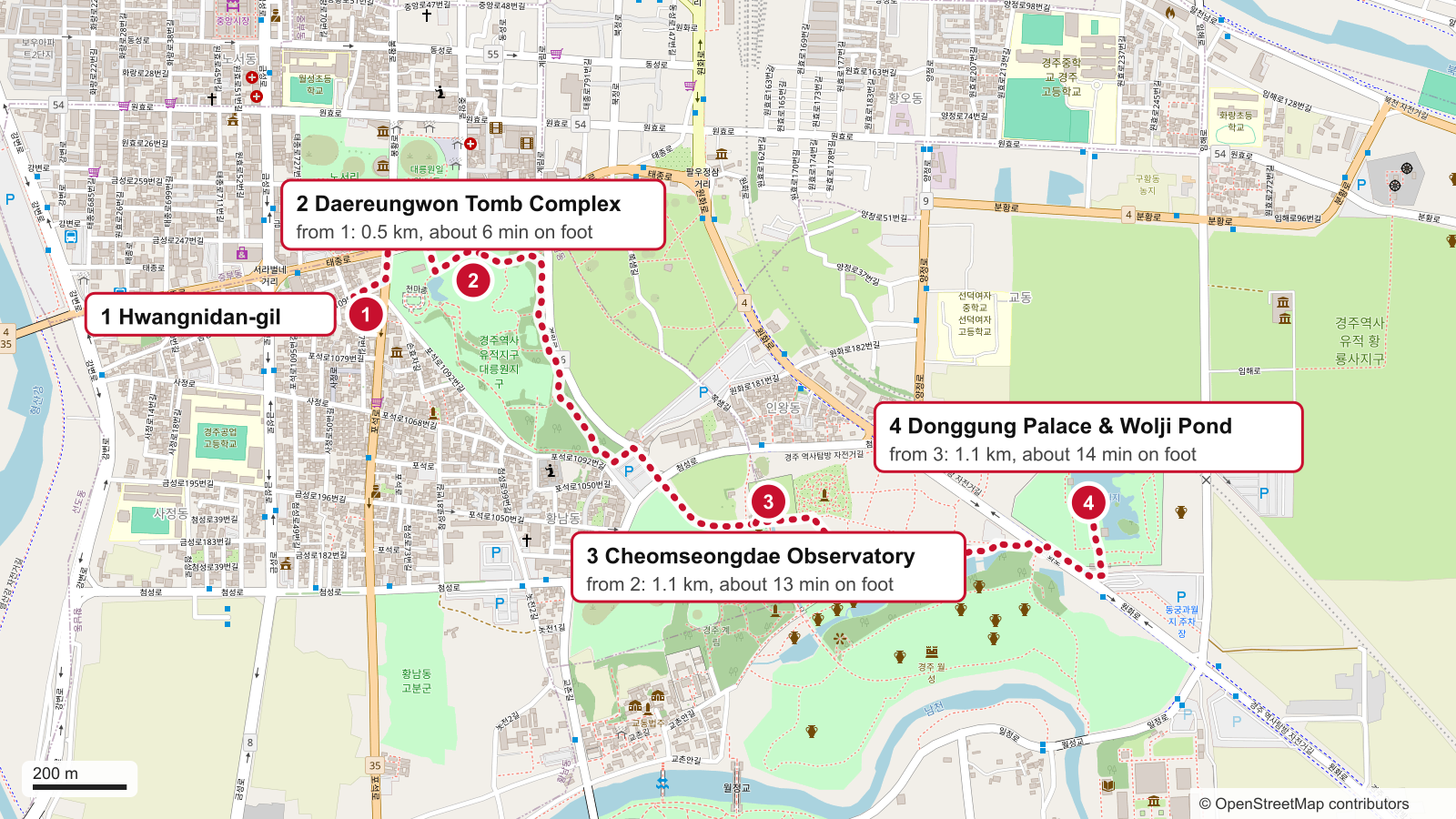
| Time | Stop | Getting there |
|---|---|---|
| 9:00 | Bulguksa Temple | City bus 10 or 11 from downtown, about 35 to 45 minutes |
| 12:30 | Lunch on Hwangnidan-gil | Bus back toward the bus terminal, then a 10-minute walk |
| 14:30 | Daereungwon Tomb Complex | About 6 minutes on foot |
| 16:30 | Cheomseongdae Observatory | About 13 minutes on foot |
| Dusk | Donggung Palace and Wolji Pond | About 14 minutes on foot |
The downtown walking times are calculated from the map at an easy pace. For buses, search the place name in Korean (불국사, 동궁과 월지) in Naver Map or Kakao Map for live times. If you're coming from Seoul, our Intercity Transit Guide compares the KTX and express bus to Gyeongju side by side.
Bulguksa Temple
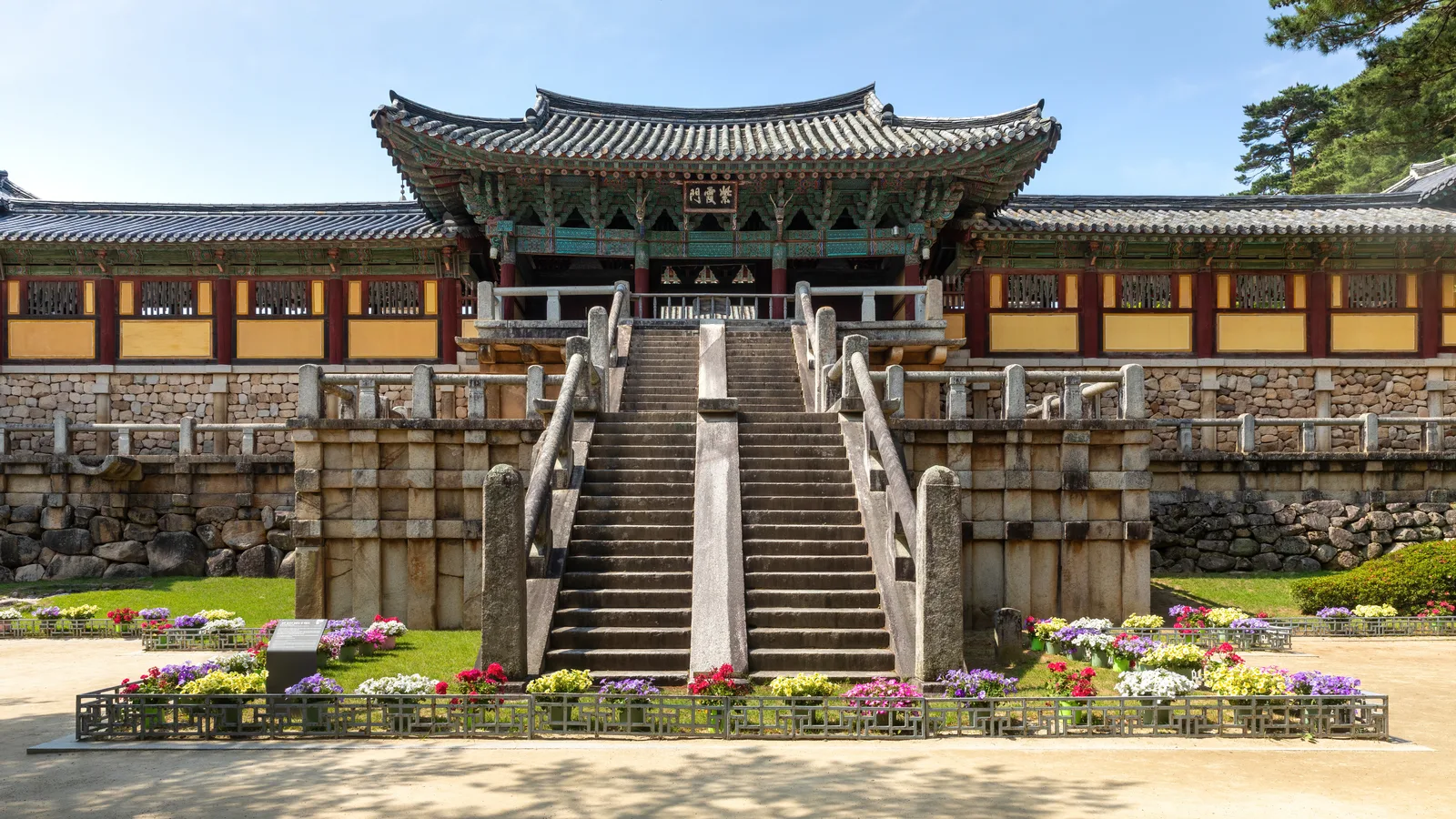
Bulguksa is the temple on every Gyeongju postcard: stone staircases, stone pagodas and wooden halls built on a raised terrace in the 8th century. It is a UNESCO World Heritage Site together with the Seokguram Grotto on the mountain above it.
| Fee | Free since May 4, 2023 |
| Hours | 9:00 to 5:00 pm (last entry) from November to January, to 5:30 pm in February and October, to 6:00 pm from March to September |
| Getting there | City bus 10 or 11 from downtown Gyeongju, about 35 to 45 minutes |
Bulguksa sits outside the city center, so go first while you're fresh and the courtyards are quiet. Allow about two hours, or longer if you add Seokguram, which needs another bus or taxi up the mountain.
Hwangnidan-gil
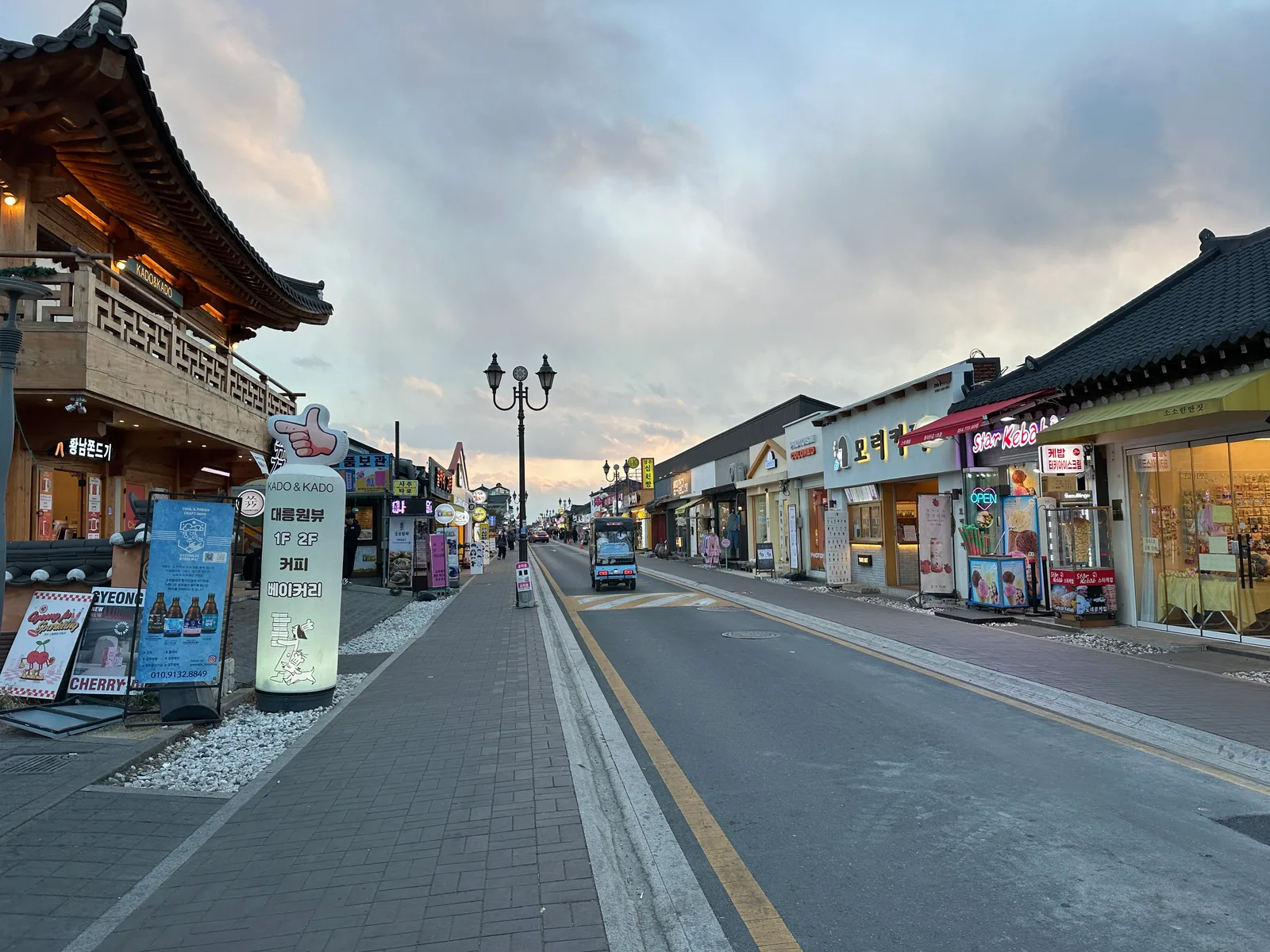
Back downtown, Hwangnidan-gil is a street of low hanok-style buildings full of cafes, bakeries and small shops. It's about a 10-minute walk from Gyeongju Bus Terminal and the natural place for lunch. Look for gyeongju-ppang (경주빵), the small red-bean pastries the city is known for, and the long lines outside the newest cafes.
Daereungwon Tomb Complex
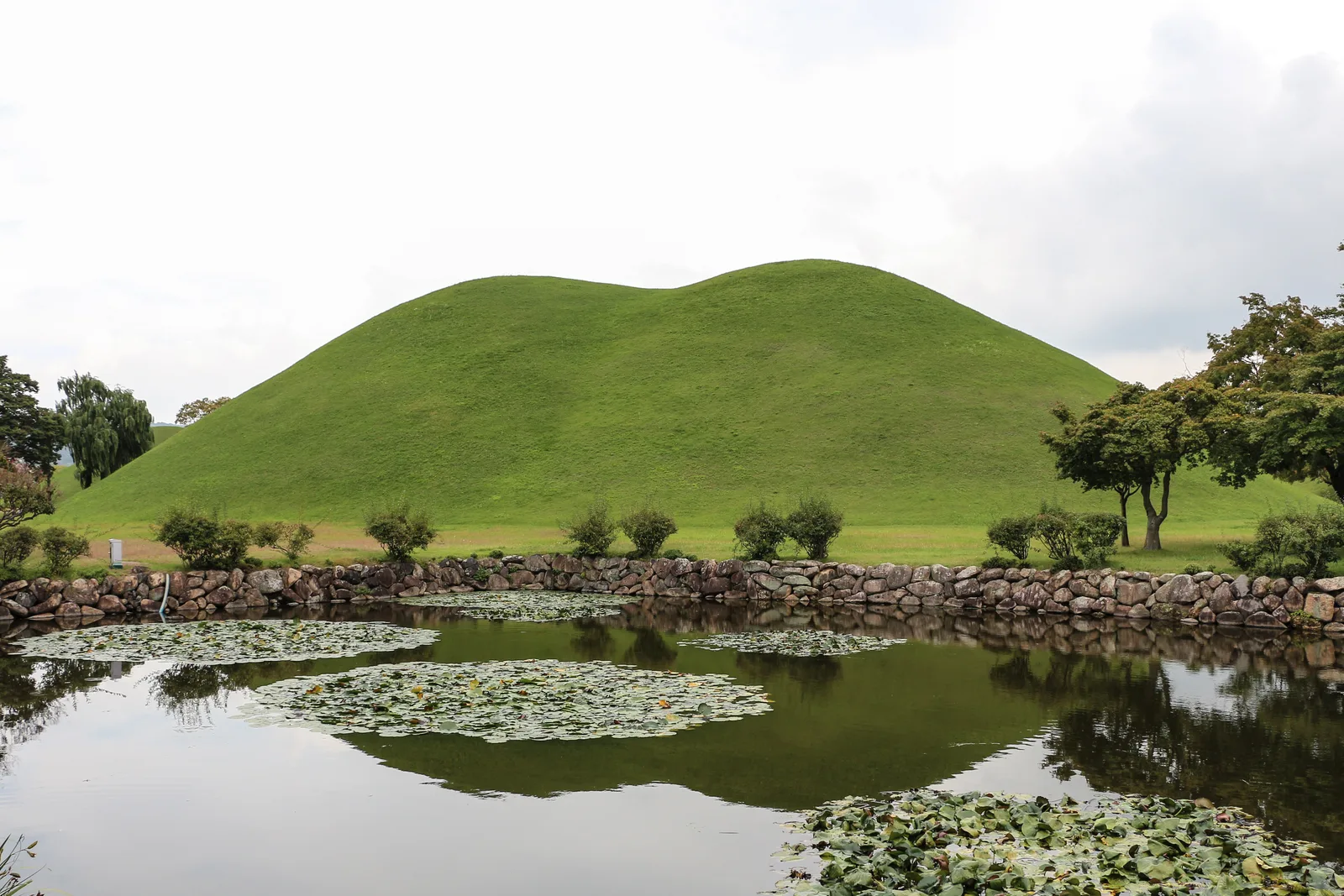
Right next to Hwangnidan-gil, Daereungwon is a park of huge grass-covered mounds: the tombs of Silla kings and nobles. Paths wind between them, and one spot frames two mounds behind a single magnolia tree that has become one of the city's best-known photos.
| Fee | Free; Cheonmachong, the one tomb you can walk inside, costs 3,000 KRW |
| Hours | 9:00 am to 10:00 pm, last tickets 9:30 pm |
Step inside Cheonmachong (천마총) to see a cut-away of how the tombs were built and a replica of the painted saddle flap that gave the tomb its name, the "Heavenly Horse Tomb."
Cheomseongdae Observatory
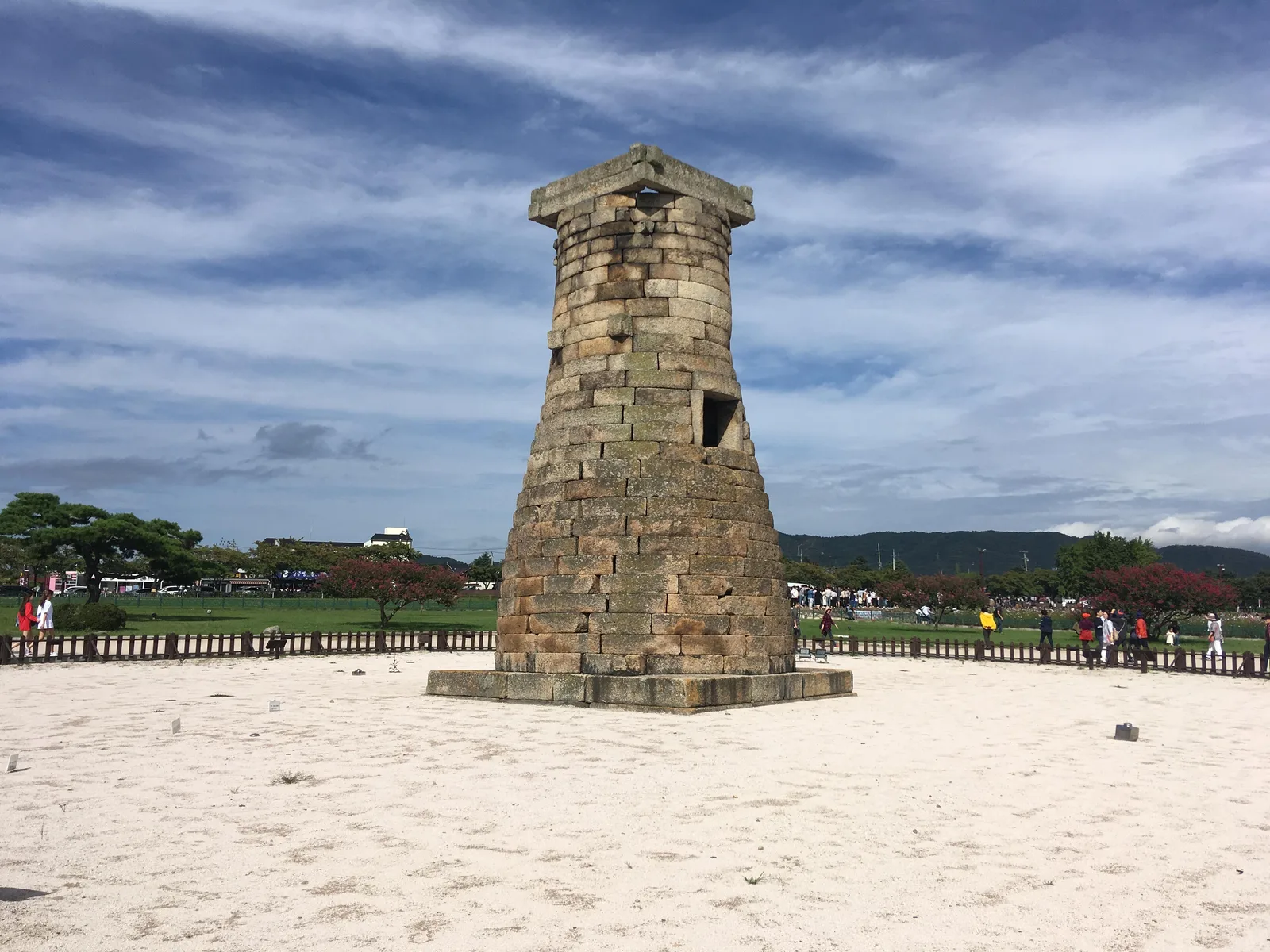
A short walk east, Cheomseongdae is a bottle-shaped stone tower from the 7th century and one of the oldest surviving observatories in Asia. It stands alone in an open field, which makes it easy to photograph from every side. Entry is free. In late spring and autumn the fields around it fill with flowers, and the tower is lit up after dark.
Donggung Palace and Wolji Pond
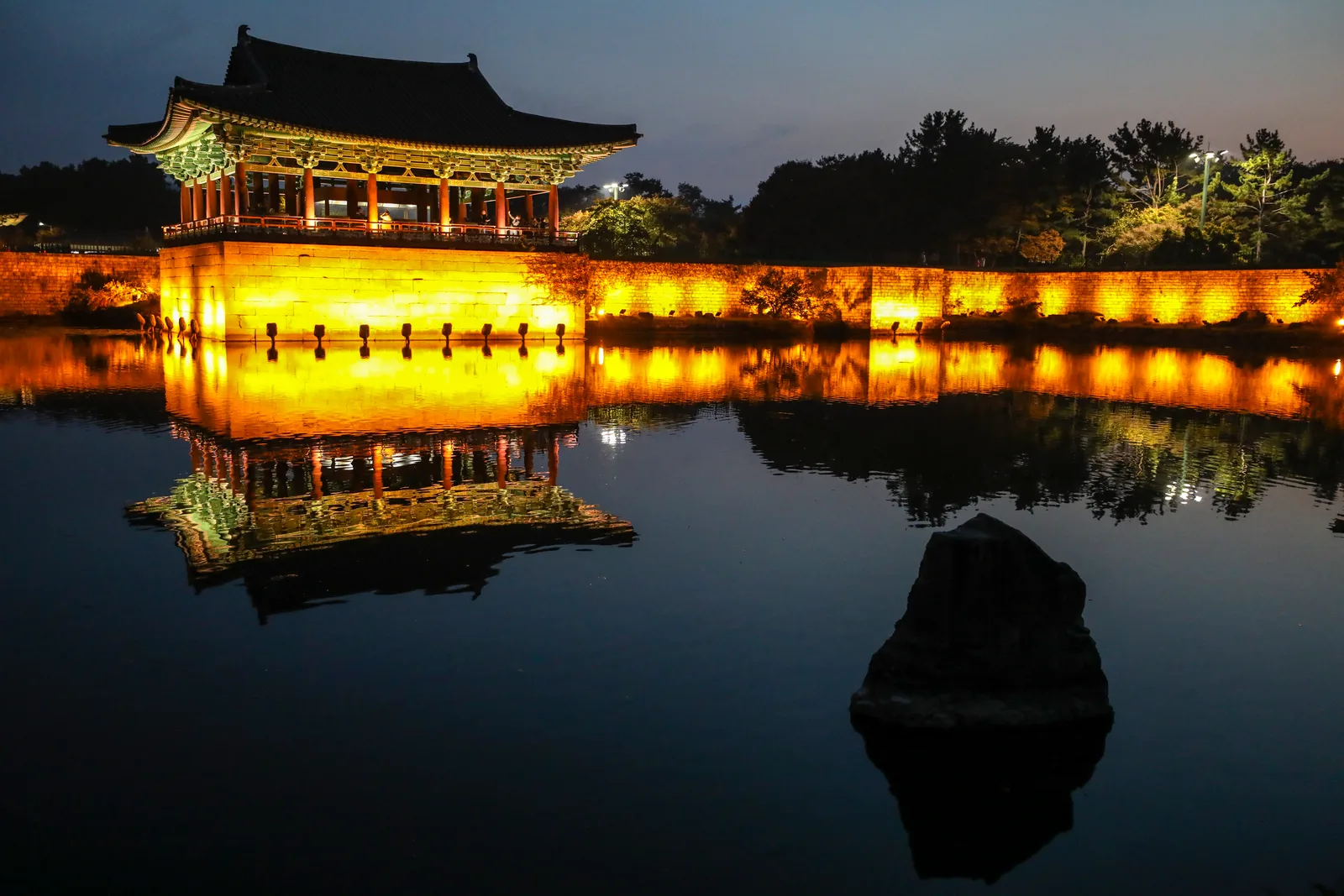
End the day at Donggung Palace and Wolji Pond, once a detached palace of the Silla crown prince. The rebuilt pavilions are reflected in the pond, and the view is at its best just after sunset when the lights come on. You may also see it signposted as Anapji, its older name.
| Fee | 3,000 KRW for adults |
| Hours | Usually 9:00 am to 10:00 pm, last tickets 9:30 pm |
Korean for the day
| Korean | Romanization | Meaning |
|---|---|---|
| 불국사 가는 버스 맞아요? | bulguksa ganeun beoseu majayo? | Is this the bus to Bulguksa? |
| 천마총 입장권 한 장 주세요. | cheonmachong ipjanggwon han jang juseyo | One ticket for Cheonmachong, please. |
| 동궁과 월지까지 걸어갈 수 있어요? | donggunggwa woljikkaji georeogal su isseoyo? | Can I walk to Donggung and Wolji? |
On the bus, you'll hear the stop announced as 불국사입니다 ("this is Bulguksa"). Our guide to riding city buses explains tapping on and off, which works the same way in Gyeongju.
Do
- Start at Bulguksa early, before the tour buses arrive
- Carry a transit card; Gyeongju city buses take the same cards as Seoul
- Eat Gyeongju's local ssambap for dinner near Daereungwon
- Stay overnight if you also want Seokguram and the museum
Don't
- Climb on the tomb mounds; they are royal graves
- Leave Wolji Pond until the last half hour on a busy evening
- Try to fit Gyeongju into a half day from Busan or Seoul
- Assume Bulguksa is a short walk from downtown; it isn't
Plan the rest of the trip: Gyeongju ssambap, the local table spread · KTX vs express bus for day trips · the Regional Hotspot Finder
Frequently Asked Questions
Is one day enough for Gyeongju? One full day covers Bulguksa and the downtown sights in this guide. With two days you can add Seokguram Grotto, the Gyeongju National Museum and a slower evening on Hwangnidan-gil.
Do I need to book tickets in advance? No. Bulguksa, Daereungwon and Cheomseongdae are free, and Donggung and Wolji tickets are sold at the gate. Book your KTX or express bus from Seoul ahead on weekends.
How do I get from Gyeongju Station to downtown? Gyeongju Station, the KTX stop formerly called Singyeongju, is about 11 km from downtown. City buses reach the bus terminal area in about 20 minutes, and a taxi is quicker.
When is the best season to visit? Spring, for cherry blossoms around the tombs and Bomun Lake, and autumn, when the fields by Cheomseongdae and the maples at Bulguksa turn color. Summer evenings are pleasant for the night walk.