Ssam means wrapped. Bap means rice. Ssambap is therefore rice you wrap in a leaf — and in Gyeongju it arrives as twenty or more small plates covering the whole table, which is not what most people expect from a two-word dish name.
Why so many plates
Gyeongju is Korea's old capital and a tourist city, and its ssambap restaurants developed as a way to present a full traditional table to visitors. The abundance is the product.
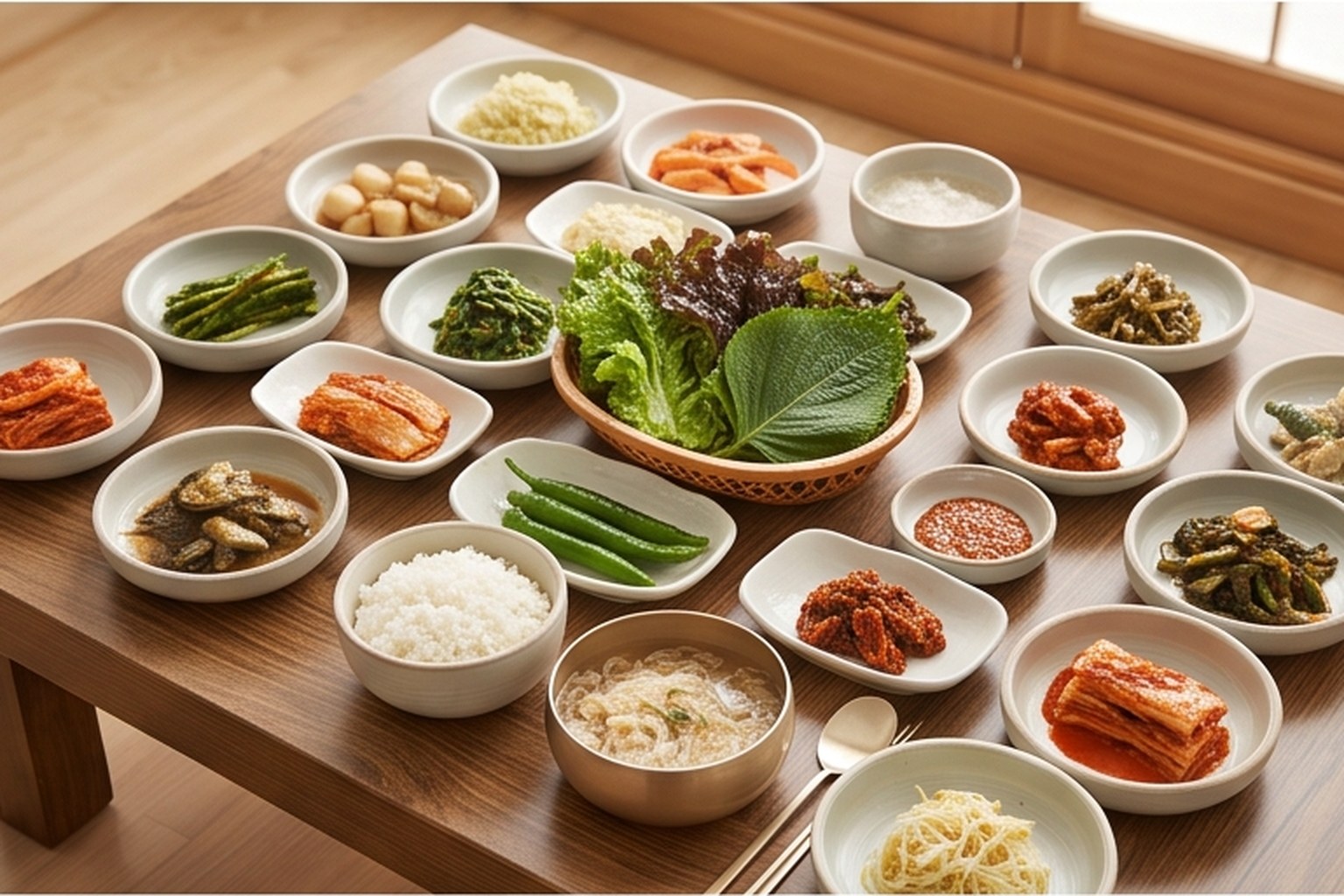
Underneath the spectacle the logic is simple. You need three categories on the table and everything else is variation:
- Leaves to wrap with — lettuce, perilla, steamed cabbage, sometimes pumpkin leaf or seaweed
- Something salty to anchor the bite — grilled fish, bulgogi, braised pork, or a strongly seasoned banchan
- Sauce — ssamjang, and often a second dipping option
The rest of the plates are supporting texture: pickles, seasoned greens, jeon, a soup, a stew.
Nobody eats all of it. That is not the design.
The order of operations
This is the part that makes ssambap manageable rather than intimidating.
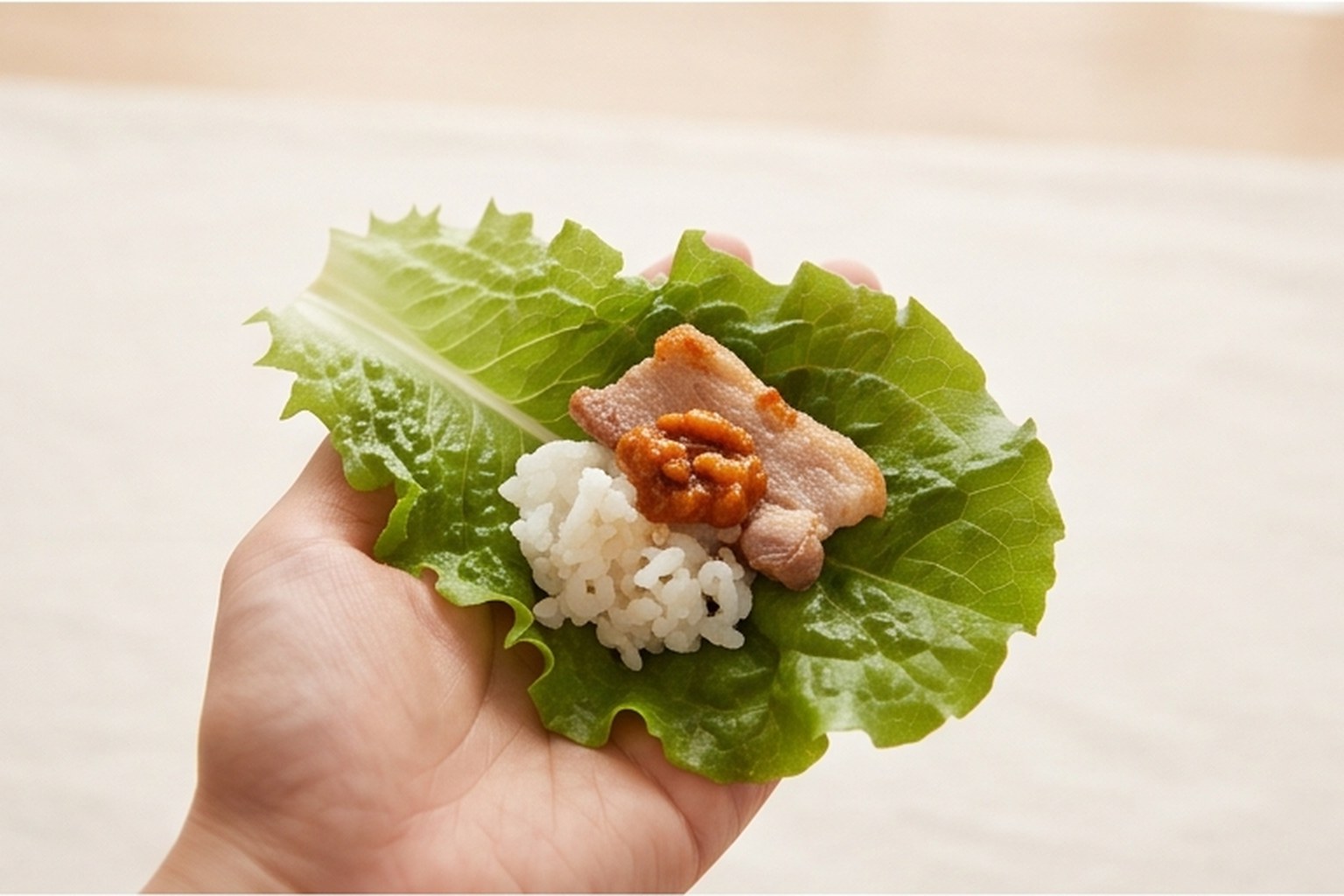
- Take one leaf. Lettuce alone is fine; lettuce plus a perilla leaf on top is the classic pairing
- Rice first, and less than you think. A small spoonful. The wrap has to close
- Protein next, one piece
- Ssamjang last, a small dab directly on top — not spread across the leaf, or every bite tastes only of sauce
- Optional extras — raw garlic slice, green chili, a pinch of a seasoned green
- Fold and eat in one bite. Two bites means it falls apart in your hand
The one-bite rule is real etiquette, not just practical advice. It is also why overfilling is the most common beginner mistake.
What ssamjang actually is
Ssamjang is doenjang and gochujang mixed, usually with sesame oil, minced garlic, chopped scallion, and sesame seeds. Doenjang carries the salt and depth; gochujang adds sweetness and a little heat.
Ready-made tubs are sold everywhere and are perfectly good. If you want to improve one, stir in a spoonful of sesame oil, some chopped scallion, and crushed sesame seeds — most commercial versions are underseasoned in exactly those three ways.
A home version worth making
You do not need twenty plates. Four gets you a real ssambap dinner:
- A pile of washed lettuce and perilla leaves
- Steamed rice
- One protein — grilled pork belly, bulgogi, or a mackerel fillet all work
- Ssamjang
Add two more if you want: a quick cucumber pickle and a bowl of doenjang jjigae. That is the shape of the meal, and everything past it is decoration.
Perilla leaves are worth seeking out. Lettuce is a wrapper; perilla is a flavor, herbal and slightly anise-like, and it changes the bite entirely.
If you go to Gyeongju
Portions are per person and generous. Two people ordering two ssambap sets will not finish them. Refills of the side dishes are free and expected, so ask for more of the two or three you actually like rather than picking at all twenty.
Cooking Korean food at home and not sure what to buy first? K-Pantry walks you through Korean ingredients one at a time — what they taste like, what to substitute, and what to skip until later.