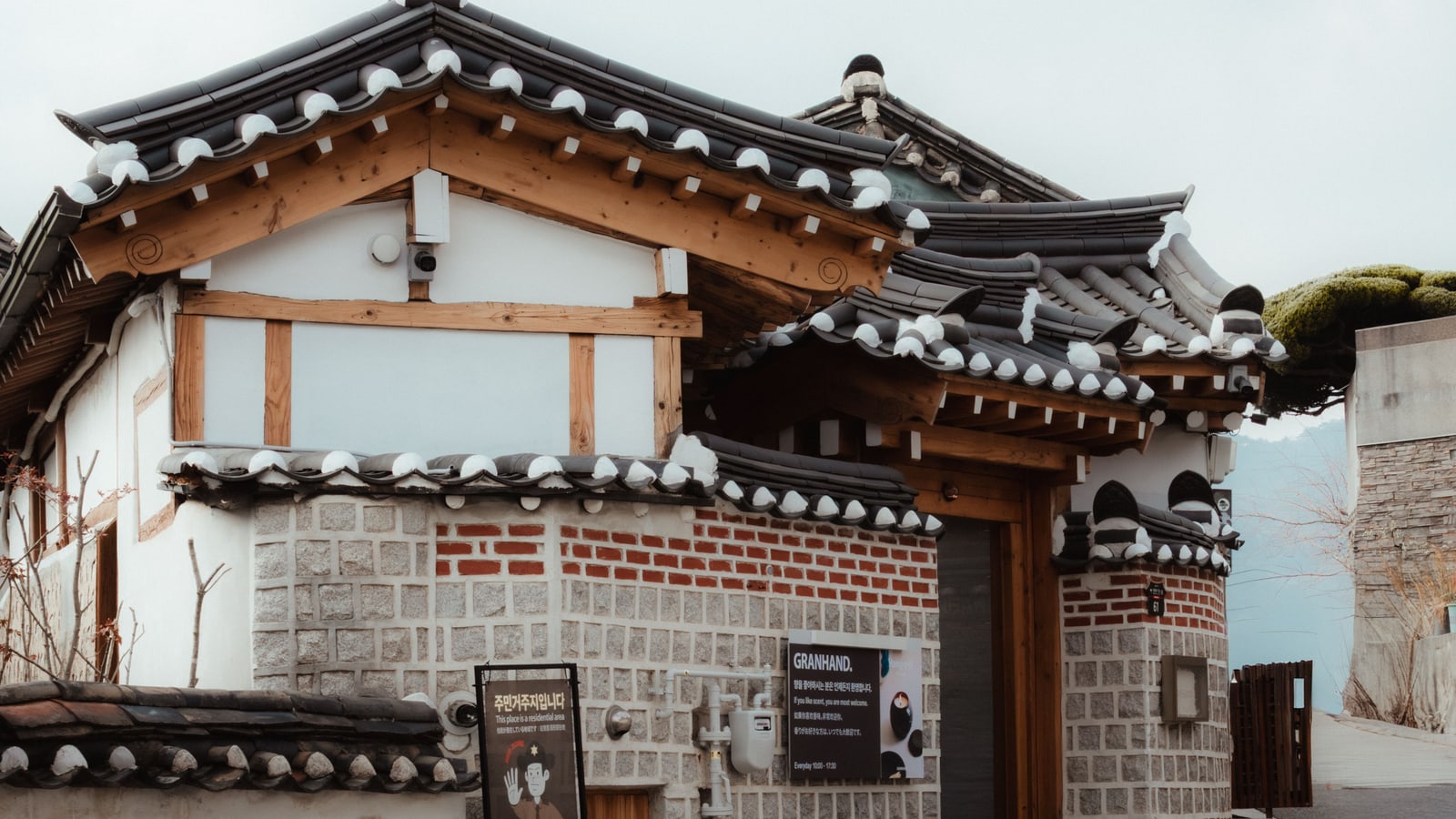
A traditional hanok stay (hanok cheheom) offers direct immersion into historic Korean timber-frame architecture, private interior courtyards, and floor-based living. To navigate the experience comfortably, expect firm floor bedding, minimal acoustic insulation, and strict preservation rules that differ fundamentally from modern concrete hotels.
Booking a hanok requires balancing historic character with modern utility. While purist heritage homes feature shared exterior restrooms and thin futons, modern boutique renovations provide private plumbing, air conditioning, and premium floor mattresses.
Architecture and Climate Engineering: Timber, Clay, and Ondol
Traditional Korean houses (hanok, 한옥) are engineered around two complementary climate adaptations: the open wooden veranda (daecheongmaru, 대청마루) designed to circulate cool air during humid summers, and the underfloor heating system (ondol, 온돌) built to withstand sub-zero winters.
Historically fueled by wood smoke channeled beneath stone slabs sealed with oiled clay paper, modern hanoks use hydronic radiant piping connected to an automated gas or electric boiler. Heat radiates upward directly through the floor, making the walking and sitting surfaces warm to the touch. Because the room's heat source is under your body, traditional layouts omit elevated Western bed frames. Guests sleep directly on a padded cotton mattress quilt (yo, 요) topped with a duvet (ibul, 이불).
Natural materials define the interior atmosphere. Pine timbers are joined without metallic nails, walls are packed with red clay and straw, and interior doors consist of latticed pine frames lined with translucent mulberry paper (hanji, 한지). This paper moderates humidity and softens natural light, but it provides virtually no soundproofing between rooms.
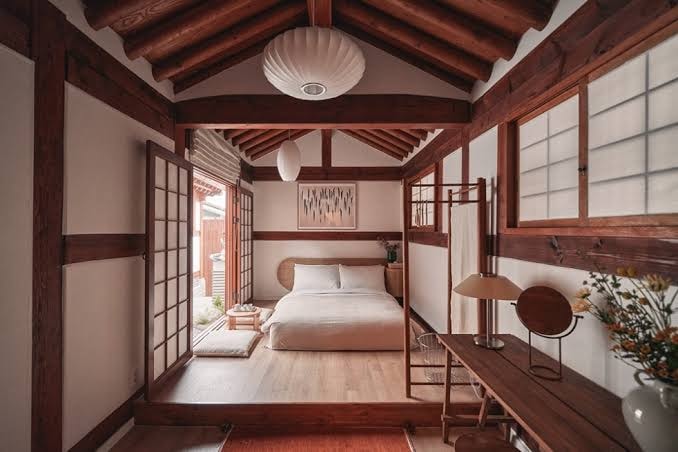
The core architectural principle of a hanok combines baesanimsu (배산임수)—building with mountains behind and water in front—with chagyeong (차경), or "borrowed scenery," framing exterior gardens through open sliding screen doors.
How to Book and Check In: A Step-by-Step Action Guide
Hanok accommodations range from budget guesthouses run by resident families to private exclusive compound rentals (dokchae, 독채). High-demand destinations include Bukchon and Ikseon-dong in Seoul, Jeonju Hanok Village, Gyeongju, and Andong. Follow this workflow to secure the right property:
Step 1: Select Your Reservation Platform
Mainstream booking aggregators such as Booking.com, Agoda, and Airbnb list hundreds of hanok properties with English interfaces and standardized cancellation policies. For upscale, architecturally restored private houses, use curated Korean platforms like Stayfolio (스테이폴리오), which features high-end interior photography and English-language booking support. For ultra-budget, community-run stays in rural areas such as Andong or Gangwon-do, listings often reside on Naver Place, where hosts coordinate via messaging.
Step 2: Vet the Bathrooms and Climate Controls
Examine listing photographs and amenity descriptions carefully before confirming:
- Look for the phrase "Private Bathroom" (dandok hwajangsil, 단독 화장실). Many heritage-listed guesthouses feature shared bathroom facilities located across an open courtyard.
- Check whether heating and cooling are individually regulated. Older properties sometimes run a central boiler controlled exclusively by the host, whereas renovated boutique units offer wall-mounted digital control panels inside your room.
Step 3: Complete Entry and Footwear Protocols
Most urban hanoks operate automated, unstaffed check-in systems. Hosts transmit entry codes on the morning of arrival via messaging apps:
- Locate the exterior wooden gate (daemun, 대문), where digital keypads are often hidden behind decorative wooden panels.
- Step across the raised threshold into the central courtyard (madang, 마당).
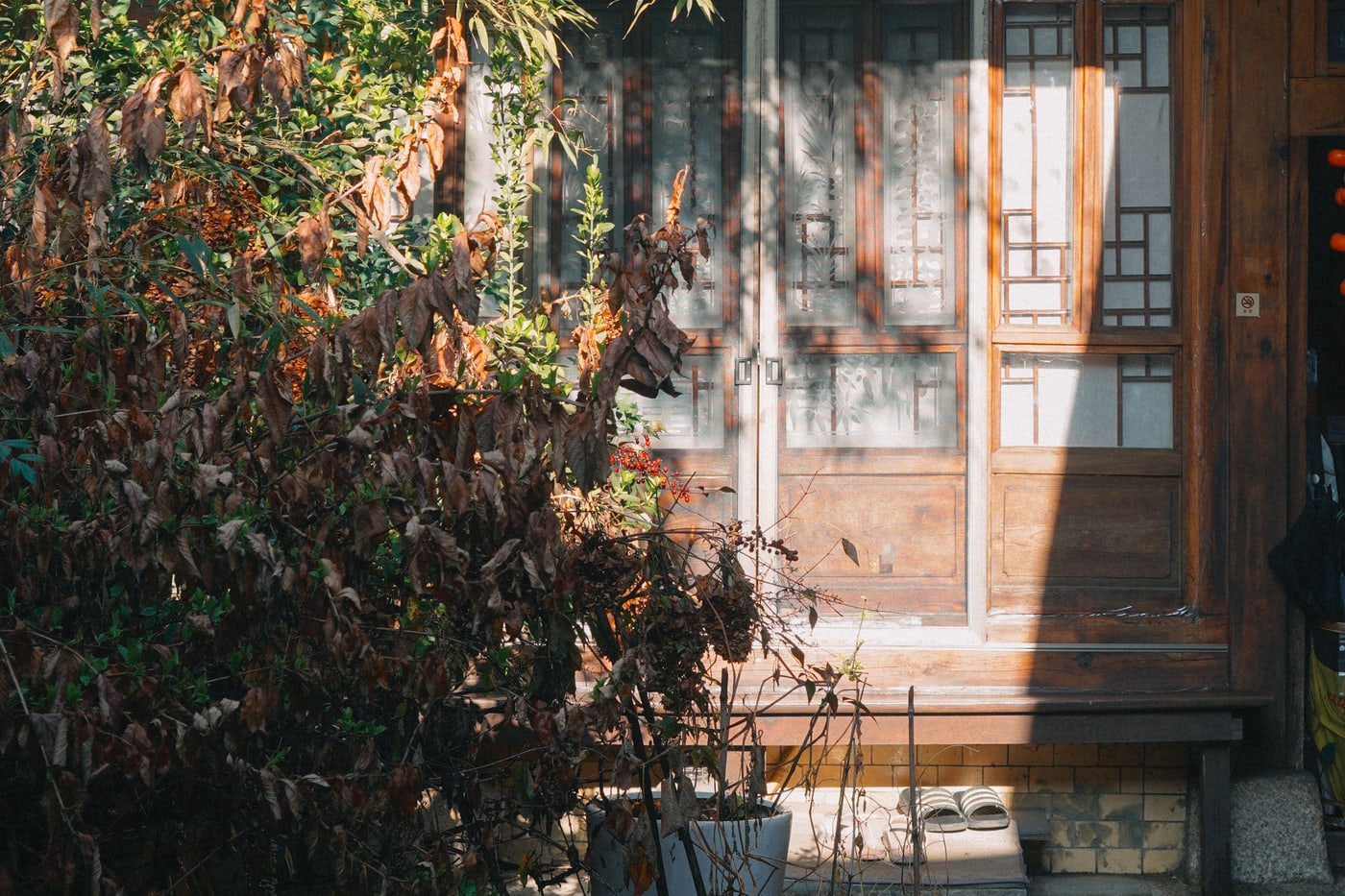
- Remove outdoor shoes immediately at the raised stone step (didimdol, 디딤돌) or wooden deck (toetmaru, 툇마루) before entering any enclosed room. Walk inside wearing clean socks or indoor slippers provided by the host.
Accommodation Styles, House Etiquette, and Essential Phrases
Hanok stays do not correspond to standard hotel star ratings. A luxury hanok may still require sitting on the floor, while a budget guesthouse might feature a newly renovated private shower. Prices depend heavily on whether you rent an individual room inside a shared house or reserve an entire courtyard exclusively.
| Category | Nightly Cost (Approx.) | Bedding Style | Restroom Setup | Best For |
|---|---|---|---|---|
| Traditional Guesthouse (Hanok Geuseuteuhauseu) | 60,000 – 130,000 KRW | Standard thin floor futon (yo) | Often shared or detached | Solo travelers, budget backpackers, cultural purists |
| Boutique Hanok Hotel (Semi-restored) | 150,000 – 350,000 KRW | Thick memory-foam floor mattress or low-profile bed | Private ensuite bathroom with modern fixtures | Couples, first-time visitors seeking heritage and comfort |
| Private Rental Compound (Dokchae Hanok) | 400,000 – 900,000+ KRW | Designer platform beds or premium floor sets | Multiple private bathrooms, indoor stone soaking tubs | Families, private groups wanting complete seclusion |
Preservation Rules and Etiquette
Because timber and paper structures are vulnerable to moisture, impact, and fire, rules inside a hanok are strictly enforced. Violating these rules can lead to steep restoration charges.
- Protect the paper screens (changhoji): Interior doors slide along wooden tracks. Always slide doors open and closed using the recessed wooden handles (sonjabi). Never push the paper surface directly with your fingers, as dry hanji punctures easily under slight pressure.
- Observe quiet hours strictly: Clay and paper walls provide minimal acoustic dampening. Quiet hours (chimsil jeongryuk) usually begin at 22:00. Keep television or mobile volumes low, speak in hushed tones, and avoid sliding furniture across the floor late at night.
- Comply with fire regulations: Hanoks present serious fire risks. Open flames, candles, incense, and portable indoor butane burners are prohibited inside guest rooms. Cooking is strictly limited to electric kettles or induction hobs in designated kitchen areas.
- Step over door thresholds: The raised wooden beam along sliding door bases (mundan, 문턱) carries structural weight. Always step cleanly over it. Stepping directly onto the beam warps the frame, misaligning sliding doors and allowing drafts inside.
- Carry luggage across wooden floors: Rolling heavy suitcase wheels over soft pine floorboards or lacquer-treated paper finishes (jangpan, 장판) creates permanent surface dents. Carry bags directly to assigned luggage mats.
Essential Korean Phrases
Keep these practical expressions ready when communicating with your host:
- "Can you explain how to adjust the floor heating?"
- 난방 조절 어떻게 하는지 알려주세요.
- Nanbang jojeol eotteoke haneunji allyeojuseyo.
- "Could we get one more thick floor mattress?"
- 바닥 요 하나만 더 주실 수 있나요?
- Badak yo hanaman deo jusil su innayo?
- "Where should we leave our shoes?"
- 신발은 어디에 두면 되나요?
- Sinbareun eodie dumyeon doenayo?
- "The digital door lock is not opening."
- 도어락이 안 열려요.
- Doeoragi an yeollyeoyo.
Frequently Asked Questions
Can I request a Western bed in a traditional hanok? Only select boutique properties feature Western-style mattresses mounted on low wooden platforms. The vast majority of authentic hanoks use traditional cotton futons (yo) spread across the heated floor. If you suffer from joint or back issues, check listings specifically for rooms labeled "Bed Room" (chimdae-bang, 침대방) or choose a hybrid luxury property.
Is staying in a hanok comfortable during the winter? Yes. The ondol heating system makes the floor very warm. However, traditional wooden window frames allow mild ambient drafts (oepung, 외풍). Wear thermal sleepwear and set the room thermostat between 21°C and 23°C to maintain comfortable sleeping temperatures without overheating the floor.
Are private courtyards accessible at all hours? In private exclusive rentals (dokchae), the entire courtyard is yours throughout your stay. In shared guesthouses, the courtyard is a shared space governed by house quiet hours. You may sit outside during the day, but socializing there usually ends at 21:00 or 22:00 to prevent echoing noise into neighboring guest rooms.
Pro Tips: Mistakes to Avoid and How to Save
- Lift suitcases off the floor: Rolling abrasive suitcase wheels over soft pine planks or traditional floor paper causes scratches that hosts will charge you to repair. Pick up your luggage at the stone entrance step and carry it directly to the designated luggage mat inside your room.
- Book regional cities for better value: Seoul's Bukchon neighborhood charges steep price premiums for small floor plans. For larger courtyards and authentic compounds at nearly half the nightly rate, book stays in Jeonju, Gyeongju, or the Andong Hahoe Folk Village.
- Check bathroom layouts in listing photos: In budget-oriented traditional hanoks, bathrooms are frequently compact "wet rooms" where the showerhead is installed directly adjacent to the toilet without an enclosing stall. If you require a dry vanity or a separated shower, verify this detail visually before confirming your booking.