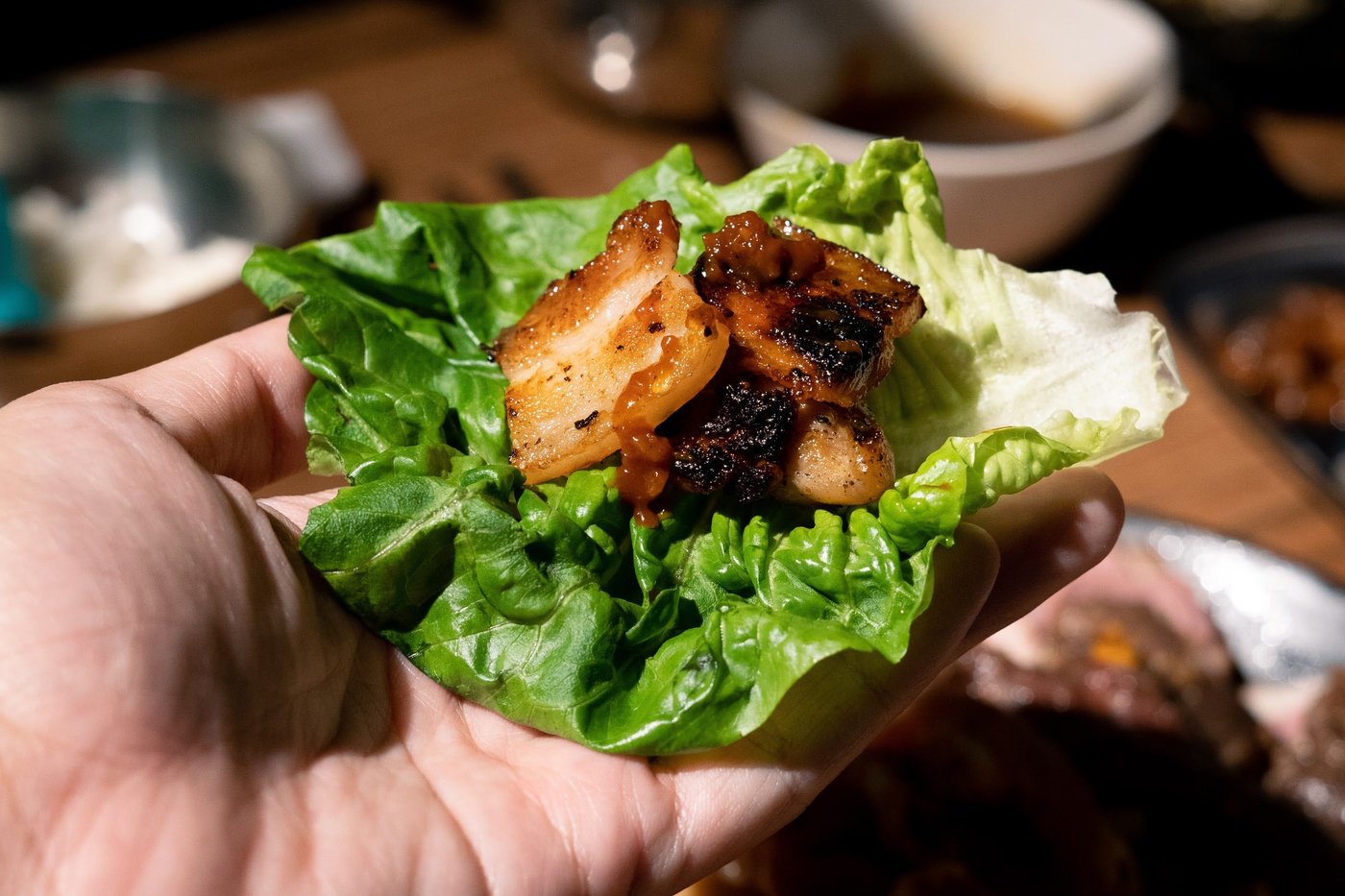
Korean ssam (leaf wraps) is not a casual salad mix, but a structured dining method designed to balance intense savory proteins with fresh, bitter greens in a single bite. Mastering the stacking order, moisture barrier, and proper filling ratios ensures the wrap stays intact without leaking sauces or juices on your hands.
The Cardinal Rule: The One-Bite Standard
Unlike Mexican tacos or Western wraps meant to be eaten in multiple bites, Korean ssam must be consumed entirely in one mouthful.
Biting a ssam in half ruptures the leaf structure, causing meat juices, oils, and ssamjang to spill out immediately. The intended profile requires all flavor notes—herbaceous greens, savory meat, warm rice, and fermented paste—to release simultaneously on the palate.
- Size Calibration: A proper wrap should not exceed 60% of your palm surface. Overfilling guarantees either jaw strain or structural collapse.
- Rice Integration: Adding a small portion of warm rice acts as an absorbent buffer that stabilizes excess grease and tempers the salinity of fermented condiments.
- Hand Preparation: Ssam requires direct contact with fresh greens. Use wet wipes or wash hands before dining to handle raw leaves comfortably.
Core Ssam Greens and Protein Pairing Matrix
Korean tables typically feature a basket of diverse leafy greens with distinct textures, bitter notes, and moisture levels.
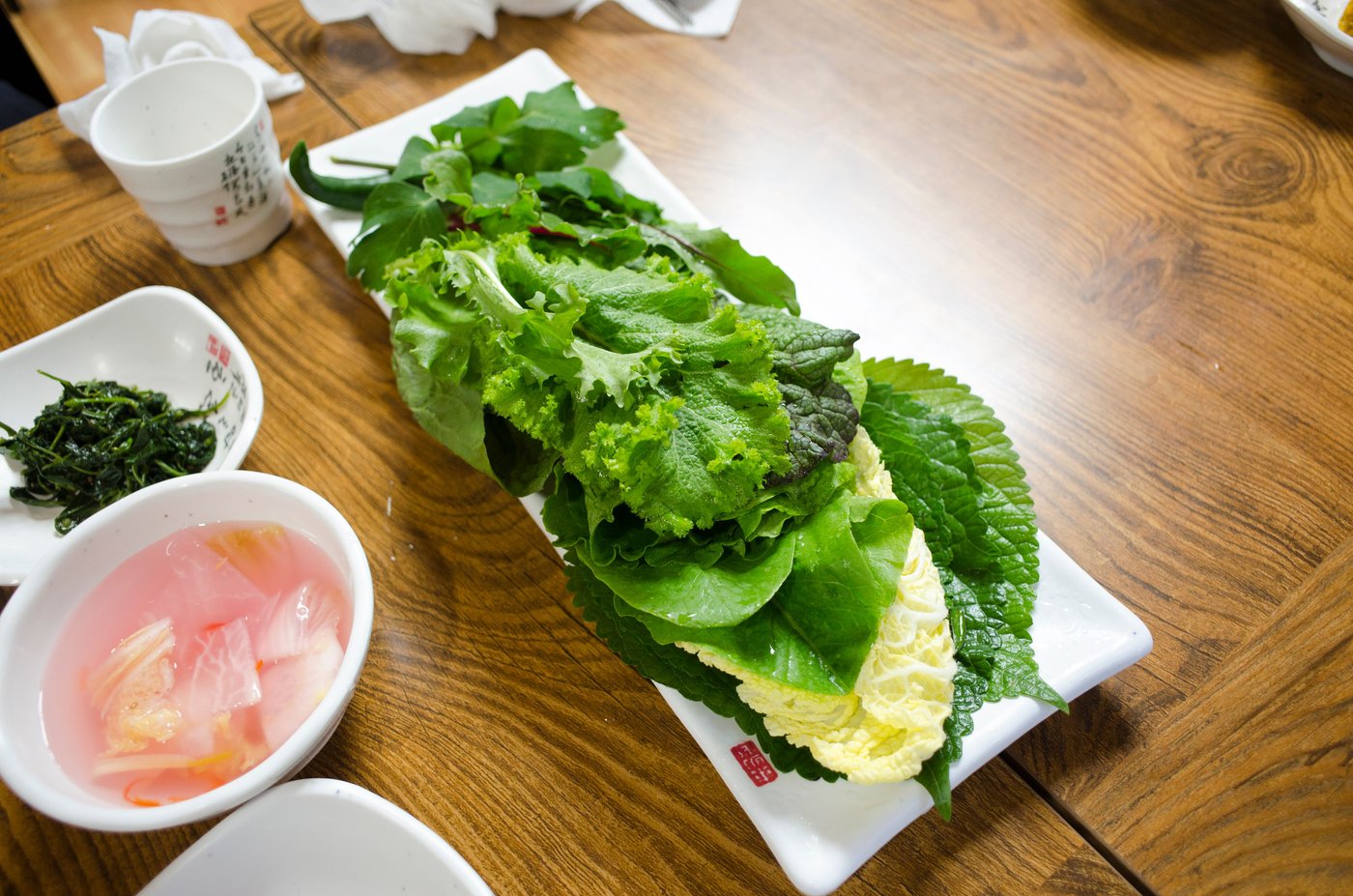
| Leaf Type | Texture & Flavor Profile | Optimal Protein Pairing | Assembly Rule |
|---|---|---|---|
| Korean Lettuce (Sangchu) | Tender, high moisture, mild sweetness | Samgyeopsal (Pork Belly), Grilled Beef | Soft base layer; trim long stem bases if oversized |
| Perilla Leaf (Kkaennip) | Rough texture, sharp anise-like aroma | Fatty meats, Gopchang, Dakgalbi | Place rough, textured underside face-up for smooth mouthfeel |
| Cabbage (Baechu) | Crisp crunch, dense fiber, natural sweetness | Bossam (Boiled Pork), Jokbal | Use tender upper leaf portions rather than thick white ribs |
| Mustard Greens (Gyeojachae) | Peppery, pungent, wasabi-like kick | Smoked Duck, Pork Neck | Use as a secondary accent leaf on top of mild lettuce |
3-Step Ssam Assembly Protocol
Follow this sequence to construct a compact, leak-proof wrap that fits the standard one-bite profile.
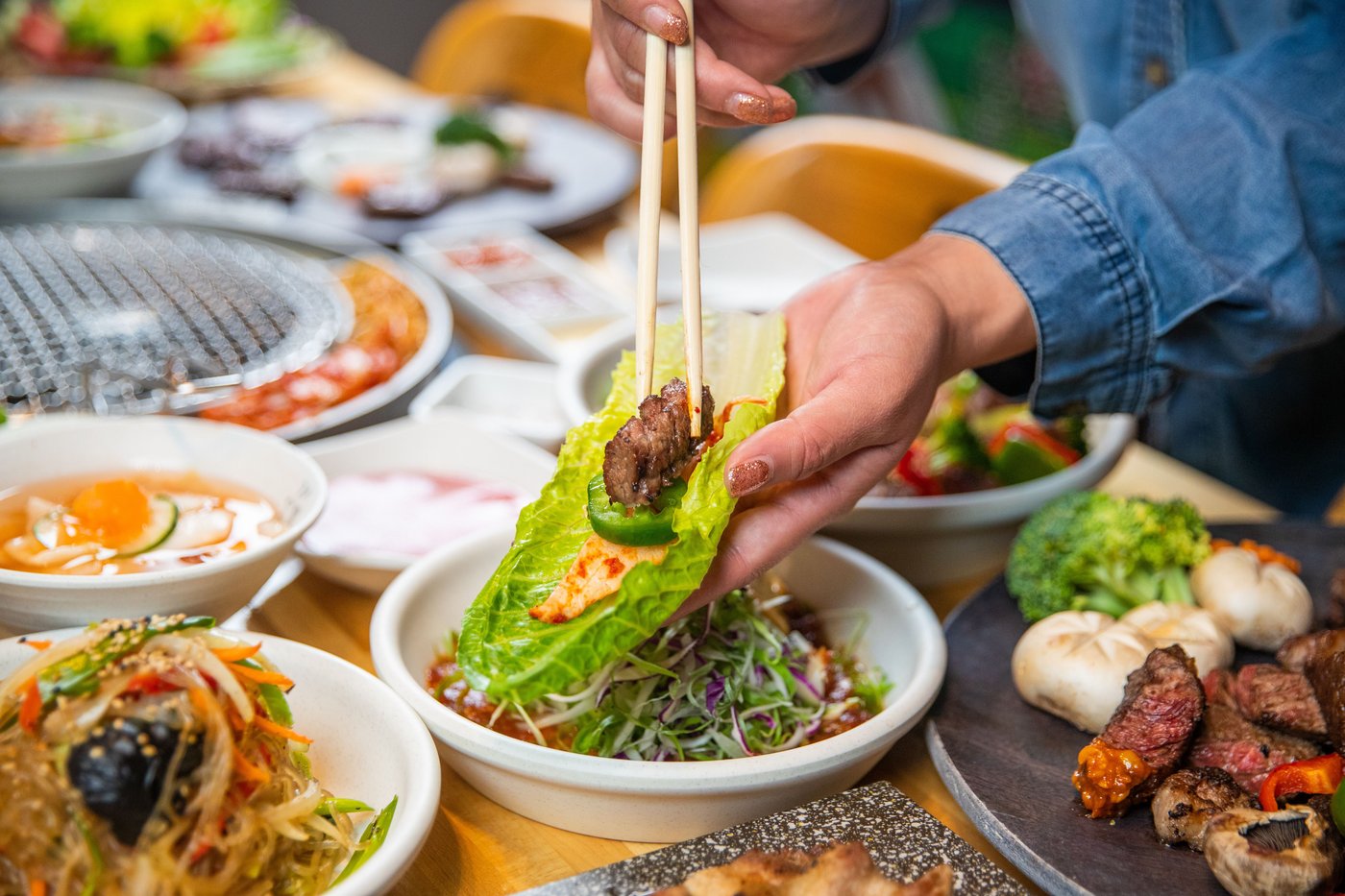
- Step 1: Lay the Foundation Leaves Place a broad sheet of lettuce flat on your palm. If adding perilla leaf for aroma, stack it directly on top with its smooth, glossy face down and the textured, veiny side facing upward toward the ingredients.
- Step 2: Layer Rice, Protein, and Paste in Measured Proportions Deposit half a spoonful of rice in the center to form an absorbent base. Rest a single piece of grilled meat over the rice, then use chopsticks to dab a pea-sized drop of ssamjang directly onto the meat. Add an optional slice of grilled garlic or ssam-mu (pickled radish).
- Step 3: Fold the Corners and Secure the Parcel Bring the bottom edge of the leaf up over the center, fold in the left and right sides tightly, and roll the top flap over to seal the parcel into a compact dumpling shape. Place the entire wrap into your mouth in a single motion.