Every genre has its shorthand. Korea's just happens to come with a soundtrack swell and a slow-motion turn.
Watch enough Korean dramas and you start to predict the next scene before it arrives. Someone will be grabbed by the wrist and pulled out of a room. A tipsy heroine will be carried home on someone's back. A wealthy mother will slide an envelope across a café table. These are not lazy writing so much as a shared visual language, and each one is quietly built on something real about Korean life.
Key Takeaways
- Wrist grab: a protective move that doubles as a rescue from a social situation
- Piggyback (업다): care expressed physically when words would be too much
- The envelope: class anxiety and family control, compressed into one prop
- Truck of doom: fate interrupting a romance, usually right before the confession
The wrist grab and the rescue
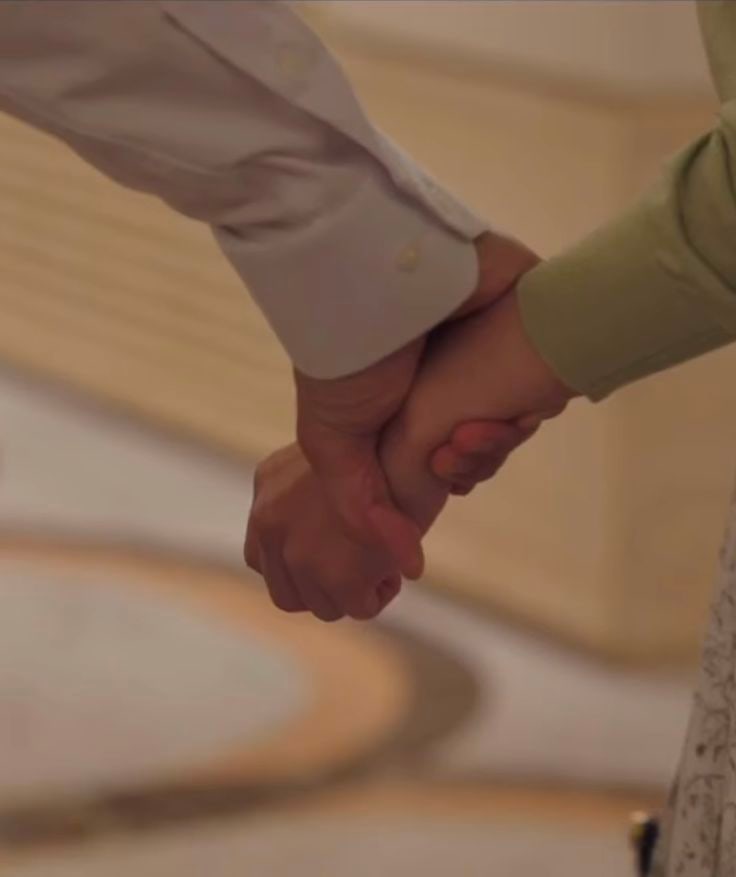
The male lead marches in, takes the heroine by the wrist, not the hand, and leads her out of a party, a meeting or an argument. Viewers abroad sometimes read it as controlling. In the logic of the drama it is a rescue: she has been cornered by a rival, a rude boss or her own family, and he removes her from a room where she cannot leave on her own.
That matters in a culture where walking out is socially expensive. Leaving a dinner with seniors, or ending a confrontation with someone older, carries real weight in Korea, so the wrist grab hands that decision to someone else. Newer dramas often flip the move, with the heroine grabbing the hero, and the joke lands precisely because everyone knows the original.
The piggyback ride
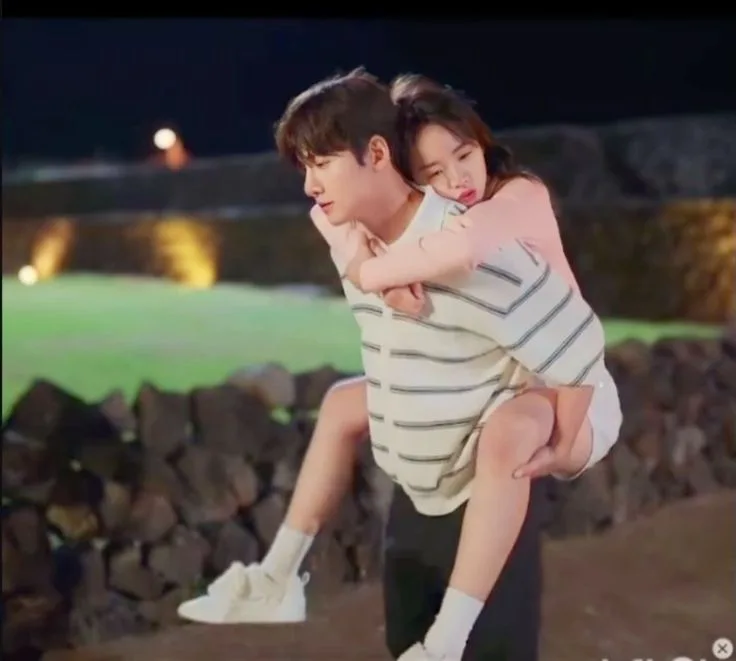
업다 (eopda) means to carry someone on your back, and Korean dramas use it the way Western romances use a first kiss. It usually happens after too much soju, a twisted ankle or a long night, and it is often where the real conversation happens: the person being carried mumbles the truth because they cannot see the other person's face.
The image has deep roots. Korean parents traditionally carried babies on their backs, wrapped in a blanket called a 포대기 (podaegi), and adults still use "업어 키웠다" (I raised you on my back) to describe how much they gave for someone. A piggyback on screen borrows all of that tenderness without anyone having to say "I love you."
| Trope | What happens | What it really signals |
|---|---|---|
| Wrist grab | Lead pulls someone out of a room | Protection, and permission to leave |
| Piggyback | Carrying a drunk or hurt partner home | Care, trust, honesty without eye contact |
| Water to the face | A rival or mother throws a glass of water | Humiliation and class contempt |
| Truck of doom | A truck appears as someone runs to confess | Fate, and a reset of the plot |
| Amnesia | A key character forgets everything | A second chance to fall in love |
The chaebol mother's envelope
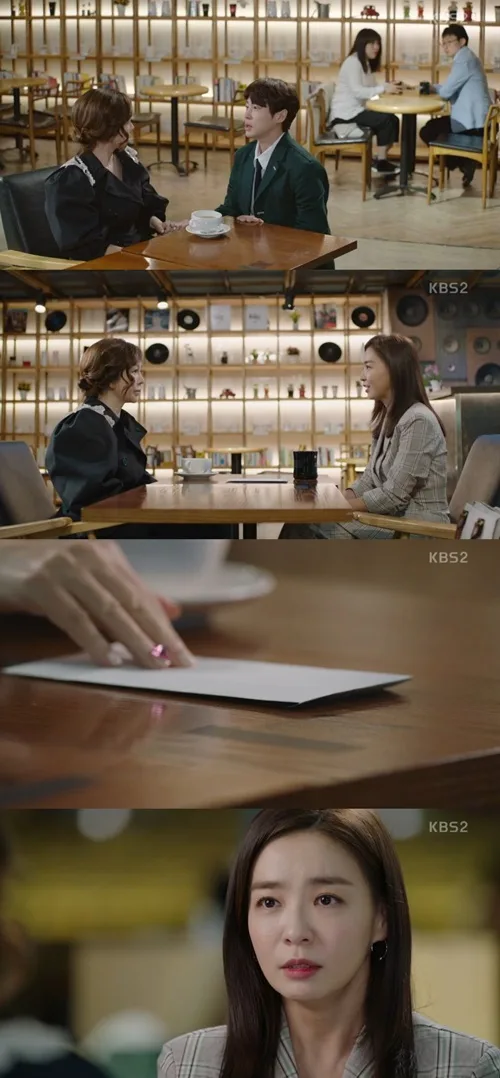
A 재벌 (chaebol) is one of Korea's family-run conglomerates, and in drama terms the chaebol family is a kingdom. The mother is its gatekeeper. Her signature move is the envelope of money, or a check, offered to the poorer partner in exchange for disappearing. When the envelope is refused, a glass of water to the face often follows.
The scene works because it dramatizes anxieties Korean viewers recognize: marriage as a joining of two families rather than two people, intense competition over schools and jobs, and the feeling that a handful of surnames run the economy. The envelope says, in one prop, that love is being priced. The heroine who pushes it back is defending her dignity in a way that audiences find deeply satisfying.
Fate, trucks and second chances
Korean storytelling has a strong sense of 인연 (inyeon), the idea that certain people are meant to meet. Dramas lean on it constantly: childhood encounters the leads have forgotten, red threads, past lives in fantasy series. The infamous truck of doom is the darker side of fate, a sudden accident that separates the couple right before a confession, so the plot can test whether destiny will bring them back.
Amnesia, secret siblings and long-lost birth parents all serve the same purpose. They keep the couple apart long enough for the story to explore loyalty, family duty and sacrifice, which are often the real themes underneath the romance.
Why the clichés keep working
Korean audiences know these tropes as well as anyone, and many recent dramas play with them openly. But clichés survive because they compress big feelings into instantly readable moments. A wrist grab, a back to lean on, an envelope pushed away: each one tells you who holds power, who cares, and who refuses to be bought, without a single line of exposition.
Next time you see one coming, look past the slow motion. You are watching a small lesson in how Korea thinks about family, status and the people worth carrying home.
More on how Korean culture shows up on screen: what K-drama titles teach you about Korean and nunchi, the art of reading the room.
Frequently Asked Questions
Why do K-drama leads grab wrists instead of hands? On screen it reads as protection or rescue rather than romance, pulling someone out of a situation they can't leave alone.
What is a chaebol in K-dramas? A chaebol is a family-run Korean conglomerate. In dramas the chaebol family usually stands for wealth, power and resistance to a "lower-class" partner.
Why are piggyback rides so common in Korean dramas? Carrying someone on your back is tied to how Korean parents carried babies, so it signals deep care and trust.
Do Koreans find these clichés cheesy too? Often, yes. Many modern dramas parody them, which only works because the originals are so familiar.