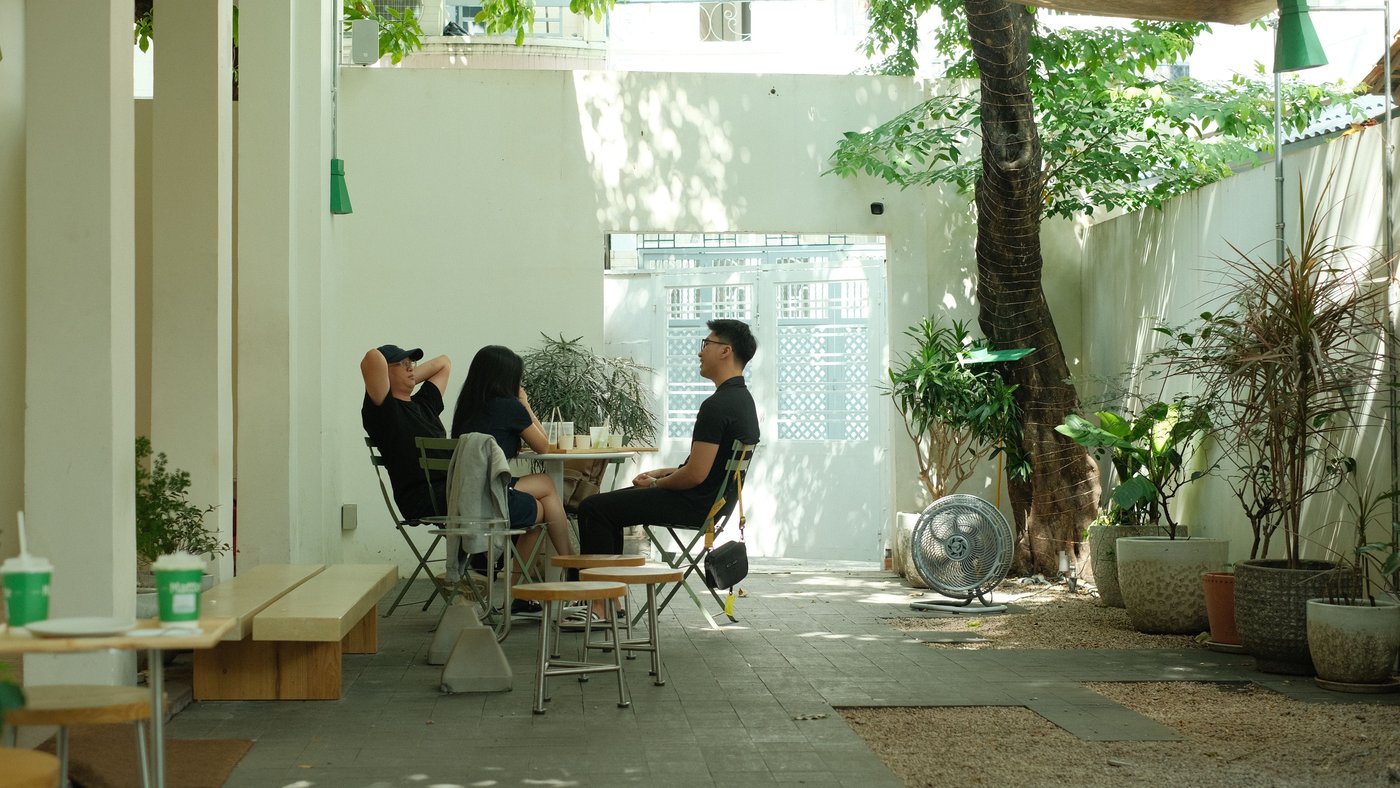
There is a Korean word that comes up in conversation constantly and has no clean English translation.
눈치 is roughly the ability to read a situation — to sense what people are feeling and what they want without being told, and to act on it.
It is treated as a skill, not a personality trait. You can have a lot of it, or none.
The phrases
눈치가 빠르다 — quick to read the room. A compliment.
눈치가 없다 — cannot read the room. A criticism, and a fairly sharp one. It describes someone who keeps talking when everyone wants to leave, or asks about a topic everyone else knew to avoid.
눈치를 보다 — to watch someone's mood, often anxiously. Usually negative, describing someone who cannot act without checking whether it is safe.
상사 눈치를 봐요. — I'm watching my boss's mood.
눈치를 채다 — to catch on, to notice something that was being concealed.
눈치챘어요? — Did you notice?
Four phrases, four quite different meanings, all built from the same noun.
Why it matters more here
Korean conversation carries more meaning outside the words than English conversation does. Direct refusal is rare. Direct criticism is rarer. The expectation is that the listener will pick up what is meant.
This is not politeness for its own sake. It is a system that avoids putting anyone in a position where they have to be openly refused — which, in a culture with strong seniority structures, would be costly for both people.
So the information still gets transmitted. It just does not go through the sentence.
How Koreans say no
This is the most practical application, and misreading it is the most common foreigner mistake.
| What they say | What it means |
|---|---|
| 생각해 볼게요 | I'll think about it → probably no |
| 좀 어려울 것 같아요 | It might be a bit difficult → no |
| 나중에요 | Later → not going to happen |
| 한번 볼게요 | I'll take a look → no |
| 글쎄요… | Hmm, well → no |
A flat 아니요 is used for factual questions. For requests, invitations, and proposals, the refusal is softened until it is barely visible.
The corresponding skill is not pressing. If you hear 좀 어려울 것 같아요 and follow up with "but why?", you have made the other person do the thing the phrasing existed to avoid.
Where it shows up
Who pays. The older or higher-status person usually pays. A younger person offering can be a formality that both sides understand.
When to leave. Nobody announces that a gathering is over. Someone checks the time, someone mentions tomorrow, and the group begins to move.
Seating. The seat furthest from the door is generally for the most senior person. Nobody says this.
Second rounds. 2차 — moving to a second venue — is often decided by drift rather than by a vote.
Related words worth knowing
정 — a deep attachment that builds through shared time, applying to people, places, and even objects. Often described as untranslatable, and used to explain why Koreans stay loyal to a neighbourhood restaurant for twenty years.
체면 — face, social dignity. Preserving someone's 체면 is part of why refusals are indirect.
분위기 — atmosphere, mood of a group. 분위기 파악 — grasping the mood — is close to 눈치 in practice.
What this means for you
Foreigners get a pass on 눈치, and a generous one. Nobody expects you to read a Korean room the way a Korean does, and misreading it will be forgiven.
But noticing that the layer exists changes what you hear. Once you know that 생각해 볼게요 usually means no, a lot of confusing interactions stop being confusing.
The practical version is small: pay attention to who speaks first and last, notice when the topic changes abruptly, and treat a soft answer as a real answer.
Hearing it happen
눈치 is easier to observe than to explain. It lives in pauses, in changes of subject, and in what people do not say.
K-PATTO episodes are ordinary conversations between people at different ages and levels of familiarity, which is where this layer shows up — who uses 반말 with whom, who defers, who changes the subject. The first ten are free at K-PATTO.