Copy the address in Korean and paste it into Naver Map. That one habit solves most navigation problems in Korea. Official addresses now follow a road-name system, but older lot-number addresses still appear on listings, receipts, and maps, and mixing the two up is how visitors end up on the wrong block.
Two Address Systems That Exist at the Same Time
Korea moved its official addressing from lot numbers to road names, with the change rolled out nationwide by 2014. The older system never disappeared from daily life. Property listings, older signs, and the way many locals give directions still use it.
A road-name address (dorongmyeong juso, 도로명주소) points to a building by the road it faces. A lot-number address (jibeon juso, 지번주소) points to a parcel of land inside a neighborhood called a dong. Both can describe the exact same building, and most official records list the two side by side.
A romanized address typed into a map app can return the wrong match or nothing at all. Paste the Hangul version instead, and the building shows up in one search.
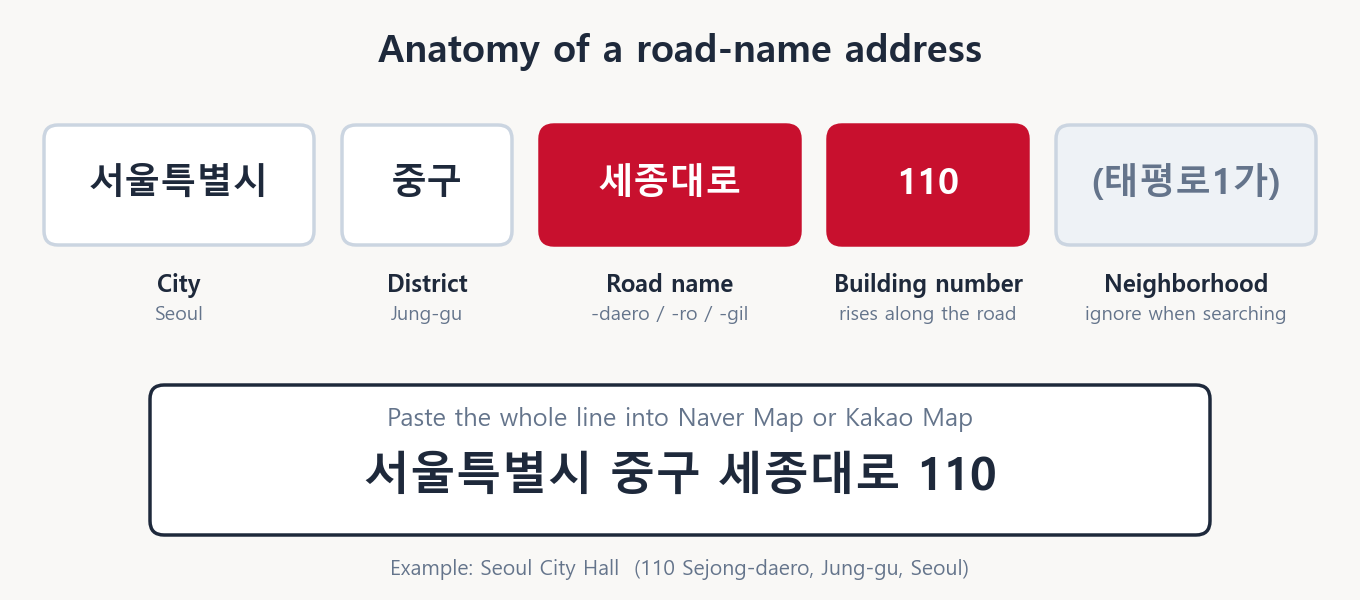
Take Seoul City Hall as an example. Its road-name address is 서울특별시 중구 세종대로 110, which reads as 110 Sejong-daero, Jung-gu, Seoul. Its lot-number address is 서울특별시 중구 태평로1가 31, which reads as Taepyeong-ro 1-ga 31. The same building carries both.
| Feature | Road-Name Address | Lot-Number Address |
|---|---|---|
| Based on | The road in front of the building | The land parcel inside a neighborhood (dong) |
| Example (Hangul) | 서울특별시 중구 세종대로 110 | 서울특별시 중구 태평로1가 31 |
| Where you see it | Official forms, deliveries, hotel confirmations | Older listings, some maps, local directions |
| Best for | Taxis, delivery apps, bookings | A fallback when the road-name search fails |
| Accepted by Naver Map / Kakao Map | Yes | Yes |
How to Read a Road-Name Address
A road-name address runs from the largest area to the smallest: city or province, then district (gu or si), then the road name, then the building number. A neighborhood name often follows in parentheses, which is a leftover from the lot-number system and is safe to ignore when searching.
The ending of the road name tells you how big the road is.
- -daero (대로): a major avenue, such as Sejong-daero.
- -ro (로): a standard road.
- -gil (길): a side street or alley branching off a larger road. Many restaurants and cafes sit on a -gil, which is why a short walk from the main road can feel like a different neighborhood.
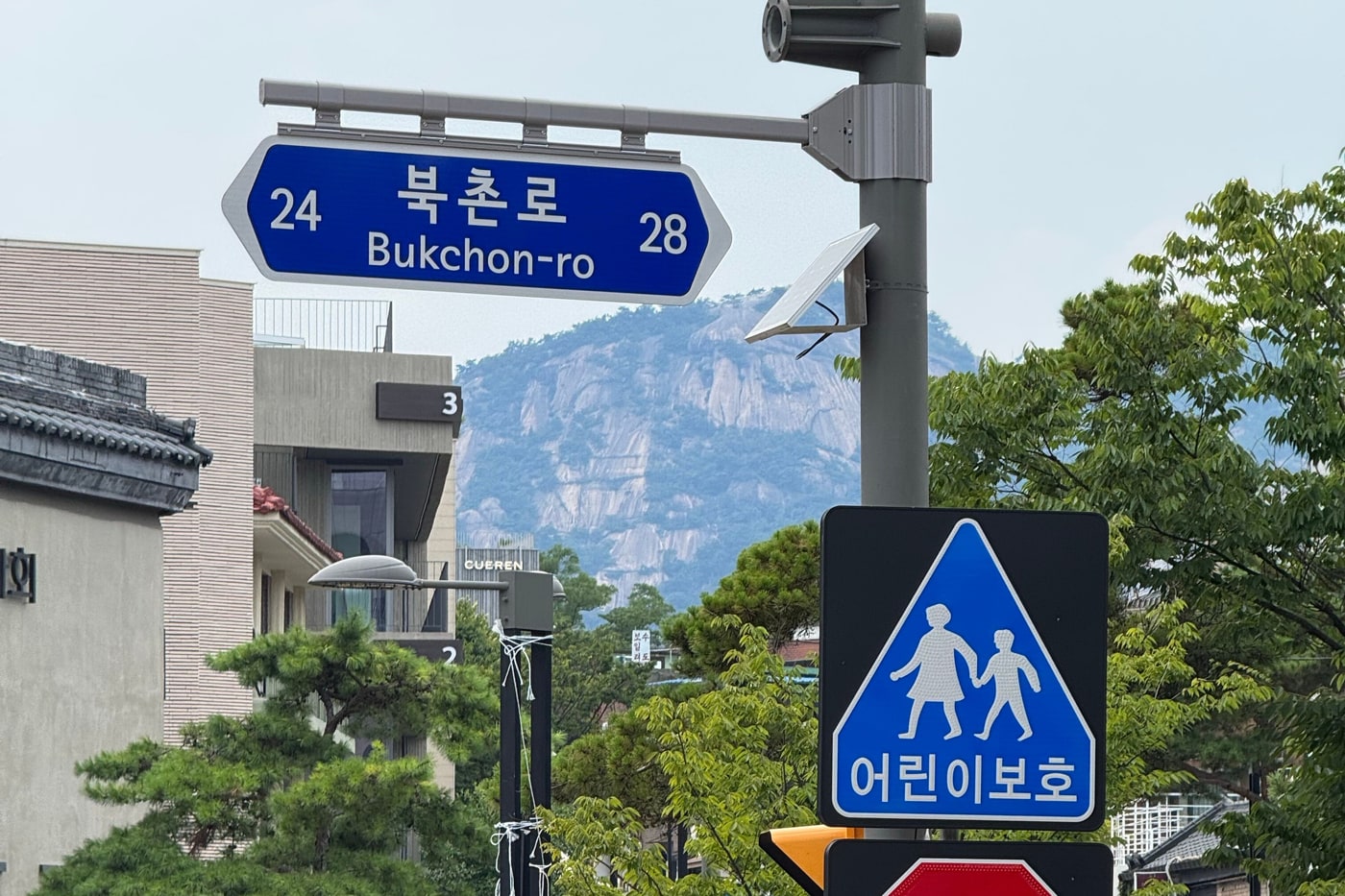
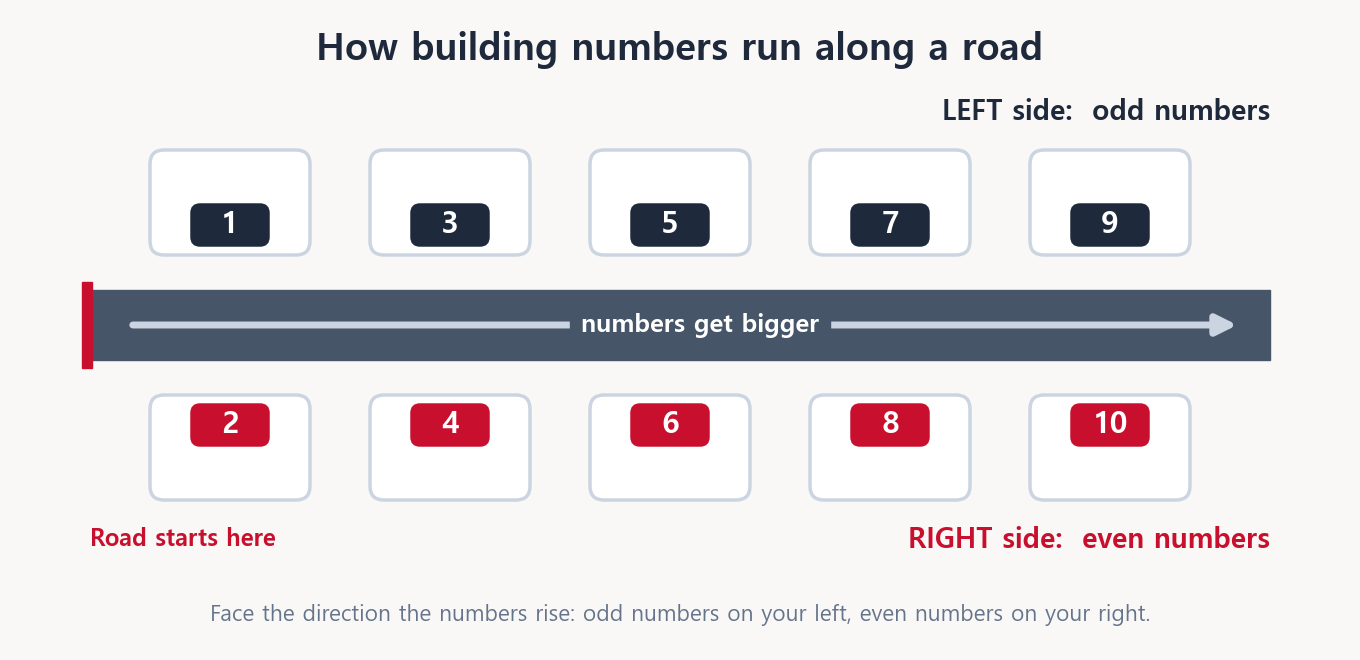
Building numbers follow the road, not the block. Odd numbers run along one side of the road and even numbers along the other, and the numbers rise as you move away from the road's starting point. This makes it possible to judge whether a destination is close or far before you start walking. Blue road-name signs at intersections show the road name and the range of building numbers on that stretch, and most buildings carry a number plate near the entrance.
Floors and Units Are Written Separately
Maps stop at the building. The floor and unit come after the main address, and they are easy to miss.
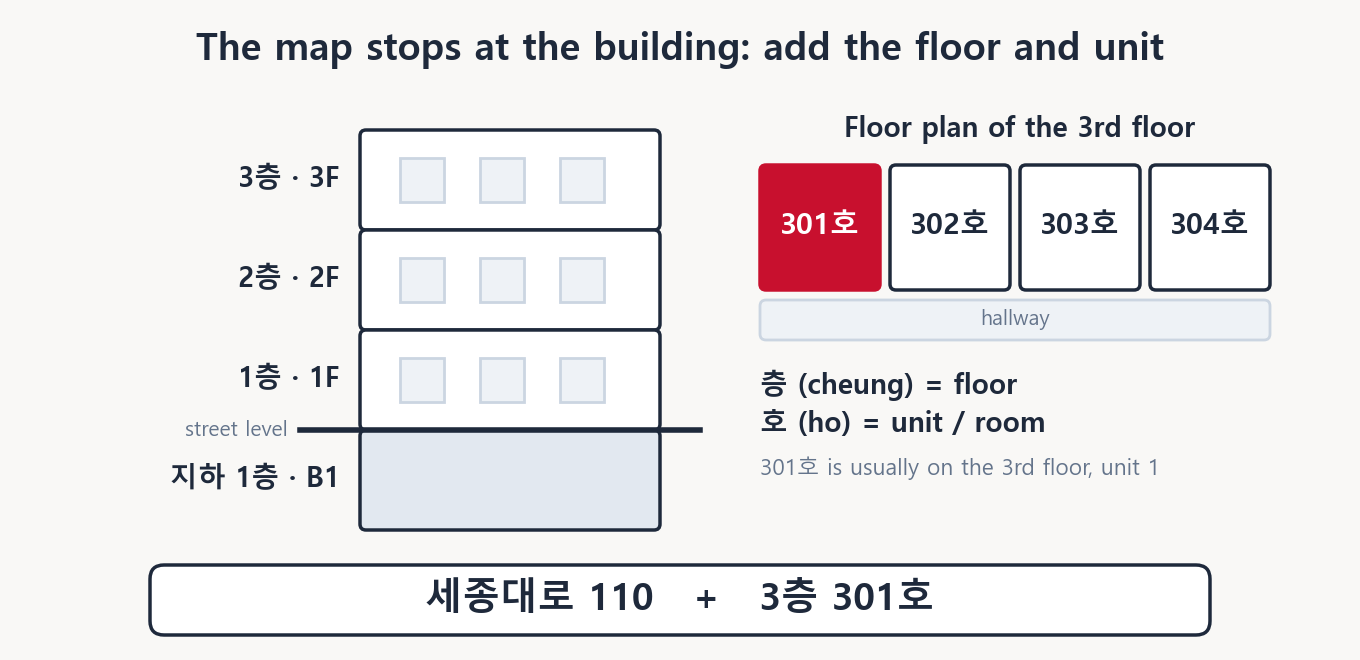
- 층 (cheung) means floor. 3층 is the third floor, often written 3F.
- 지하 (jiha) means underground. 지하 1층 is the first basement level, often written B1.
- 호 (ho) means unit or room. 301호 is room 301.
Many cafes, clinics, and salons sit above the ground floor or below street level, so a pin that lands on the right building can still leave you looking at the wrong entrance. Check the floor in the listing before you go, and look for the directory board near the door.
Step-by-Step: From Listing to Door
- Step 1: Copy the address in Korean. Booking sites, hotel confirmations, and map listings usually show the Hangul address under or beside the English one. Copy that line instead of retyping it.
- Step 2: Paste it into Naver Map or Kakao Map. Select the result labeled as a road-name address. If nothing matches, search the lot-number version or the name of the business.
- Step 3: Note the floor and unit. Write down the 층 and 호 separately, since the map will not show them.
- Step 4: Show the screen to a taxi driver or delivery rider. A Hangul address on a phone screen is faster and more reliable than pronouncing it.
- Step 5: Confirm at the building. Match the number plate by the entrance against your address, then follow the directory board to the right floor.
If a place has no usable address, search its name in Korean and open the map listing, which almost always carries the full address underneath.