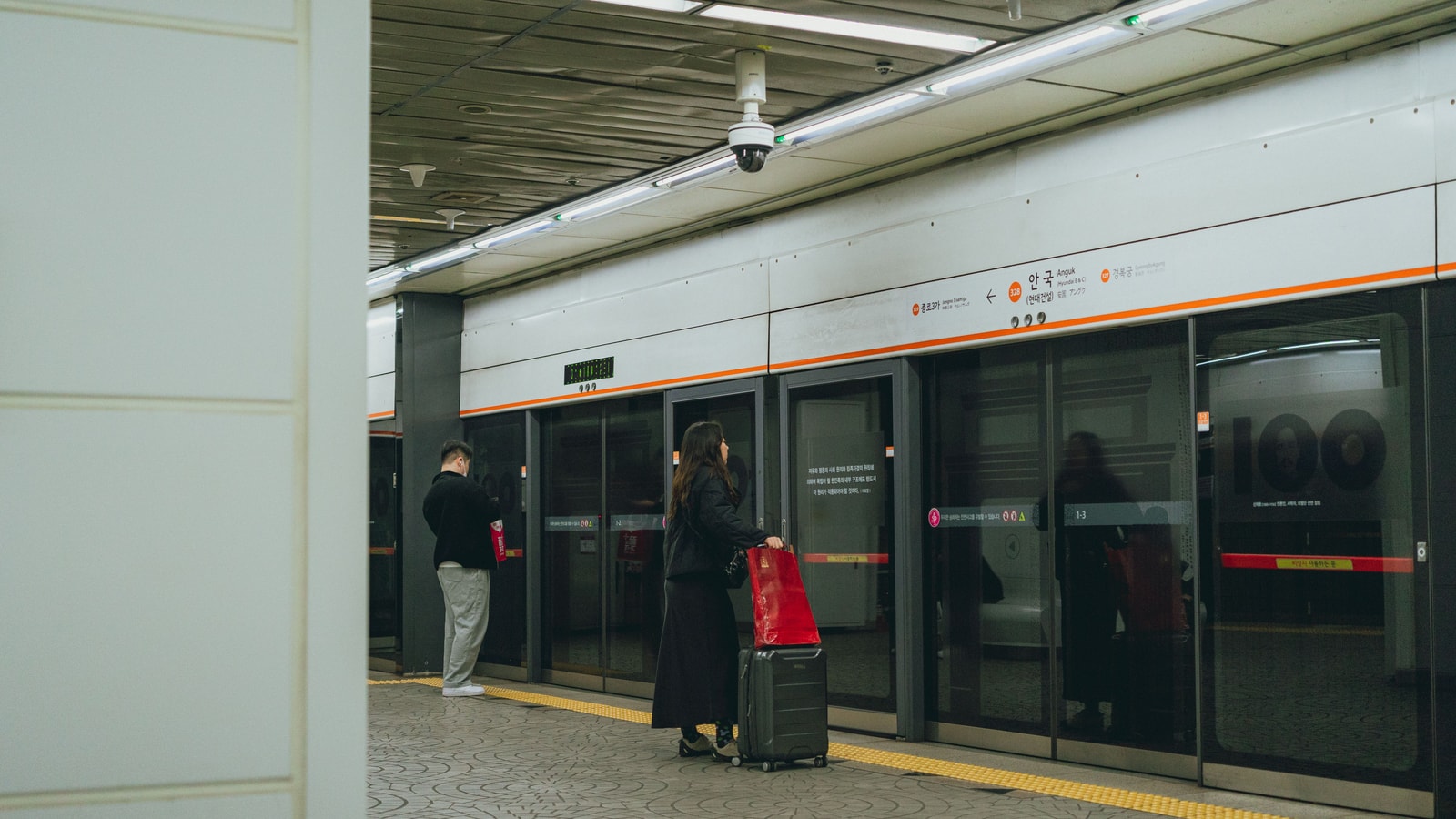
The Seoul subway is clean, cheap and signposted in English, so most visitors find it easy after one ride. Learn the transfer signs, check whether your train is express, and leave the colored priority seats free.
Key Takeaways
- Fare: pay by tapping a transit card; transfers within a set time are discounted or free
- Signs: every line has a number and color; follow the color to transfer
- Express trains: Line 9 and some other lines skip stations, so check before boarding
- Avoid: sitting in pink pregnancy seats or the priority seats at the ends of each car
Transfers and train types
| Situation | What to look for | Tip |
|---|---|---|
| Transferring | Orange transfer signs (갈아타는 곳) with the line color | Some transfers are long walks; allow 5–10 minutes |
| Direction | The name of the last station on the platform sign | Check the next station name too |
| Express vs local | 급행 (express) vs 일반 (local) on the train and platform screen | Line 9 express skips many stations; local stops everywhere |
| Last train | Around midnight on most lines | Check the app; times differ by line and day |
| Transit card | T-money or Climate Card | See which card to buy |
Watch: a beginner’s walkthrough of riding the Seoul subway (video: Where is Dan).
Fixing gate problems
Some stations have separate entrances for each direction, so it's easy to tap in on the wrong side.
| Problem | What to do |
|---|---|
| Tapped in on the wrong side | Tap out and back in on the correct side within 15 minutes, at the same station and line; it's free on a transit card (see the transfer rules) |
| Gate won't open | Press the call button (호출) on the gate; staff answer over the intercom and can open it remotely |
| Card shows an error | Try again slowly, or take it to the station office (역무실) |
| Not enough balance | Top up at the machine next to the gates, usually with cash |
Reading the station
Every station has a name in Korean, English, Chinese and Japanese, plus a line number and a station code. Exits are numbered, and locals give directions by exit number, so note yours when you arrange to meet someone or look up a restaurant. Large stations have maps showing which exit leads to which building.
| Sign | What it tells you |
|---|---|
| Line color and number | Which line you're on, such as green for Line 2 |
| Station code (e.g. 201) | A short number used on maps and screens |
| Exit numbers (출구) | Which street you come out on; restaurants list their nearest exit |
| Platform screens | When the next two trains arrive and whether they're express |
Seat etiquette
| Seat | Where | Who it's for |
|---|---|---|
| Pink pregnancy seats (임산부 배려석) | Middle of each car, pink seat and floor marking | Pregnant passengers; locals leave them empty even when the train is packed |
| Priority seats (교통약자석) | Ends of each car, a different color | Elderly, disabled, pregnant passengers and people with small children |
| Regular seats | Everywhere else | Anyone; offer yours to someone who needs it |
Leaving these seats free is one of the most noticed local habits. Early pregnancy doesn't show, so many pregnant women wear a small pink badge, and the empty seat is there for them without anyone having to ask. Younger passengers usually stand rather than sit in the priority seats at the ends of the car, even on a crowded train.
실례합니다. 명동역 가려면 어디서 갈아타요?
Sillyehamnida. Myeongdong-yeok garyeomyeon eodiseo garatayo?
Excuse me, where do I transfer to get to Myeongdong Station?
동대문역사문화공원역에서 4호선으로 갈아타세요.
Dongdaemun-yeoksa-munhwa-gongwon-yeogeseo sahoseoneuro garataseyo.
Transfer to Line 4 at Dongdaemun History & Culture Park.
카드가 안 찍혀요.
Kadeuga an jjikyeoyo.
My card won't tap through.
잠시만요, 확인해 드릴게요.
Jamsimanyo, hwaginhae deurilgeyo.
One moment, I'll check it for you.
Riding etiquette
Do
- Let passengers off before boarding
- Wear your backpack on your front in crowded cars
- Stand still and hold the handrail on escalators; stations ask passengers not to walk on them
- Use headphones for music and videos
Don't
- Sit in pink or priority seats when you don't need them
- Talk loudly on the phone
- Eat full meals on the train
- Rush through closing doors; the next train is usually minutes away
More transit guides: subway transfers and transit cards, riding city buses, and subway lockers.
Frequently Asked Questions
Which app should I use for the subway? Naver Map and KakaoMap give accurate routes, transfer walking times and last-train times. Google Maps works for transit, but the Korean apps are more detailed.
Can I pay the fare with a credit card? Not at the gates: foreign credit cards and phone wallets can't be tapped there yet. Many station machines now accept foreign cards for single tickets and Climate Cards, and a T-money card works everywhere.
Is it OK to eat or drink on the subway? A drink with a lid is fine. Strong-smelling food and full meals are frowned upon.
What happens if I miss my stop? Get off at the next station, cross to the opposite platform, and ride back. Many stations let you change direction without leaving the gates.