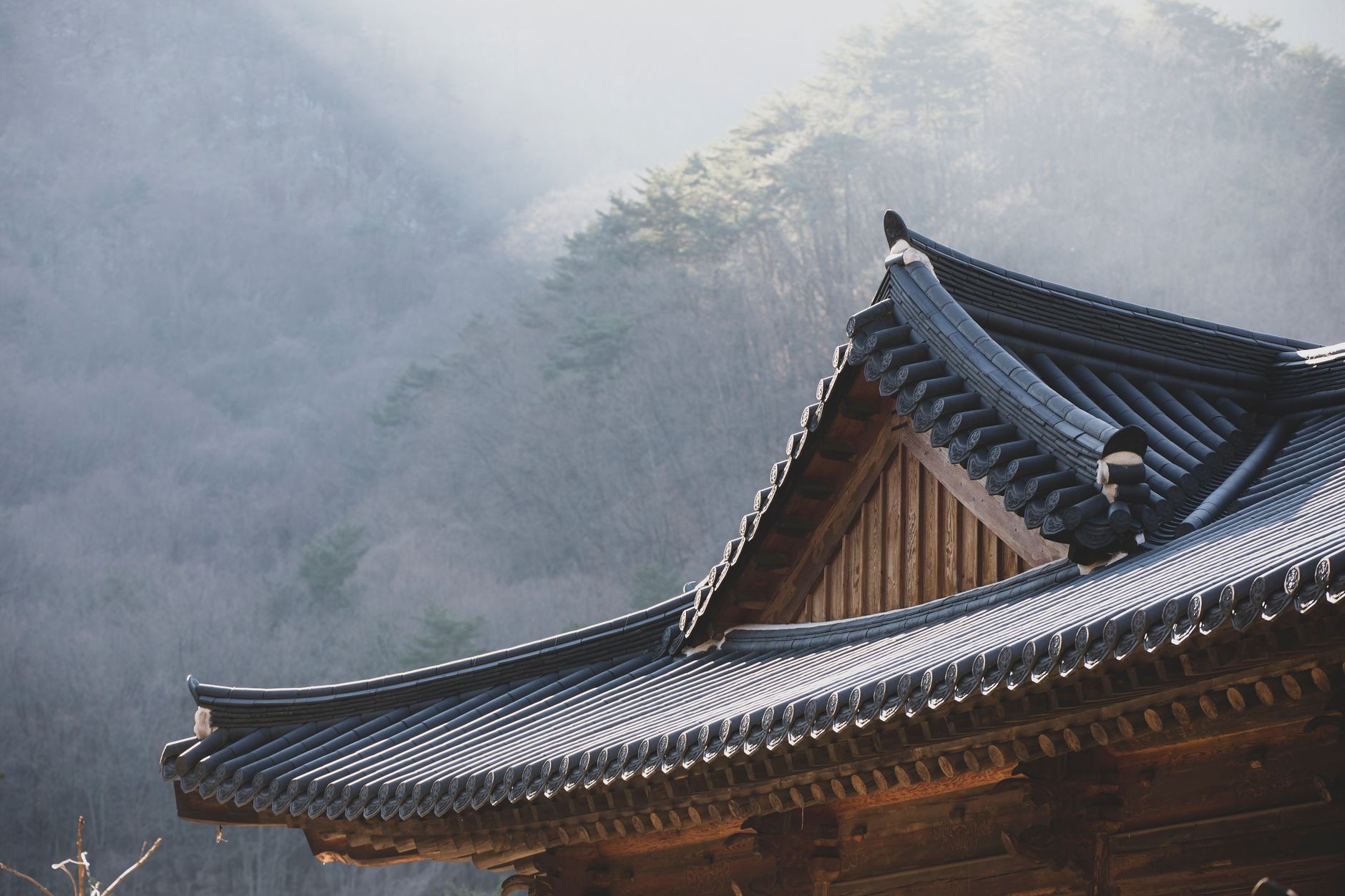
A Korean Templestay is a structured cultural program that lets visitors live alongside Buddhist monks in historical temples, participating in chantings, meditation, and traditional monastic meals. Foreign travelers and residents can reserve English-interpreted sessions online through the official Cultural Corps of Korean Buddhism reservation system.
The Monastic Heritage Behind Modern Korean Templestay
The Templestay program originated during the 2002 FIFA World Cup, when the Korean government and the Jogye Order of Korean Buddhism sought to provide cultural accommodation for international visitors. What began as a temporary hospitality initiative quickly evolved into one of South Korea's most recognized cultural experiences. Most participating temples belong to the Jogye Order, the largest branch of Korean Buddhism, which traces its lineage back over 1,200 years to the Silla and Goryeo dynasties.
Traditional Korean monasteries, known as sansa, are typically built deep within mountainous regions according to pungsu-jiri (Korean geomancy) principles. In 2018, UNESCO designated seven of these mountain monasteries as World Heritage Sites due to their preserved architecture and continuous spiritual practice. Attending a Templestay offers direct access to these heritage sites, where daily routines follow strict monastic codes that have remained largely unchanged for centuries.
Monasteries operate as self-contained communities where work, meals, and prayer form an integrated discipline. By participating in a program, non-Buddhists gain rare access to historical art, temple cuisine (sachal eomsik), and ancient meditation techniques like Ganhwa Seon (question-oriented zen meditation).
How to Select and Book an English-Friendly Templestay
Foreign visitors can book a stay using the official Templestay English portal (eng.templestay.com). Reservations generally open one to three months in advance, and weekend spots at popular mountain temples fill up quickly.
Note: Always verify whether your chosen date offers an English-speaking interpreter or monk guide. While major temples provide dedicated English coordination on weekends, smaller regional temples may only offer native Korean language support.
Step 1: Select Your Preferred Program Type
Templestay programs generally fall into three distinct categories. Review these options to choose the structure that matches your personal travel pace and physical capabilities:
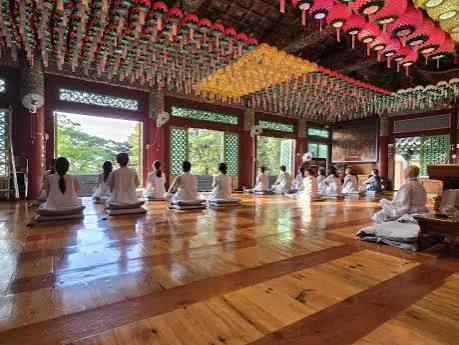
- Experiential Templestay (1 Night, 2 Days): A fully structured itinerary that includes morning and evening chanting (Yebul), 108 prostrations, tea time with a monk (Dado), and lotus lantern making.
- Rest-Oriented Templestay (1 Night or Longer): A flexible schedule requiring mandatory attendance only at meals and evening chanting. The rest of the day is spent reading, resting, or walking mountain trails.
- One-Day Templestay (2 to 4 Hours): A condensed session without an overnight stay, usually covering a temple tour, basic meditation, and a tea ceremony. Ideal for tight travel schedules.
Step 2: Complete the Online Reservation
- Visit the official website (
eng.templestay.com) and filter temples by region, language support, and program type. - Select your desired date and participant details. Enter your passport name, contact number, and dietary requirements.
- Pay the registration fee using an international credit card. Expect to pay roughly 50,000 to 100,000 KRW per night for rest-oriented stays, and 80,000 to 150,000 KRW for full experiential stays.
- Check your email for a confirmation voucher containing transportation directions, check-in times (usually 14:00–15:00), and a recommended packing list.
Step 3: Prepare Your Gear and Travel to the Site
Temples provide top and bottom uniform sets (susu-oi or temple vests and wide pants), but you must bring your own comfortable undergarments, modest socks, and personal toiletries. Public transit directions on the official website detail which local bus or taxi routes run from regional train terminals to the mountain entrance.
Daily Routines, Temple Food, and Core Activities
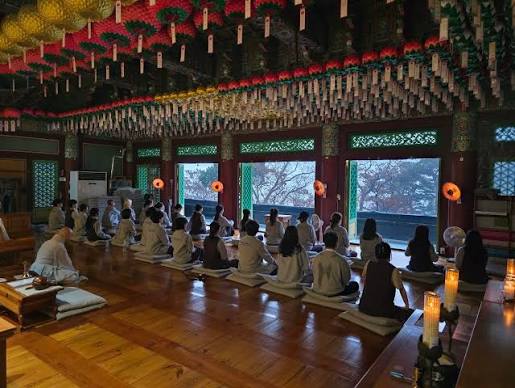
Life inside a temple revolves around strict time management. The monastic day begins well before dawn, around 03:30 or 04:00, marked by the sounding of the Moktak (wooden fish drum) and metal gongs calling the community to pre-dawn chanting.
| Time Block | Typical Activity | Description & Protocol |
|---|---|---|
| 03:30 – 04:30 | Dawn Yebul (Chanting) | Morning prayers in the Main Buddha Hall (Daeungjeon). |
| 06:00 – 07:00 | Baru Gongyang (Breakfast) | Traditional monastic meal using four wooden bowls (baru). |
| 08:30 – 10:30 | Chamseon (Meditation) | Seated zen meditation combined with mindful walking (Gyeonghaeng). |
| 11:30 – 12:30 | Lunch | Buffet-style vegetarian meal featuring seasonal wild herbs. |
| 14:00 – 16:00 | Chadam (Tea Ceremony) | Informal Q&A session over herbal tea with a resident monk. |
| 18:00 – 18:30 | Evening Drumming & Yebul | Ritual striking of the four temple instruments (drum, bell, cloud gong, wooden fish). |
| 21:00 | Lights Out (Smsik) | Complete silence across temple grounds; all room lights turned off. |
Temple Food (Sachal Eomsik) Protocol
Temple cuisine is entirely vegetarian and omits five pungent vegetables known as Oshinchae (garlic, green onions, chives, wild leeks, and onions) to keep the mind calm during meditation.
During formal Baru Gongyang meals, waste is strictly forbidden. Participants clean their wooden bowls at the end of the meal using warm water and a slice of pickled radish (danmuji), drinking the residual water to ensure no food particles are discarded. Even during informal buffet-style meals, you are expected to take only what you can eat completely.
Temple Etiquette and Essential Korean Vocabulary
Monasteries are active places of worship. Showing respect through body language and silent conduct is required throughout your stay.
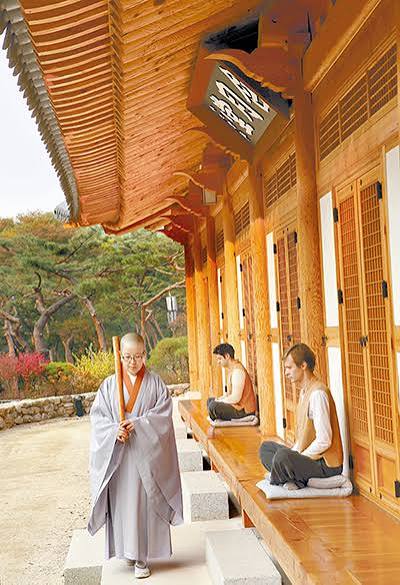
- Hand Posture (Hapjang): Place your palms together in front of your chest with fingers pointing upward when greeting monks, fellow participants, or entering temple halls.
- Walking Protocol (Chaak): When walking through the courtyard, fold your right hand over your left hand at waist level. Avoid swinging your arms, running, or shouting.
- Entering Buddha Halls: Never walk through the central door of a main hall; that entrance is reserved for monks. Use the side doors. Remove your shoes at the entrance, place them facing outward, and walk quietly along the outer edges of the hall. Never sit with your feet pointed directly at a Buddha statue or a monk.
- Clothing and Footwear: Always wear socks inside temple halls; bare feet are considered disrespectful. Avoid sleeveless shirts, shorts, revealing tops, and tight athletic leggings.
Essential Korean Phrases for Templestay
| Phrase (Hangul) | Romanization | English Meaning | Usage Context |
|---|---|---|---|
| 성불하십시오 | Seongbul-hasipsio | "May you attain Buddhahood." | Standard monastic greeting |
| 합장 | Hapjang | Palms-together bow | Physical sign of respect |
| 차담 | Chadam | Tea time conversation | Q&A with a monk |
| 발우공양 | Baru Gongyang | Formal monastic meal | Traditional wooden bowl dining |
| 화장실이 어디예요? | Hwajangsil-i eodiyeyo? | "Where is the restroom?" | General inquiry |
Frequently Asked Questions
Do I need to be a Buddhist to participate in a Templestay?
No. Templestay programs are open to people of all religious backgrounds, beliefs, and non-believers. Activities like chanting and prostrations are encouraged for cultural immersion, but monks and coordinators respect individual religious boundaries if you prefer to observe silently.
What kind of room accommodations can foreign visitors expect?
Most temples provide traditional Korean floor heating (Ondol) with quilted sleeping mats (yo) and thick blankets. Rooms are categorized into single-gender shared dormitories or private family rooms. While major urban temples have en-suite modern bathrooms, mountain temples often use clean, shared communal bathhouses.
Are children and senior citizens allowed to join?
Yes. Rest-oriented stays welcome travelers of all ages. However, family members should note that high-altitude mountain temples involve steep stone staircases and require quiet behavior starting at 21:00, which may present challenges for very young children or travelers with mobility impairments.
Pro Tips: Mistakes to Avoid and How to Save
- Avoid Overpacking Large Luggage: Mountain buses and steep temple access roads make wheeling large hard-shell suitcases difficult. Leave your main luggage at a hotel or city locker (such as at Seoul Station or Busan Station) and carry only a small backpack with essentials.
- Prevent Physical Strain During Prostrations: Experiential programs may include 108 bows (Baekpalbae). Keep your feet together, lower your knees first, place your hands on the mat, and touch your forehead to the floor before standing up with a flat back. Pushing up with bad posture causes lower back pain.
- Save Money via Off-Peak Booking and Promo Weeks: The Cultural Corps of Korean Buddhism holds a "Templestay Weeks" promotion once or twice a year (typically in spring and autumn). During these promotional periods, stay rates across selected temples drop by 30% to 50%, making it possible to secure a weekend reservation for as low as 20,000 to 30,000 KRW. Check the official website's banner announcements regularly for dates.