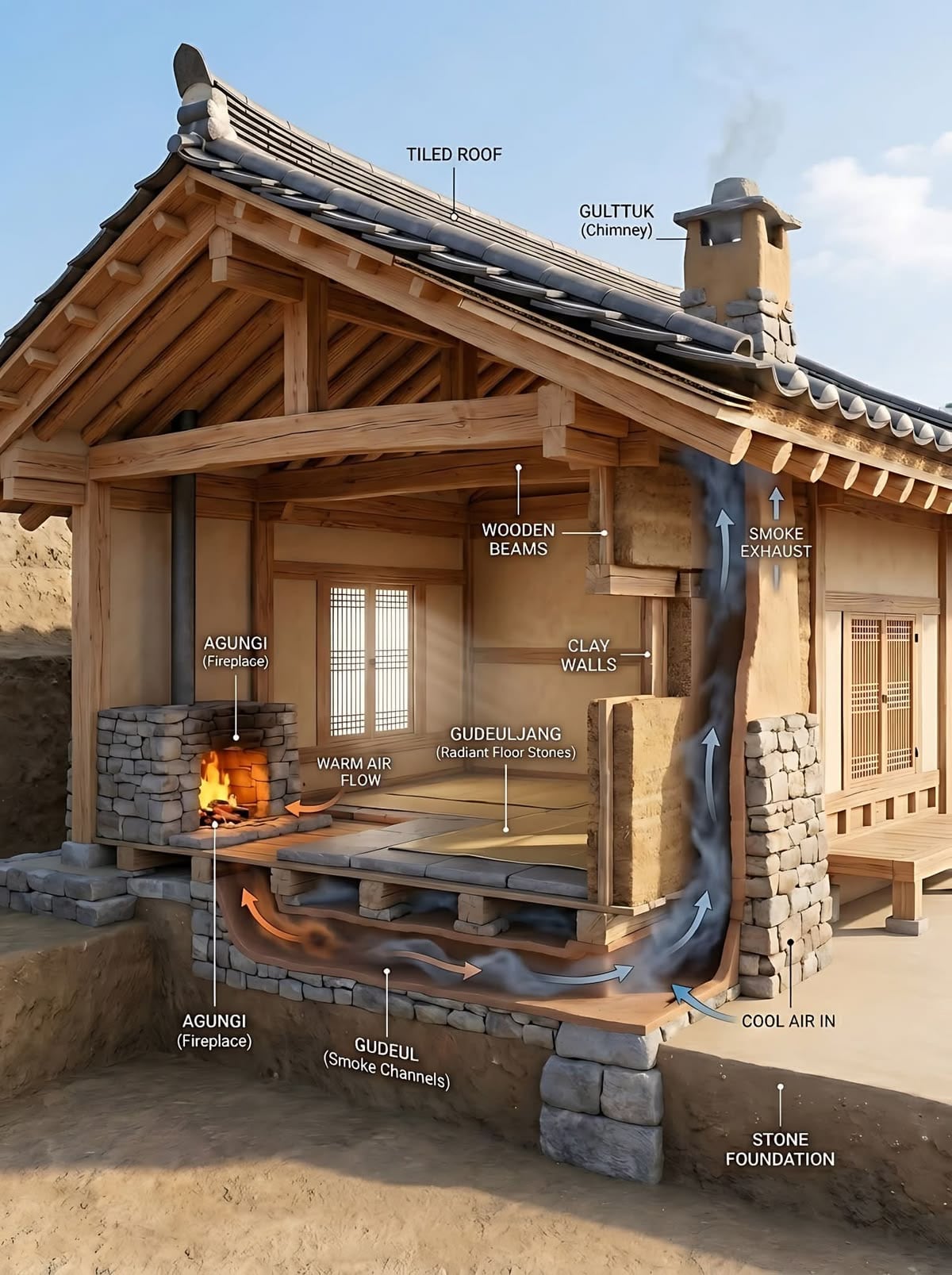
In Korea, the warmest place in the room has always been the floor.
Ask Koreans what they miss about home in winter and many will say the same thing: lying on a hot floor. For centuries, Korean houses were heated from below by 온돌 (ondol), a system that channels heat under stone floors. That single engineering choice shaped how Koreans sit, eat, sleep and even relax, and it still shapes daily life in modern apartments today.
Key Takeaways
- Ondol means "warm stone" and heats the room through the floor
- Shoes come off because the floor is where you sit and sleep
- Floor seating (좌식) is still common in homes and traditional restaurants
- The warmest spot (아랫목) was traditionally offered to elders and guests
How ondol works
In a traditional house, a fire was lit in a kitchen furnace called an 아궁이 (agungi). The hot smoke traveled through channels under flat stones beneath the room before escaping through a chimney on the other side. The stones absorbed the heat and released it slowly for hours, warming the floor, and the people sitting on it, long after the fire had died down.
Modern Korean apartments use the same idea with hot-water pipes laid under the floor, controlled by a thermostat on the wall. Many visitors are surprised to find no radiators or heaters, just a floor that becomes gently, sometimes very, warm. Ondol culture was designated a national intangible heritage of Korea in 2018, a recognition of how central it is to Korean identity.
A life lived on the floor
Because the heat comes from below, Korean homes developed around the floor. People sat on cushions called 방석 (bangseok), ate at low tables, and slept on a 요 (yo), a thick padded mattress, with a quilt called an 이불 (ibul). In the morning, the bedding was folded away and the same room became a living room or dining room.
Even in apartments with sofas and beds, many Koreans still sit on the floor, leaning back against the sofa rather than on it. Families gather on the warm floor to watch TV, nap or peel tangerines in winter.
| Ondol habit | Why it exists |
|---|---|
| Shoes off at the door | The floor is a clean surface for sitting and sleeping |
| Low tables (상) | Meals are eaten seated on the floor |
| Folding bedding | One room serves many purposes during the day |
| Leaning on the sofa from the floor | The floor is warmer than the seat |
| Hot-floor rooms at bathhouses | Lying on heated floors is seen as restorative |
The warm spot and its etiquette
In traditional homes, the area nearest the furnace, the 아랫목 (araenmok), was the warmest part of the floor. It was reserved for grandparents and honored guests, and food was sometimes kept there under a blanket to stay warm for a family member coming home late. The phrase still carries a sense of care and respect.
For visitors, floor living means a few simple rules. Take off your shoes at the entrance (look for the step down called the 현관, hyeongwan), avoid stepping on floor cushions with outdoor socks if you can, and sit cross-legged or with legs tucked to the side. Pointing your feet toward elders is considered rude. Our hanok stay guide covers what to expect when you sleep on a traditional heated floor.
Why the floor still matters
Ondol is more than a heating system. It created a culture of closeness, people gathered together on one warm surface, sharing blankets, food and conversation. It also explains why Koreans love a hot floor at a jjimjilbang and why many still say a warm floor is the best cure for a cold body.
If you stay in a Korean home or guesthouse this winter, try it the local way: turn up the floor heating, lie down on a yo, and feel the heat soak into your back. You will understand why so many Koreans call it the best part of the season.
Frequently Asked Questions
What is ondol? A traditional Korean underfloor heating system, now built into most Korean homes using hot-water pipes.
Why do Koreans take off their shoes indoors? Because the floor is used for sitting, eating and sleeping, so it must stay clean.
Do Koreans still sleep on the floor? Many use beds today, but sleeping on a yo on a heated floor remains common, especially in winter or with guests.
What is 좌식 seating? Floor seating at low tables, common in traditional restaurants and homes.