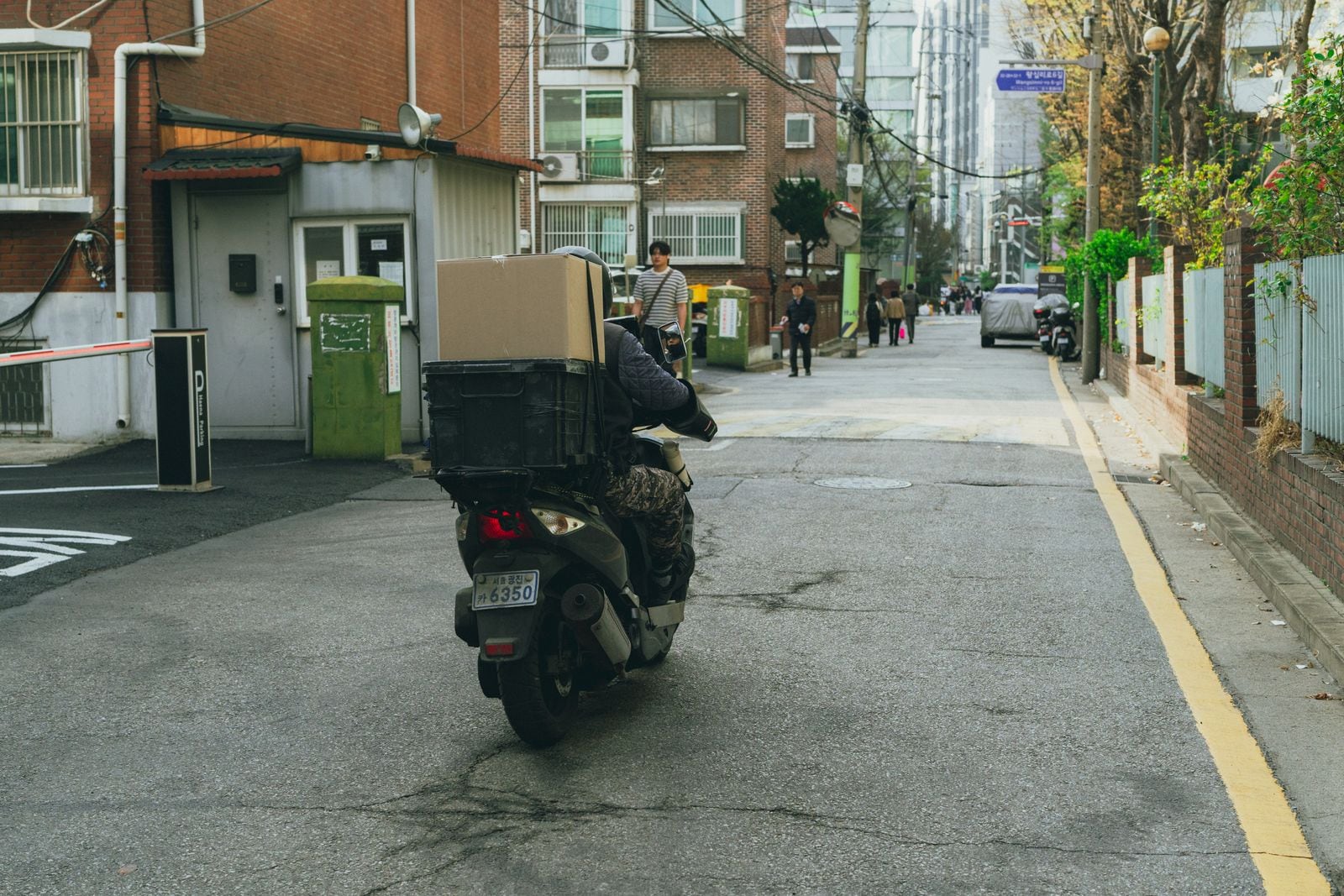
Order groceries at 10 p.m. in Seoul and they may be outside your door before you wake up.
빨리빨리 (ppalli-ppalli) means "quickly, quickly," and it might be the most-quoted phrase about modern Korea. Visitors meet it in small ways, food that arrives minutes after ordering, elevators where everyone presses "close" immediately, and in big ones, like fiber internet everywhere and government paperwork finished in a single visit. Behind the jokes is a real story about how a country rebuilt itself in a hurry and decided never to slow down.
Key Takeaways
- Ppalli-ppalli grew out of Korea's rapid post-war industrialization
- Dawn delivery (새벽배송) brings groceries ordered at night before morning
- Speed is everywhere: internet, banking, repairs, public services
- The downside: pressure on workers and a culture that struggles to rest
Where the hurry comes from
In the 1960s, South Korea was one of the poorest countries in the world. Within a few decades it became a major industrial economy, a transformation often called the "Miracle on the Han River." That pace required long hours, tight deadlines and a constant push to finish things faster. The habits stuck long after the urgency faded.
Dense cities helped. With most people living in apartment complexes close together, it is efficient to deliver, connect and serve them quickly. Fast became not just a value but a reasonable expectation, and businesses compete hard to meet it.
Dawn delivery and the 24-hour city
The clearest example of ppalli-ppalli today is 새벽배송 (saebyeok baesong), dawn delivery. Online grocers and big e-commerce platforms let you order fresh food late at night and receive it by early morning, packed with ice packs and left at your door. Same-day and next-day delivery of almost anything, from phone chargers to furniture, is standard in big cities.
| Area | What "fast" looks like in Korea |
|---|---|
| Groceries | Order at night, delivered before breakfast |
| Food delivery | Hot meals at your door, often within 30–40 minutes |
| Internet | Very high speeds and coverage, even in the subway |
| Banking | Instant transfers between banks, any time of day |
| Repairs | Phone screens fixed while you wait |
| Public services | Many documents issued from machines in minutes |
For practical tips on ordering meals as a visitor, see our delivery app guide. This essay is about why it works so well in the first place.
Little habits of a fast country
Ppalli-ppalli also shows up in everyday behavior. People start eating as soon as the food lands, walk quickly on escalators, and refresh results pages constantly. Instant noodles became a national staple partly because they fit the rhythm. In offices, colleagues often expect replies to messages within minutes. Even the elevator close-button habit has become a meme Koreans laugh about themselves.
The phrase you will hear most is the polite version, 빨리 해 주세요 (please do it quickly), and the response that every service worker seems ready to give: 바로 해 드릴게요 (I'll do it right away).
The cost of never slowing down
Speed has a price. Delivery riders and warehouse workers face intense schedules, and debates about working hours and safety come up regularly in Korean news. Long work hours and pressure to keep up have pushed many younger Koreans to talk about burnout and to value 워라밸 (work-life balance), a Konglish term that has become part of everyday speech.
There is also a counter-trend. Slow travel, rural stays, temple retreats and "doing nothing" events have gained popularity, partly as a reaction to ppalli-ppalli. Our templestay guide is a good place to start if you need the opposite of rush.
Living with the rush
For visitors, ppalli-ppalli is mostly a gift. Things work, they work quickly, and they work late. But the best way to experience Korea may be to enjoy the speed when you need it and step out of it when you can: let the groceries arrive at dawn, then take the slow walk to the café anyway.
Frequently Asked Questions
What does ppalli-ppalli mean? "Quickly, quickly," a phrase describing Korea's fast-paced culture.
What is dawn delivery in Korea? 새벽배송: groceries or goods ordered late at night and delivered before early morning.
Why is Korea so fast? Rapid industrialization, dense cities and strong competition between businesses made speed a social expectation.
Is ppalli-ppalli a bad thing? It brings convenience but also pressure on workers, which is why work-life balance has become a big topic in Korea.