You've finished your coffee. You pack up, stand, and head for the door — and something feels off. Everyone else is carrying their mug somewhere.
Korean cafes expect you to clear your own table.
The short answer
Take your cup to the 반납대 (ban-nap-dae) — the return station. It's usually a counter near the register with a tray rack, a bin for lids and straws, and sometimes a small sink.
If you can't find one, ask.
The question
컵은 어디에 반납할까요? keop-eun eo-di-e ban-nap-hal-kka-yo? "Where should I return the cup?"
Shorter versions work too:
| Korean | Romanization | Meaning |
|---|---|---|
| 컵 어디에 놔요? | keop eo-di-e nwa-yo? | Where do I put the cup? |
| 반납대 어디예요? | ban-nap-dae eo-di-ye-yo? | Where's the return station? |
| 이거 어디에 둬요? | i-geo eo-di-e dwo-yo? | Where do I put this? |
The last one is the most flexible — 이거 means "this thing," so it works for a tray, a cup, or anything else you're holding.
What you'll hear back
저한테 주시면 돼요 — jeo-han-te ju-si-myeon dwae-yo — "You can just give it to me"
At smaller cafes the barista will simply take it from you. At chains you'll get pointed toward the station instead:
저쪽에 있어요 — "It's over there" 반납대에 놔주세요 — "Please leave it at the return station"
Sorting at the station
Larger cafes separate things out. You'll usually see three areas:
- Liquid — a drain or bucket for leftover drink and ice
- Trash — lids, straws, napkins
- Trays and cups — stacked on a rack
Signs are often in pictures. Dump the liquid first, then the plastic, then stack the cup.
If you used a real mug, it goes in a separate bin or gets handed to staff.
A phrase worth stealing
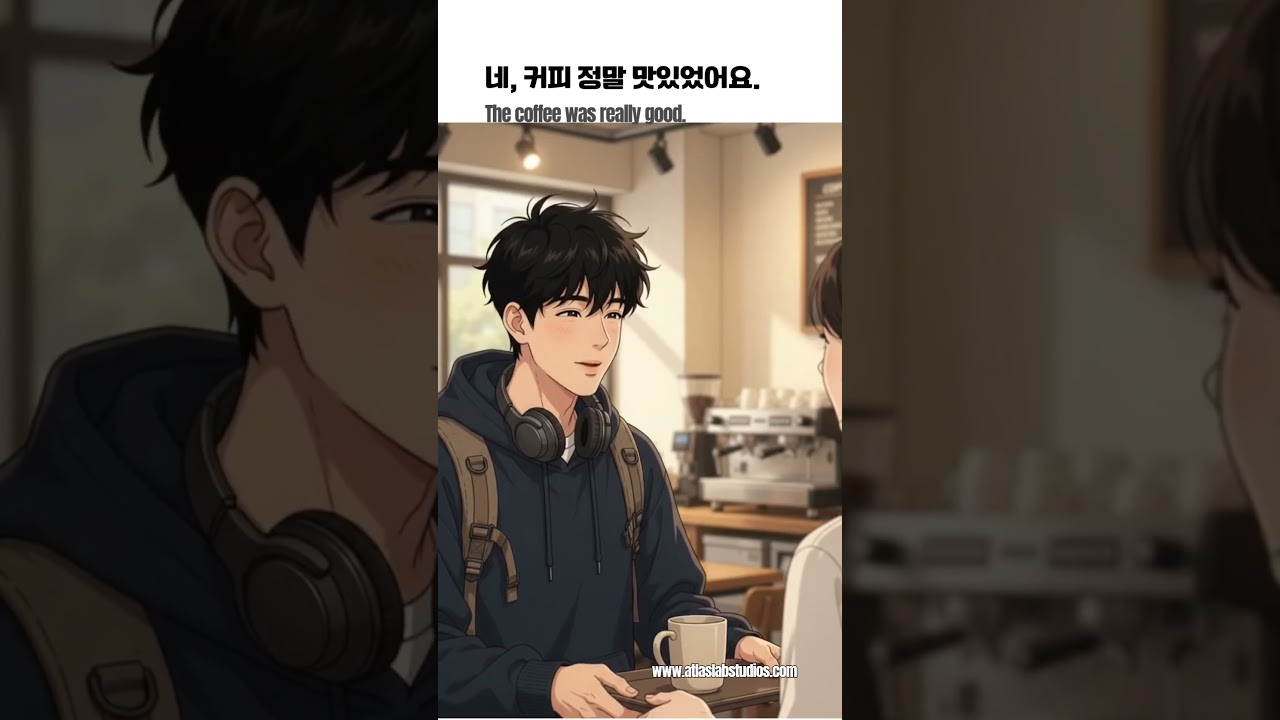
커피 정말 맛있었어요 keo-pi jeong-mal ma-siss-eoss-eo-yo "The coffee was really good"
Saying this as you hand over the cup is a small courtesy that lands well. The same shape works anywhere:
- 정말 맛있었어요 — "It was really delicious"
- 잘 먹었습니다 — jal meog-eoss-seum-ni-da — "I ate well" (standard after any meal)
You'll almost always get the same reply: 또 오세요 (tto o-se-yo) — "Come again."
Where this doesn't apply
Restaurants. You leave dishes on the table. Nobody expects you to clear them.
Full-service cafes. A few upscale places have staff who collect.
Table with a bell. If there's a call button, someone will come.
The rule is mostly about self-service cafes and fast food, which is where most visitors spend their time.
What to actually do
- Finish your drink and pack up
- Take the cup and tray with you
- Look for the return station near the counter
- If you can't find it, ask 이거 어디에 둬요?
- Say 잘 마셨습니다 on your way out if you feel like it
It takes ten seconds and it's the thing most visitors don't realize they're supposed to do.
These small closing moments happen every single day in Korea. K-PATTO teaches 300+ phrases through a webtoon story set in Seoul, with native audio on every line. The first ten episodes are free.