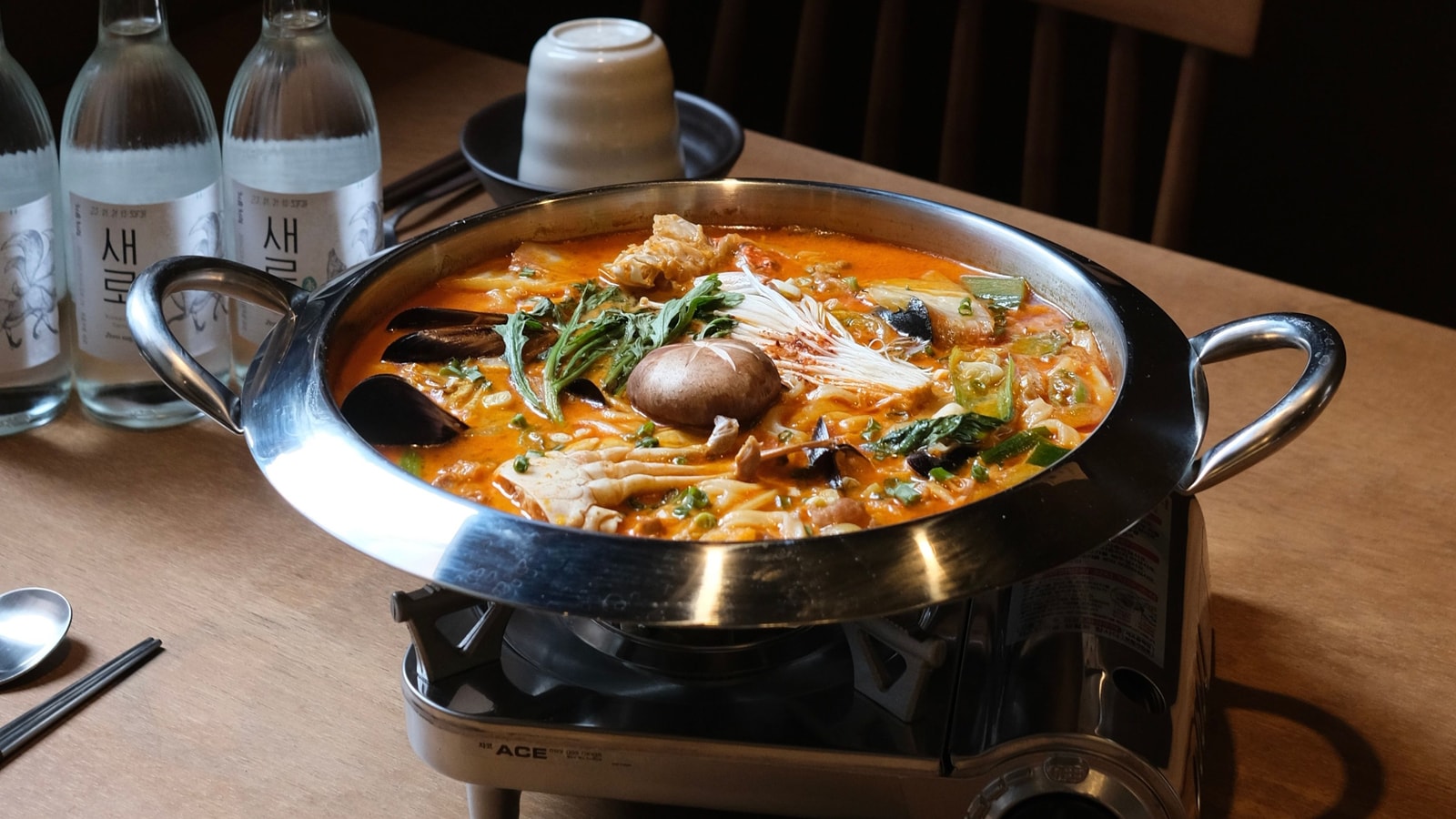
Budae jjigae (부대찌개), or army stew, is a spicy hot pot of ham, sausage, instant noodles, tofu and kimchi, cooked at your table and shared. Order by the number of people, add ramyeon noodles, and let it bubble until the noodles are just soft.
Key Takeaways
- What it is: a spicy, salty hot pot mixing Korean and American ingredients
- How it's served: in a big pot on a tabletop burner for the whole table
- Price: usually around 11,000–15,000 KRW per person, often with a two-serving minimum
- Avoid: letting the stew boil dry; ask staff to top up the broth
What goes in the pot
| Ingredient | Korean | Why it's there |
|---|---|---|
| Spam and ham | 햄 | The signature ingredient from the dish's origins |
| Sausages | 소시지 | Salty, smoky flavor |
| Kimchi | 김치 | Sourness and heat |
| Gochujang-chili sauce | 양념 | The spicy base of the broth |
| Tofu, rice cakes, vegetables | 두부 · 떡 · 야채 | Body and texture |
| Ramyeon noodles | 라면 사리 | Added near the end; usually extra |
| Sliced cheese | 치즈 | Optional, melts into the broth |
| Baked beans | 베이크드 빈스 | Some restaurants add them, a nod to the origins |
Watch: a budae jjigae meal at a Seoul restaurant (video: Samuel and Audrey).
A dish born from history
Budae jjigae is often traced to the years after the Korean War, when ham, sausages and canned goods from US military bases (부대, budae) found their way into Korean kitchens. Cooks combined them with kimchi and chili paste, creating a uniquely Korean comfort food. Uijeongbu, north of Seoul, is famous for it and even has a budae jjigae street.
Cooking budae jjigae at home
Budae jjigae is one of the easiest Korean dishes to make abroad, because most ingredients are pantry staples. Arrange sliced Spam, sausages, kimchi, tofu, onion and green onion in a wide pot. Add a sauce of gochujang, gochugaru, soy sauce, garlic and a little sugar, then pour in anchovy stock or water. Bring it to a boil at the table, add instant ramyeon noodles and a slice of cheese at the end, and eat with rice.
Supermarkets in Korea also sell budae jjigae meal kits with everything pre-cut, and many convenience stores sell single-serve versions you can heat in the microwave.
- Stock: anchovy stock gives the best flavor; plain water works in a pinch
- Kimchi: older, sour kimchi adds more depth
- Leftovers: add rice to the last of the broth and stir-fry it in the pot
Ordering for a group
Most budae jjigae restaurants price the stew per person with a two-serving minimum. Rice usually comes with it, and add-ons like extra noodles, cheese or ham cost a little more.
부대찌개 3인분 주세요.
Budae-jjigae sam-inbun juseyo.
Budae jjigae for three, please.
라면 사리 추가하시겠어요?
Ramyeon sari chugahasigesseoyo?
Would you like to add ramyeon noodles?
네, 라면 사리 하나랑 치즈도 추가할게요.
Ne, ramyeon sari hanarang chijeudo chugahalgeyo.
Yes, one ramyeon and cheese too.
육수 좀 더 주세요.
Yuksu jom deo juseyo.
A bit more broth, please.
Do
- Add ramyeon noodles near the end
- Use the ladle and a small plate for serving
- Ask for more broth if it gets too salty
- Eat with rice to balance the saltiness
Don't
- Add noodles too early; they turn mushy
- Leave the burner on high once everything's cooked
- Eat straight from the pot with your own spoon
- Expect a mild stew; it's usually medium-spicy
More stew guides: kimchi vs doenjang jjigae, guk vs tang vs jjigae vs jeongol, and instant ramyeon upgrades.
Frequently Asked Questions
Why is it called army stew? It's linked to post-war Korea, when processed meats from US military bases were combined with Korean ingredients. 부대 (budae) means military base or unit.
Is budae jjigae spicy? Usually medium-spicy from gochujang and chili flakes. Ask for less spice if you prefer.
Can I order budae jjigae for one? Many restaurants require two servings, though some offer single portions. Check the menu.
What should I add to budae jjigae? Ramyeon noodles are the classic add-on, and cheese is popular. Some people add extra ham or rice cakes.