Walk down the Korean aisle and you will find a red tub, a red bag, and a brown tub. Recipes call for all three by unfamiliar names, and the packaging rarely explains itself in English.
They are not variations of the same thing. Two of them are fermented pastes and one is a dry spice, and substituting one for another changes the dish more than most people expect.
The short version
| What it is | Tastes like | Texture | |
|---|---|---|---|
| Gochujang 고추장 | Fermented chili paste | Sweet, savory, mildly spicy | Thick, sticky |
| Gochugaru 고춧가루 | Dried chili flakes | Clean heat, slightly fruity | Dry powder or flakes |
| Doenjang 된장 | Fermented soybean paste | Salty, deeply funky, no heat | Thick, coarse |
Only one of the three is actually a chili paste. Doenjang has no chili in it at all.
Gochujang: the sweet one
Gochujang is made from chili powder, glutinous rice, fermented soybean powder, and salt. The rice matters — it ferments into sugars, which is why gochujang tastes sweet before it tastes hot.
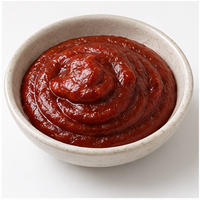
This is the part people miss. Gochujang is carrying three things into a dish: heat, sweetness, and fermented depth. If you treat it as "Korean hot sauce" you will be surprised when your dish comes out sweeter than expected.
Heat levels are printed on Korean packaging as GHU (고추장 매운맛 등급), usually 1 to 5. Most export brands sit around level 2 or 3, which is mild by Korean standards and noticeably milder than sriracha.
Use it in: tteokbokki, bibimbap sauce, spicy pork bulgogi, dipping sauces.
Gochugaru: the one you should buy first
Gochugaru is just dried Korean chili peppers, deseeded and ground. No salt, no sugar, no fermentation. That makes it the most flexible of the three.
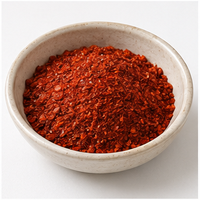
It comes in two grinds, and the difference is not cosmetic.
Coarse (굵은 고춧가루) is for kimchi. The flakes stay visible and release color slowly.
Fine (고운 고춧가루) dissolves into stews and sauces. Use it where you want the broth red rather than flecked.
If you buy one, buy coarse. It works in stews too, just with more visible flakes.
Korean chili is genuinely different from cayenne or generic chili powder — it is fruitier and much less hot, which is why Korean recipes call for tablespoons rather than teaspoons. Substituting cayenne one-for-one will make the dish inedible.
Doenjang: the one with no chili
Doenjang is fermented soybean paste, the byproduct of making Korean soy sauce. It is often compared to miso, and that comparison is useful but incomplete — doenjang ferments longer, with whole soybean chunks, and tastes considerably stronger and saltier.
If a recipe wants doenjang and you use miso, the dish will be recognizable but flat. Use about 1.5 times the amount and accept that it will be milder.
Use it in: doenjang jjigae, vegetable seasoning (namul), ssamjang.
Ssamjang, the fourth tub
You will also see ssamjang 쌈장, which is not a separate ingredient. It is gochujang and doenjang blended with sesame oil, garlic, and usually a little sugar, sold pre-mixed as a dipping sauce for grilled meat and lettuce wraps.
You can make it: roughly 2 parts doenjang to 1 part gochujang, plus a teaspoon of sesame oil and minced garlic.
What happens when you swap them
Gochujang in place of gochugaru — common mistake in kimchi. The sugar in gochujang interferes with fermentation and the paste coats rather than distributes. The result is sweeter, cloudier, and ferments unpredictably.
Gochugaru in place of gochujang — the heat is there but the body is gone. Sauces that should cling will be thin. If you have to do it, add a little honey and a spoon of miso to replace the sweetness and depth.
Doenjang in place of gochujang — these are not substitutes for each other in any direction. One is spicy and sweet, the other is salty and funky.
Storage
Gochujang and doenjang go in the fridge after opening and keep for a year or more. They may darken; that is fermentation continuing, not spoilage.
Gochugaru is the fragile one. It loses color and aroma at room temperature within a few months. Keep it in the freezer — this is standard practice in Korean homes and makes a visible difference.
If you are buying one thing today
Buy gochugaru. It is the most used ingredient in Korean home cooking, it goes into more dishes than the other two combined, and it does not commit you to a particular flavor profile.
Gochujang second, doenjang third.
K-Pantry tells you which recipes each ingredient unlocks, so you can see what a purchase actually buys you before you make it. Try K-Pantry