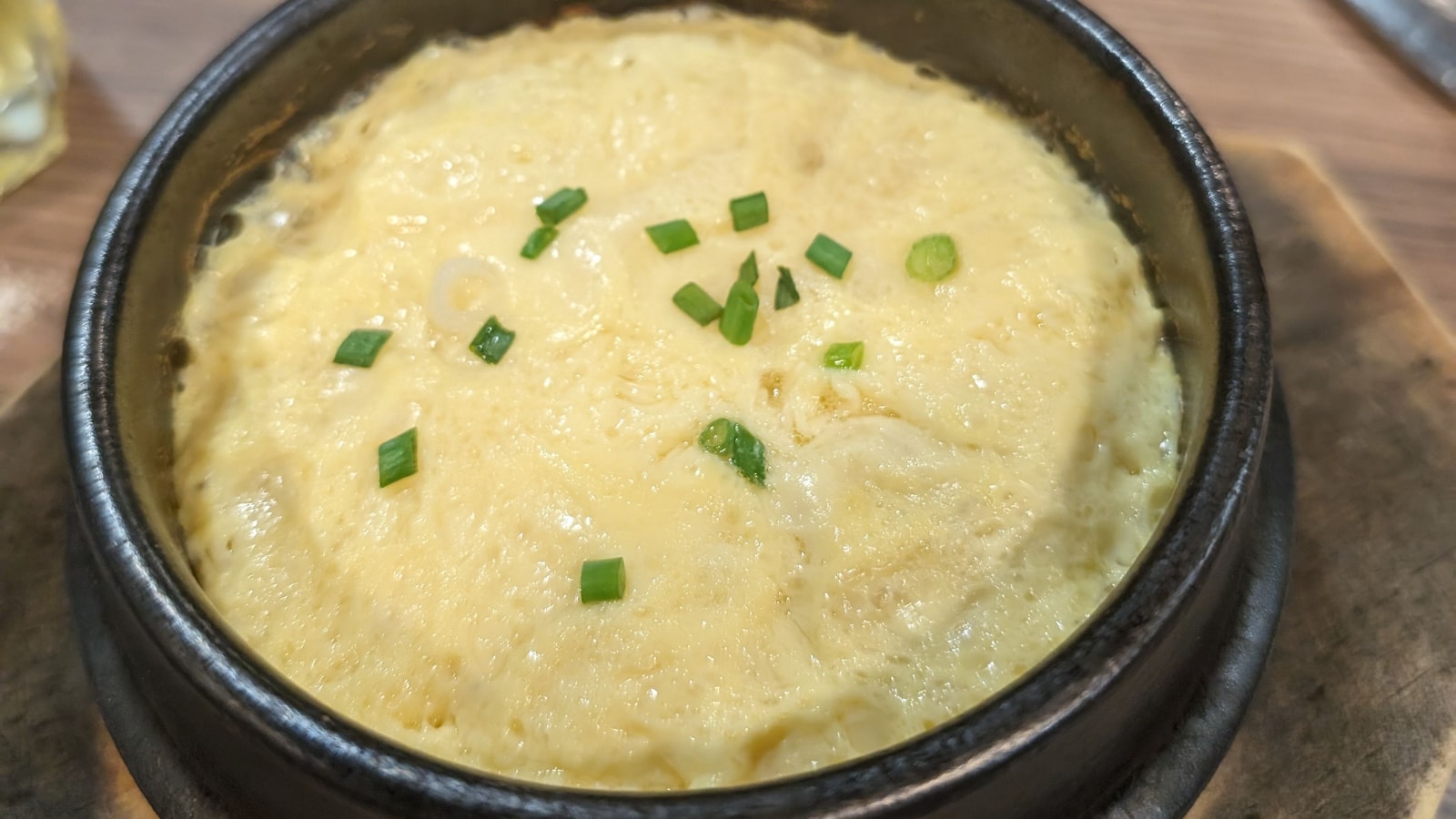
Gyeran-jjim (계란찜) is a fluffy, savory steamed egg, often served bubbling in an earthenware pot next to Korean BBQ or spicy stews. Order it to cool your mouth between spicy bites, or make it at home in about ten minutes.
Key Takeaways
- What it is: eggs whisked with broth and steamed until soft and fluffy
- Spice: none; mild and savory
- Where: Korean BBQ restaurants, stew shops and home kitchens
- Avoid: cooking it on high heat at home; it turns rubbery and dry
Styles of gyeran-jjim
| Style | How it's made | Texture | Where you'll see it |
|---|---|---|---|
| Volcano (puffed) | Cooked in a ttukbaegi pot with a lid, until it rises above the rim | Airy, soufflé-like | Korean BBQ restaurants |
| Smooth steamed | Strained eggs steamed gently in a bowl | Silky, custard-like | Homes, Korean-Japanese style restaurants |
| Seafood or cod roe | Mixed with salted cod roe (명란) or shrimp | Savory, richer | Specialty restaurants |
| Microwave | Whisked eggs microwaved in short bursts | Soft, quick | Home, convenience cooking |
Why order it?
Gyeran-jjim is the perfect partner for spicy food. When kimchi jjigae, spicy pork or fiery chicken gets too hot, a spoonful of soft egg cools things down. At many Korean BBQ restaurants it's a cheap add-on, sometimes free, and it arrives still bubbling in a small stone pot.
Because it's cooked to order and served bubbling hot, gyeran-jjim often arrives a little after the main dish. Let it settle for a minute before scooping; the outside sets first and the middle stays soft and very hot.
Where gyeran-jjim fits in a meal
Gyeran-jjim is a side dish, not a main. At Korean BBQ restaurants it arrives in its own small stone pot partway through the meal and is shared by the table. At home it's a quick, comforting banchan for children and older family members, and it's a common breakfast or light dinner when someone feels unwell.
Japanese chawanmushi is a close cousin: also a steamed egg custard, but usually smoother, served in a cup and often with shrimp or mushrooms inside. Korean gyeran-jjim tends to be fluffier and more rustic, especially the "volcano" style.
- Kids' favorite: mild, soft and easy to eat
- Spice balancer: the go-to order next to spicy stews and buldak
- Budget add-on: usually a few thousand won at BBQ restaurants
Making it at home
- Whisk 3 eggs with about the same volume of water or anchovy stock and a pinch of salt.
- Strain the mixture if you want a silky texture.
- Heat a small pot on low with a little stock, pour in the eggs and stir gently until it starts to set.
- Cover and cook on the lowest heat for a few minutes until puffed.
- Garnish with green onion, sesame seeds or a drizzle of sesame oil.
Salted shrimp (새우젓) instead of salt gives a more traditional flavor.
계란찜 하나 추가할게요.
Gyeranjjim hana chugahalgeyo.
I'll add one steamed egg.
네, 뚝배기가 뜨거우니까 조심하세요.
Ne, ttukbaegiga tteugeounikka josimhaseyo.
Sure. The pot is hot, so be careful.
숟가락 하나 더 주세요.
Sutgarak hana deo juseyo.
One more spoon, please.
여기 있어요.
Yeogi isseoyo.
Here you go.
Do
- Order it alongside spicy dishes
- Let it cool for a minute before eating
- Cook it on low heat at home
- Season with salted shrimp for a traditional taste
Don't
- Touch the earthenware pot
- Cook it on high heat; it turns spongy
- Expect a sweet custard; it's savory
- Skip it with spicy stews
More food guides: Korean BBQ dining, the ttukbaegi pot, and is Korean food spicy.
Frequently Asked Questions
What does gyeran-jjim taste like? Mild, savory and soft, somewhere between scrambled eggs and a light soufflé.
Is gyeran-jjim free at Korean BBQ? Sometimes, but usually it's a cheap add-on. Check the menu or ask staff.
How do I stop it from turning rubbery? Use low heat, the right ratio of liquid to egg, and a lid to trap steam.
Is gyeran-jjim vegetarian? It can be, if made with water instead of anchovy stock and without salted shrimp. Ask at restaurants.