Rice is not a side in a Korean meal. It is the center, and everything else is seasoned to be eaten with it. Which means getting it right changes the meal more than any single dish does.
It also means long-grain rice does not really work, and it is worth understanding why before assuming rice is rice.
The grain
Korean rice is short-grain (단립종), the same broad category as Japanese rice. Cooked, it is slightly sticky and the grains hold together in loose clumps.
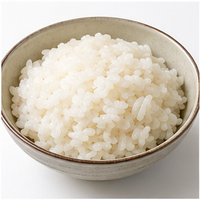
That stickiness is functional. Korean meals are eaten with a spoon and metal chopsticks, and food is often wrapped in lettuce or perilla leaves. Rice that falls apart makes both awkward.
Jasmine or basmati produce a fine dish of rice but a different eating experience. If short-grain is unavailable, Japanese rice is the same category and works without adjustment. Calrose is an acceptable middle ground.
Washing
Rinse until the water runs mostly clear — usually three or four changes.
Use your hand to swirl and lightly rub the grains rather than scrubbing. Modern milled rice does not need aggressive washing, and broken grains make the result gluey.
The first rinse should be quick. Dry rice absorbs water fast, and you do not want it taking on the starchy water from the first pass.
Soaking
Thirty minutes, in the water you will cook it in.
Soaked rice cooks more evenly and comes out with a better texture — the center hydrates rather than staying firm while the outside softens. Rice cookers with a soak cycle build this in; if yours does not, add the time yourself.
In a hurry, twenty minutes still helps. Skipping it entirely gives a noticeably firmer result.
Water ratio
Here is where most people go wrong, because the ratios they know are for long-grain rice.
| Rice state | Water |
|---|---|
| Soaked short-grain | 1 : 1 by volume |
| Unsoaked short-grain | 1 : 1.2 |
Compare that to the 1:1.5 or 1:2 common for long-grain and you can see why using a familiar ratio produces mush.
The traditional check: the water should sit about one knuckle above the surface of the leveled rice. It works because the depth of water needed scales with surface area rather than volume.
Stovetop method
- Washed and soaked rice in a heavy pot with a tight lid.
- High heat until it boils, about 5 minutes.
- Lowest heat, lid on, 12–13 minutes. Do not lift the lid.
- Heat off, rest 10 minutes, still covered.
- Fluff from the bottom with a rice paddle or spatula.
The rest is not optional. Rice straight off the heat is wet at the bottom and dry at the top; ten minutes of residual steam evens it out.
Rice cookers
A basic rice cooker does all of the above automatically and is the reason nearly every Korean household owns one. If you cook rice more than twice a week, it is worth the counter space.
Korean pressure rice cookers produce a noticeably different texture — glossier and slightly chewier. That difference is real, though not necessary for good rice.
Nurungji, the bit at the bottom
In a stovetop pot, the layer that lightly scorches on the bottom is 누룽지, and it is not a mistake. It is eaten as a snack, or hot water is poured over it to make 숭늉, a mild toasted rice tea served at the end of a meal.
To make it deliberately: after the rice is done, turn the heat back to high for one to two minutes.
Leftover rice
Korean households portion cooked rice into single servings and freeze it while still warm — the trapped steam is what keeps it from drying out. Microwaved from frozen, it comes back close to fresh.
Refrigerated rice goes hard and is better repurposed than reheated. That is exactly what makes it ideal for fried rice.
K-Pantry starts from what you already have, including yesterday's rice. Try K-Pantry