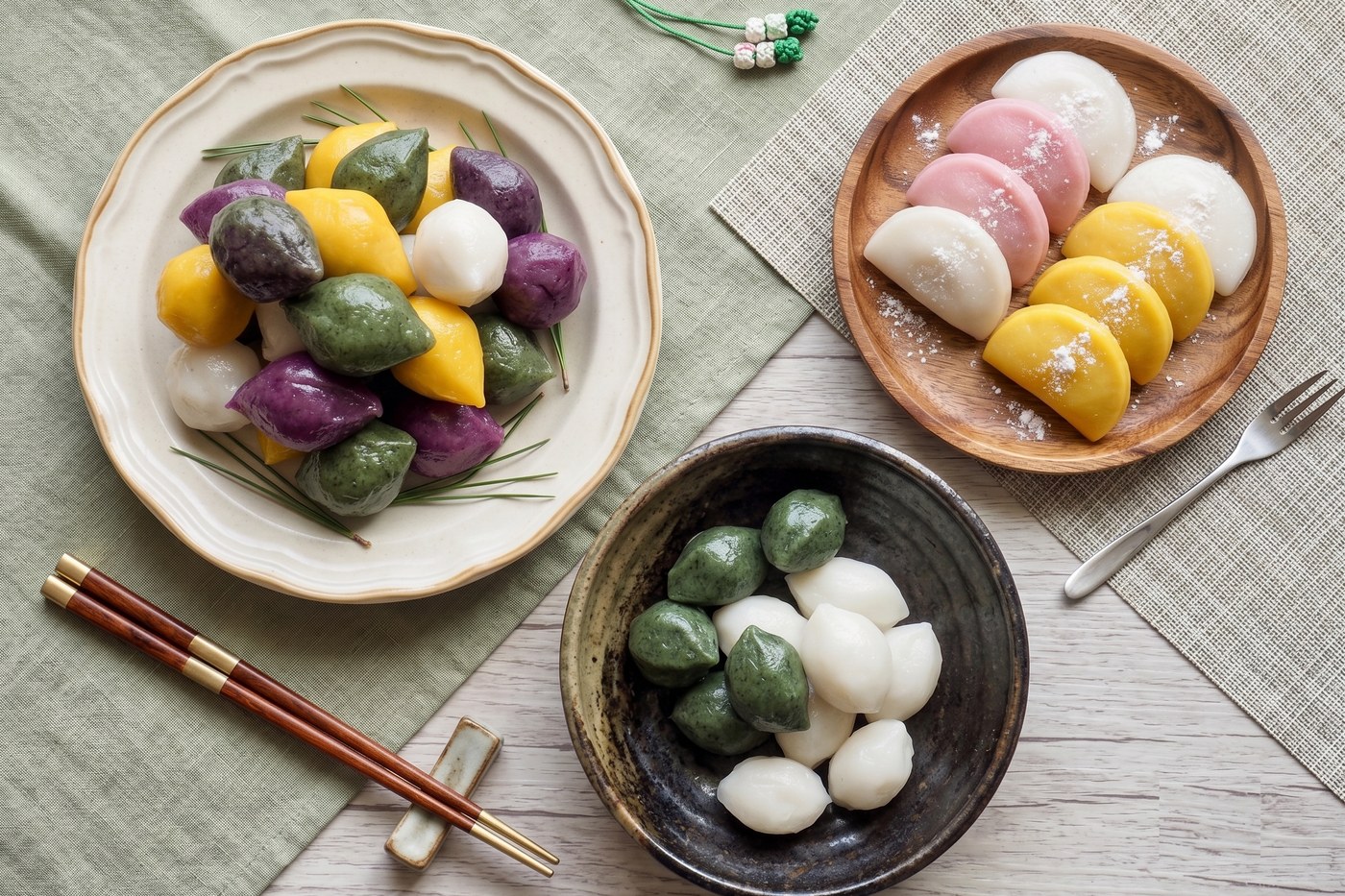
Steaming songpyeon over a dense bed of pine needles is an empirical food science technique rather than a mere decorative ritual. The volatile terpenes released by the needles act as a natural antibacterial shield while preventing the gelatinized rice dough from fusing to the steamer. Combined with its half-moon geometry—symbolizing future growth rather than immediate decline—songpyeon represents one of the most chemically and philosophically refined rice cakes in Korean culinary history.
Biochemical Defense: The Role of Pine Needles (Sol-nip)
The name songpyeon translates directly to "pine cake" (song meaning pine), pointing to its foundational cooking medium.
During high-heat steaming, fresh needles of the Korean red pine release concentrated phytoncides, primarily alpha-pinene and terpene compounds. These chemical agents exhibit potent antimicrobial and antifungal properties. In pre-refrigeration Korea, where late-autumn harvest temperatures could remain warm during Chuseok, this steam infusion preserved the non-glutinous rice dough against spoilage for several days.
"Pine needles function as a micro-porous biological grid: they elevate each rice cake above pool water, diffuse steam evenly, imprint subtle forest aromas, and coat the starch surface in natural preservatives."
- Anti-Adhesion Barrier: Non-glutinous rice flour (mepssalgaru) turns exceptionally adhesive upon gelatinization. The wax-coated, needle-like foliage keeps individual cakes separate without tearing the delicate skins.
- Aroma Implantation: Terpenes bind directly to the expanding surface starches, cutting through the heavy sweetness of honey and sugar fillings.
- Surface Protection: Removing the steamed cakes and plunging them into cold water sets the outer gelatin layer before a light sesame oil coating seals in the pine scent.
The Half-Moon Paradox: Crescent vs. Full Moon
Chuseok is celebrated under the largest full moon of the lunar year, yet the central holiday pastry is strictly folded into a crescent half-moon.
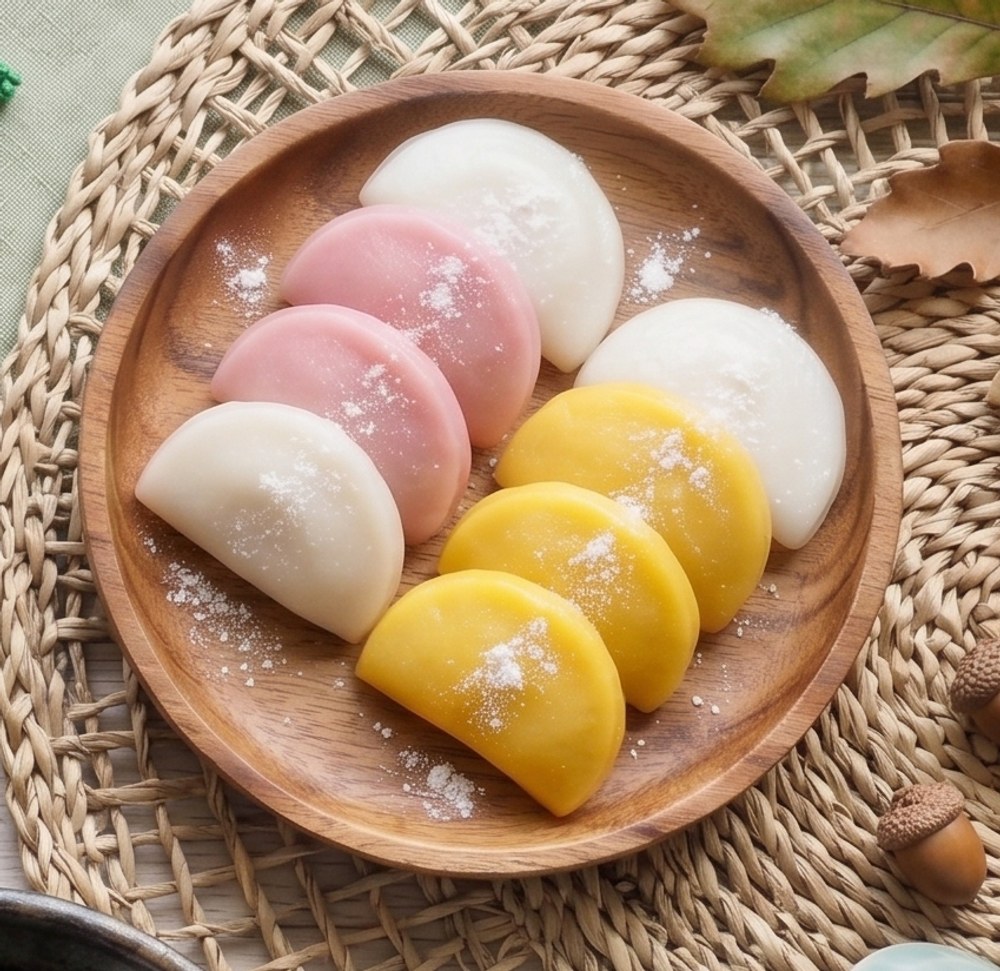
This intentional shape reflects an ancient cosmological view of potential and prosperity. In Korean philosophy, a full moon represents the absolute peak of a cycle, meaning its only remaining trajectory is to wane. A half moon, conversely, holds the promise of waxing toward fullness and abundance.
Historically, this symbolism was recorded during the Three Kingdoms period, where a prophetic turtle shell bearing the inscription "Baekje is a full moon, Silla is a half moon" foretold the rising dominance and eventual unification led by the Silla kingdom.
Traditional Filling Profiles and Texture Science
The inner filling dictates how the moisture of the outer shell behaves during and after steaming.
| Filling Type | Primary Ingredients | Texture & Flavor Dynamic | Structural Mechanics |
|---|---|---|---|
| Honey & Toasted Sesame (Kkae-songpyeon) | Roasted sesame seeds, brown sugar, honey | Liquid center, rich nuttiness, sharp sweetness | Sugar melts into syrup under heat; dough requires airtight seam |
| Sweet Red Bean (Pat) | Steamed adzuki beans, salt, pinch of sugar | Earthy, velvety crumb with gentle sweetness | Starch absorption keeps the interior solid without bursting |
| Whole Soybeans (Kong) | Steamed yellow soybeans or black beans | Dense, savory chew with minimal added sugar | High protein content retains a firm bite against tender rice skin |
| Chestnut (Bam) | Steamed wild chestnuts, honey or raw sugar | Creamy, nutty, buttery harvest flavor | Soft starch matrix mirrors the density of the kneaded wrapper |
3-Step Protocol for Shaping and Steaming Songpyeon
Execute this sequence to prevent filling ruptures and achieve an elastic, pine-infused skin.
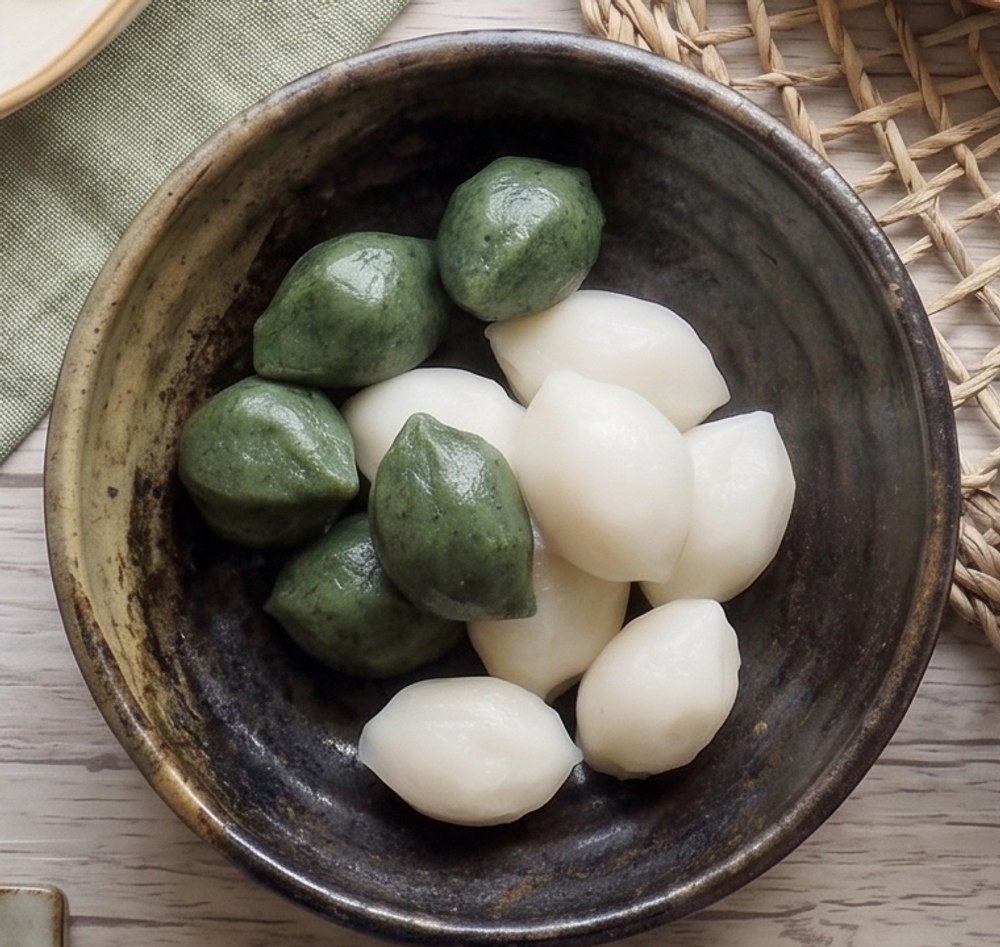
- Step 1: Cup the Dough and Press with the Thumb Take a 20g ball of hot-water kneaded non-glutinous rice dough. Roll it into a smooth sphere, press your thumb deeply into the center to create a thin, cup-shaped well, and rotate the perimeter to ensure uniform wall thickness.
- Step 2: Enclose Filling and Form the Crescent Seam Insert half a teaspoon of filling into the pocket. Pinch the open edges shut firmly with your thumb and index finger to expel trapped air pockets, then gently curve the sealed ridge into a sleek half-moon arc.
- Step 3: Steam Over Washed Pine Needles and Oil-Coat Layer culinary-grade, thoroughly rinsed pine needles across the bottom of your steamer rack. Arrange the cakes without touching, cover, and steam on high heat for 20 minutes. Immediately plunge the cooked cakes into cold water for 5 seconds to lock in elasticity, discard loose needles, and brush lightly with pure toasted sesame oil.