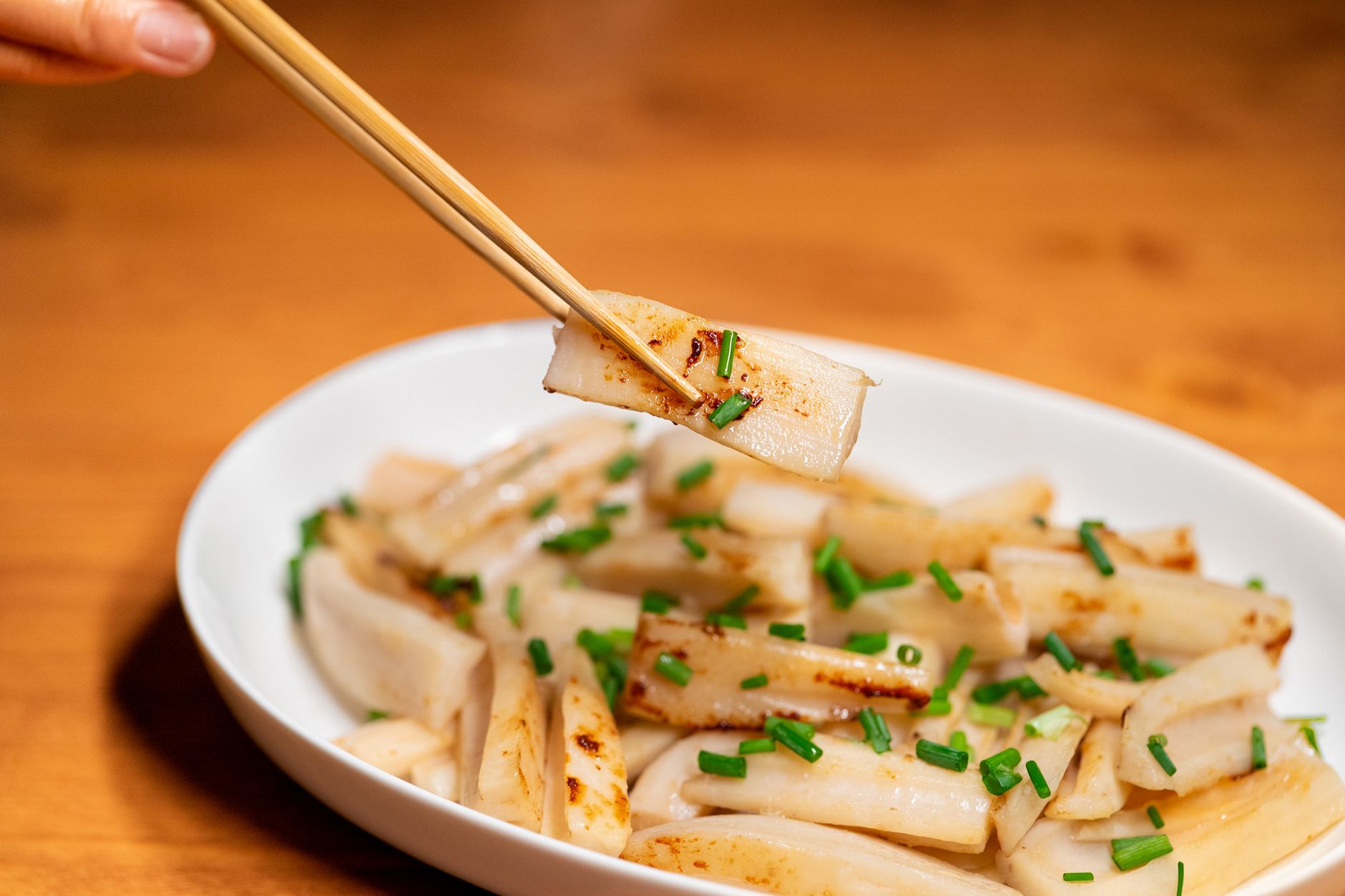
Tteokbokki tteok and tteokguk tteok originate from the exact same culinary foundation—cylindrical white rice cake known as garae-tteok—but differ completely in cut, thickness, starch-to-surface ratio, and heat tolerance. Tteokbokki tteok is extruded or cut into dense, finger-sized cylinders engineered to hold their structural integrity during prolonged simmering in thick, spicy reductions, while tteokguk tteok is machine-sliced into paper-thin diagonal ovals designed to soften in delicate, clear broths within three minutes.
Choosing the wrong shape alters the textural balance of Korean dishes: using thick cylinders in a light soup leaves the center undercooked and the broth cloudy, while dropping thin soup slices into a slow-simmered tteokbokki sauce can dissolve the rice starch into a sticky porridge.
Structural and Material Differences: Shape, Grain, and Density
Both rice cake varieties begin as steamed short-grain white rice dough pounded into a pliable mass and extruded through circular nozzles into long ropes called garae-tteok (가래떡). The divergence occurs in the post-extrusion handling and grain formulation.
Rice vs. Wheat Composition
Tteokguk tteok (떡국떡) is almost exclusively made from 100% non-glutinous short-grain white rice (mepssal / 멥쌀), water, and salt. Rice flour provides the signature firm, clean bite and milky sheen necessary for New Year soup (tteokguk). Because the broth is meant to remain translucent or lightly milky, manufacturers avoid starches that leach excessive gluten or cloudy residue.
Tteokbokki tteok (떡볶이떡) comes in two distinct marketplace formats:
- Rice Tteok (ssal-tteok / 쌀떡): Denser, heavier, and chewier. It retains moisture longer after cooking and delivers a prominent sweet rice flavor.
- Wheat Tteok (mil-tteok / 밀떡): Made with wheat flour or a wheat-rice blend. It absorbs sauces much faster, inflates during high-heat boiling, and collapses into a softer, springier texture preferred by traditional street-food vendors (bunsikjib).
Surface Area and Cross-Section Physics
Tteokguk tteok is aged for 24 to 48 hours to partially dry and firm up the exterior of the garae-tteok cylinders before being cut diagonally across the grain. This diagonal cut yields an oval slice approximately 2 to 3 millimeters thick. The elongated oval maximizes surface exposure to boiling liquids, allowing rapid hydration of retrograded starches without requiring prolonged cooking.
Tteokbokki tteok retains its three-dimensional cylindrical shape, measuring roughly 5 to 7 centimeters in length and 1 to 1.5 centimeters in diameter. The smaller surface-area-to-volume ratio shields the interior core from immediate heat transfer, ensuring that the cake maintains an al dente chew (kkwaduk-kkwaduk) even after 10 to 15 minutes of continuous simmering in gochujang sauce.
Head-to-Head Comparison: Cooking Mechanics and Retail Profile
The mechanical difference between the two shapes dictates cooking method, sauce pairing, and prep requirements.
| Metric / Feature | Tteokbokki Tteok (떡볶이떡) | Tteokguk Tteok (떡국떡) |
|---|---|---|
| Physical Shape | Cylindrical rod (5–7 cm long, ~1.2 cm thick) | Thin diagonal oval coin (2–3 mm thick) |
| Dominant Ingredient | Non-glutinous rice (쌀) or Wheat flour (밀) | Non-glutinous rice (쌀); rarely wheat |
| Boiling Cook Time | 7–12 minutes | 2–4 minutes |
| Primary Dish | Spicy stir-fried rice cakes (Tteokbokki) | New Year rice cake soup (Tteokguk), Manduguk |
| Sauce Adhesion | Exterior coating of thick, viscous sauces | Surface absorption of light, savory broths |
| Heat Tolerance | High; withstands prolonged simmering | Low; turns mushy and tears if overboiled |
| Retail Price (500g–1kg) | 2,500 – 4,500 KRW | 2,800 – 5,000 KRW |
| Texture Profile | Dense, rubbery, springy, chewy | Tender, supple, silky, moderately chewy |
Kitchen Rule: Never boil tteokguk tteok simultaneously with dry ingredients that require long cooking times. Add tteokguk tteok during the final 3 minutes of soup preparation, removing the pot from heat as soon as the ovals float to the surface.
Interchangeability and Culinary Substitution
You can substitute one variety for the other if adjustments are made to cooking time, liquid ratios, and heat application.
- Cooking Tteokguk Tteok as Tteokbokki: This is a common and successful home variation known colloquially as tteokguk-tteok tteokbokki. The wide, flat surface of the diagonal slice picks up more red pepper paste per bite than cylindrical tteok. However, reduce total simmer time to under 4 minutes. Add the sliced cakes at the very end of the sauce reduction. If simmered for the standard 10 minutes, the starch will break down, thicken the sauce into a paste, and turn the cakes to mush.
- Cooking Tteokbokki Tteok as Tteokguk: This substitution is structurally problematic. Cylindrical tteok takes over 8 minutes to soften through the center. In a light anchovy or beef brisket broth, this prolonged boiling clouds the soup with shed surface starches while leaving the interior core noticeably firm and under-salted. If tteokbokki tteok is the only option for soup, parboil the cylinders separately in plain water for 5 minutes, rinse away loose surface starch, and transfer them into the hot broth for the final 2 minutes.
Step-by-Step Action Guide: Buying, Prepping, and Cooking
Follow these precise steps when purchasing and preparing packaged Korean rice cakes from local supermarkets (E-mart, Homeplus, Lotte Mart) or neighborhood marts.
Step 1: Read the Label and Grain Type
Examine the front label in the refrigerated noodle/tofu section:
- Look for 밀 (Mil) if you want soft, ultra-chewy wheat tteokbokki tteok.
- Look for 쌀 (Ssal) or 우리쌀 (Uri-ssal, Korean domestic rice) for denser texture in tteokbokki, or for authentic tteokguk tteok.
- Check the preservation method: vacuum-sealed ambient packs contain food-grade alcohol (chujeong) or citric acid as preservatives; refrigerated packs from the deli section contain fewer additives and fresher moisture levels.
Step 2: Wash and Rehydrate Correctly
Do not drop cold rice cakes directly from the refrigerator into boiling liquid.
- Chilled rice cakes: Separate stuck pieces by hand and soak them in lukewarm tap water for 10 minutes. This rinses off surface oil or natural preservation alcohol and prevents thermal shock cracking.
- Frozen rice cakes: Never boil frozen tteok directly; the sudden exterior expansion causes the cakes to split open lengthwise. Thaw them submerged in cold water for 20 to 30 minutes until pliable throughout.
Step 3: Calibrate Cooking Times
Adjust your burner heat and cook duration based on the chosen cut:
- For Tteokbokki: Simmer sauce (gochujang, gochugaru, soy sauce, sugar, anchovy broth) until simmering. Add pre-soaked cylindrical tteokbokki tteok. Cook over medium-low heat for 8 to 10 minutes, stirring constantly to prevent bottom scorching.
- For Tteokguk: Bring beef brisket or bone broth (sagol) to a rolling boil. Add pre-soaked tteokguk tteok. Boil uncovered for 2 to 3 minutes. The exact indicator of doneness is buoyancy: once the thin ovals float to the broth's surface, kill the heat immediately and garnish with egg ribbons (jidan) and toasted seaweed (gim).