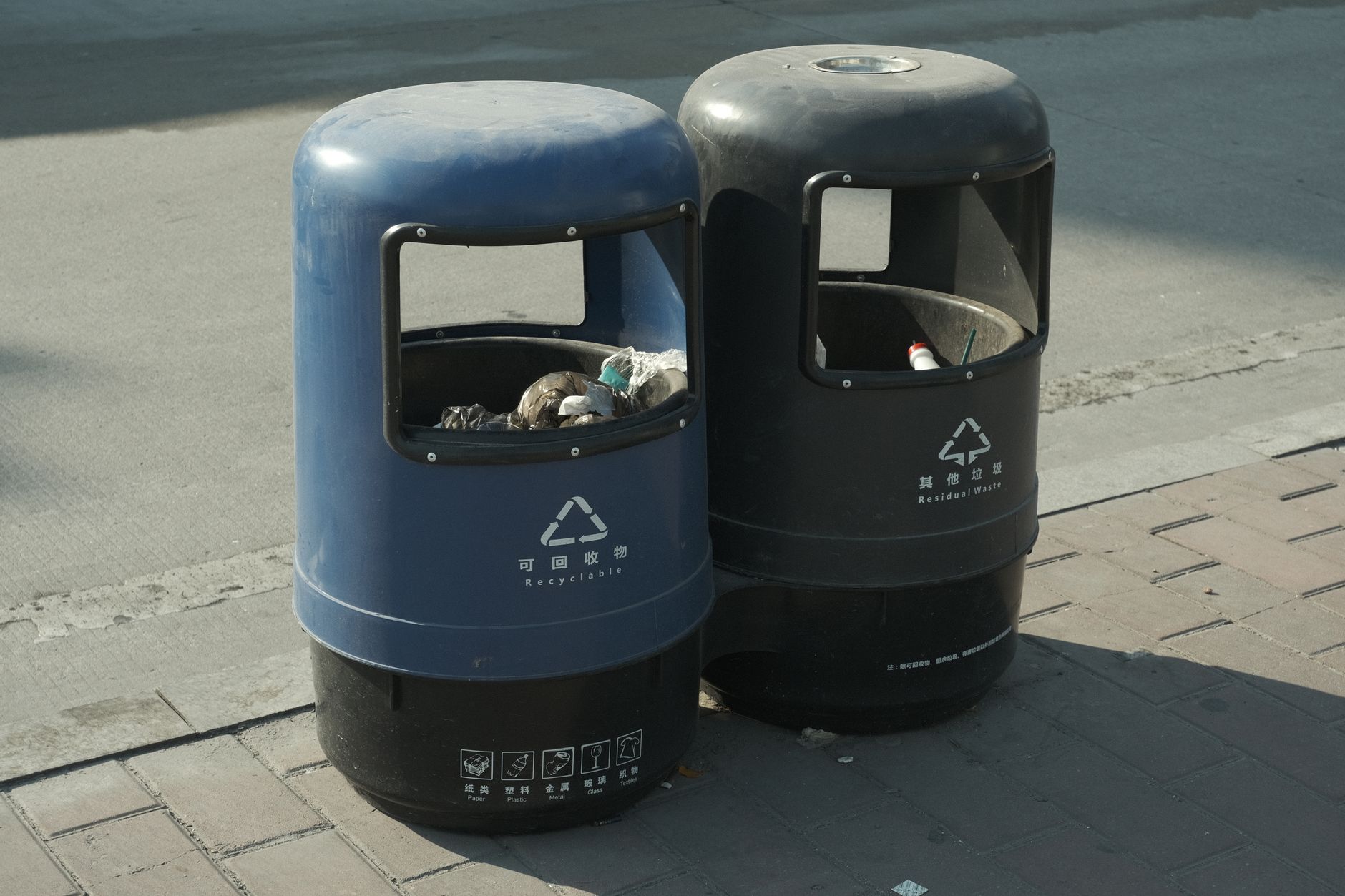
In South Korea, you cannot throw all your household trash into a single bin. Apartment residents must separate waste into four strict categories: general waste (disposed of in district-specific paid bags), recyclables (sorted by material), food waste (weighed via automated RFID bins), and oversized items (requiring paid stickers). Failing to comply with the volume-based waste fee system results in uncollected garbage and fines starting at 100,000 KRW, scaling up to 1,000,000 KRW for severe violations.
The Four Streams of Korean Waste Disposal
South Korea’s waste management operates on a strict "pay-as-you-throw" principle known as Jongnyangje (종량제), implemented nationwide in 1995. You pay for the volume of general and food waste you produce, while recycling remains free to encourage environmentally conscious disposal.
Every piece of waste you generate must be sorted into one of the following four streams before it leaves your apartment.
| Waste Category | Disposal Method | Cost / Payment Method |
|---|---|---|
| General Waste | Official district bag (Jongnyangje bongtu) | 490–600 KRW per 20L bag |
| Recyclables | Designated apartment bins (sorted by material) | Free |
| Food Waste | RFID weigh bin or designated food waste bag | 50–130 KRW per kg (billed monthly) |
| Oversized Items | Paid disposal sticker (Daehyeong pyegimul seutikeo) | 1,000–10,000+ KRW per item |
Navigating the Apartment RFID Food Waste System
Most modern Korean apartment complexes use an automated Radio Frequency Identification (RFID) system for food waste. This eliminates the need to buy separate disposable food waste bags, allowing you to pay exactly for the weight of the scraps you throw away.
Here is how the RFID system operates in a standard apartment complex:
- Get your card: Obtain the apartment-issued RFID card or key fob from your building management office or landlord.
- Scan to open: Tap the card on the scanner located on the food waste bin (usually stationed in the basement or ground-floor waste room). The lid will open automatically.
- Dump the waste: Empty your food scraps directly into the machine. Do not throw plastic bags or containers inside.
- Weigh and pay: The machine weighs the deposited waste and displays the total. The cost (typically 50 to 130 KRW per kilogram, depending on your district) is automatically added to your monthly apartment maintenance bill.
Not everything edible belongs in the food waste bin. South Korea processes food waste into animal feed, compost, and biogas. The strict rule of thumb is: if a livestock animal cannot safely eat it, it is general waste.
The following items must go into your general waste bag, never the food waste bin:
- Bones and shells: Chicken bones, pork bones, clam shells, oyster shells, and crab shells.
- Hard pits and seeds: Peach pits, apricot pits, and persimmon seeds.
- Tough skins and rinds: Onion skins, garlic peels, corn husks, and pineapple rinds.
- Beverage byproducts: Coffee grounds and tea bags.
- Eggshells: Shells from chicken, duck, or quail eggs.
Step-by-Step Guide to General Waste and Recycling
General waste requires a specific bag purchased locally, while recyclables must be cleaned and separated manually at your building's designated recycling station.
Step 1: Buy the correct general waste bags Visit a convenience store (CU, GS25, 7-Eleven) or supermarket located in your specific district (gu). Bags from Mapo-gu will not be collected in Gangnam-gu. Ask the cashier for a Jongnyangje bongtu (종량제 봉투). A 20-liter bag is the standard size for household kitchen bins, costing roughly 490 to 600 KRW.
Step 2: Clean and sort your recyclables Apartment complexes have dedicated recycling areas, often open 24/7 or on specific collection days of the week. You must separate items into specific bins:
- Paper (종이류): Flatten all cardboard boxes. You must completely remove all plastic tape, shipping labels, and staples before recycling.
- Plastics (플라스틱류): Rinse containers to remove food residue. You must peel the plastic wrap labels off clear PET bottles (like water and soda bottles). Clear PET bottles are often sorted into a separate bin from colored plastics.
- Vinyl (비닐류): Clean plastic wrap, snack bags, and bubble wrap go into a dedicated vinyl bin.
- Glass and Metal (유리 / 캔류): Rinse glass bottles and aluminum cans. Remove metal caps from glass bottles.
- Styrofoam (스티로폼): Remove all tape and ensure it is clean. Stained styrofoam (like instant ramen bowls with red broth stains) goes into general waste.
Step 3: Dispose of general waste Place all non-recyclable, non-food items into your district-specific Jongnyangje bag. This includes dirty napkins, sanitary products, broken glass wrapped securely in newspaper, and the food waste exceptions listed above (bones, shells, onion skins). Tie the bag securely and place it in the designated general waste bin in your apartment’s disposal area.
Disposing of Oversized Items and Electronics
Furniture, suitcases, and large appliances cannot be left in the standard trash area or stuffed into standard bags.
Do not abandon furniture on the street or in the apartment basement. Illegal dumping of oversized items is closely monitored by building CCTV and carries heavy fines.
For large furniture (mattresses, desks, sofas, broken suitcases):
- Purchase a bulky waste sticker (Daehyeong pyegimul seutikeo). You can buy these at local convenience stores, your district’s community center (Jumin Center), or print them from your district office website.
- Pay the fee based on the item. Prices range from 1,000 KRW for small items to over 10,000 KRW for large furniture like beds and wardrobes.
- Write your details on the sticker, attach it prominently to the item, and leave it in your apartment’s designated bulky waste zone on the approved collection day.
For electronic appliances (refrigerators, washing machines, TVs, microwaves): The government operates a free pickup service for large electronic appliances. You can schedule a collection online at www.15990903.or.kr or by calling 1599-0903. Small electronics (like rice cookers, electric fans, or hair dryers) do not require a sticker and can usually be placed in a designated small appliance bin in your apartment’s recycling area.