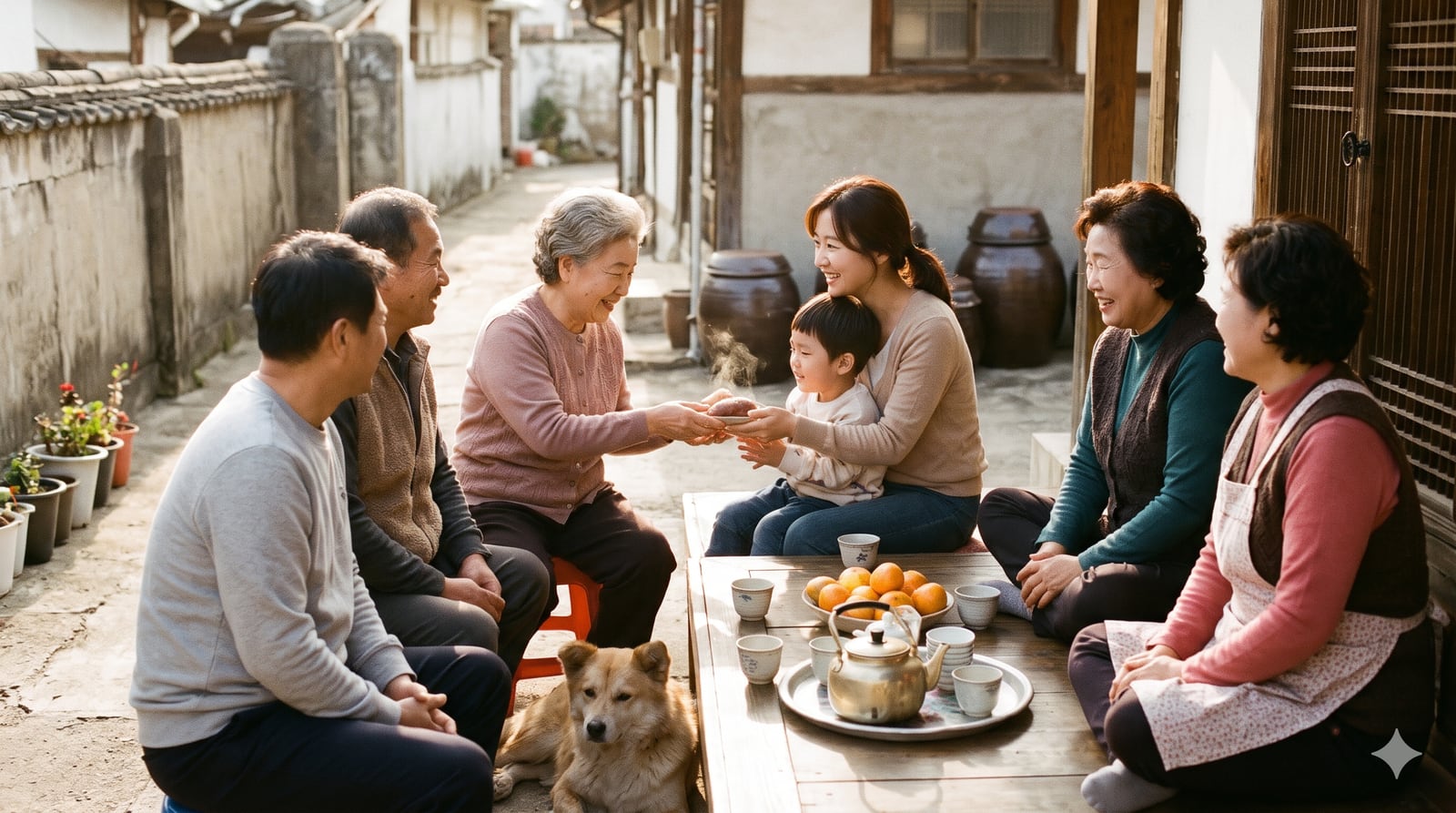
Jeong is the reason a stranger at the market adds one more apple to your bag.
Some Korean words resist translation, and 정 (jeong) is the most famous of them. It is often described as affection, attachment or warmth, but none of those quite capture it. Jeong is the deep, sticky bond that builds slowly between people who share time, space and small kindnesses, and once you notice it, you will see it everywhere in Korea.
Key Takeaways
- Jeong is a lasting bond built through shared time, not instant attraction
- It shows up in small acts: extra food, shared snacks, looking out for others
- It can exist with places and things, not just people
- Its partner concept is nunchi, the sense that tells you how to act on jeong
What jeong actually feels like
Jeong is not love at first sight. It accumulates. Coworkers who have shared years of late nights, neighbors who have lived side by side for a decade, even a former enemy you have seen every day, all can develop jeong. Koreans sometimes say 미운 정 고운 정 (miun jeong goun jeong), "the jeong of the hateful and the jeong of the lovely," meaning that even the difficult moments become part of the bond.
That is why jeong is hard to leave behind. Koreans say 정이 들다 (jeongi deulda), "jeong has entered," when they have become attached to someone or somewhere, and 정 떼다 (jeong ttaeda), "to peel off jeong," for the painful process of letting go.
| Phrase | Meaning |
|---|---|
| 정이 들다 | To grow attached over time |
| 정이 많다 | To be warm-hearted and generous |
| 정 떼다 | To detach yourself, often painfully |
| 미운 정 고운 정 | A bond made of both good and bad memories |
| 정 없다 | Cold, lacking warmth (often said jokingly) |
Jeong in everyday life
Visitors encounter jeong in small, surprising ways. A restaurant owner brings an extra plate you did not order and calls it 서비스 (service), meaning it is on the house. A market vendor rounds down the price or adds a little more. An older woman on the bus hands you a tangerine from her bag. These acts are not transactions. They are ways of building a relationship, even with someone you may never see again.
Food is the most common carrier of jeong. Sharing from one pot, refilling side dishes, and pressing food on guests all express it. A famous snack brand even built its decades-long advertising around the word, packaging chocolate pies as a gift of jeong. If you are curious why Korean meals come with so many shared plates, see our guide to banchan.
Jeong and nunchi: two halves of social life
If jeong is the warmth between people, nunchi is the sensitivity that tells you how to express it. Jeong makes you want to give a friend the last dumpling; nunchi tells you whether they would be embarrassed to accept it. Together they explain much of Korean social behavior, generous but careful, warm but attentive to the mood.
This is also why jeong can feel like obligation. A colleague who has looked after you expects you to remember it, and a friend who always pays for coffee trusts you will return the favor someday. Jeong runs on reciprocity, not keeping score exactly, but never forgetting.
The bond you take home
Many people who live in Korea for a while say the hardest part of leaving is the jeong they built: the café owner who knew their order, the neighbor who left kimchi at the door, the coworkers who became family. It is a quiet, unglamorous kind of love, made of time and repetition rather than grand gestures.
You do not need to master Korean customs to feel it. Show up, share food, notice others, and let jeong enter on its own schedule.
Frequently Asked Questions
What does jeong mean in Korean? A deep bond of affection and attachment that grows between people through shared time and experiences.
Is jeong the same as love? It overlaps, but jeong also covers friends, neighbors, places and even rivals. It is about attachment, not romance.
What is "service" in Korean restaurants? 서비스 means a free extra item from the owner, a common everyday expression of jeong.
How are jeong and nunchi related? Jeong is the warmth you feel toward others; nunchi is the awareness that guides how you show it.