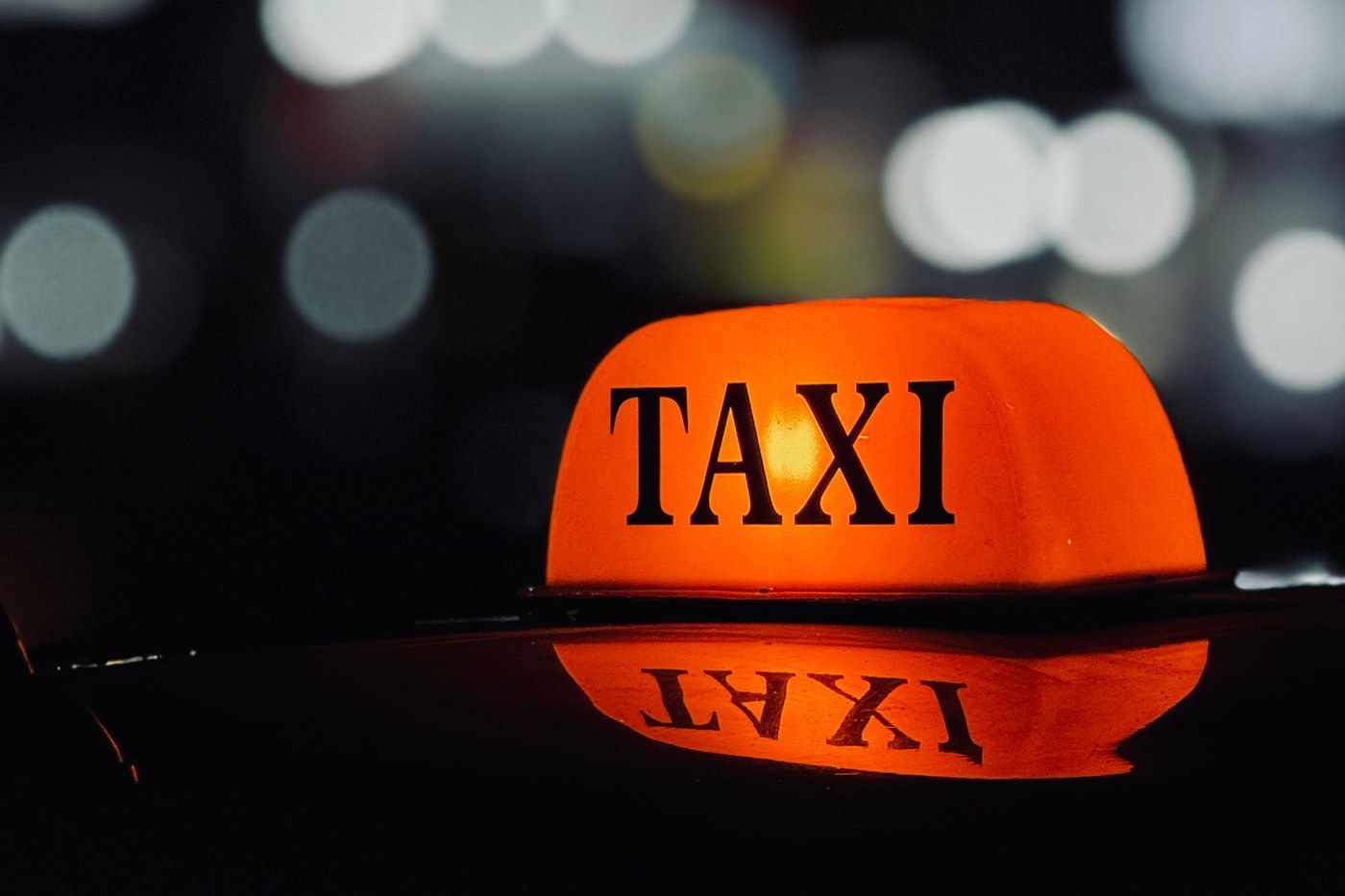
Hailing a taxi in South Korea presents immediate friction for foreign travelers due to a counterintuitive visual code: a glowing red light signals that a cab is vacant and ready for passengers. Paired with strict point-of-sale card infrastructure, zero tipping requirements, and distinct fleet tiers, learning basic transit conventions prevents miscommunication and boarding refusals on the street.
The Red Light Paradox: Decoding Roof and Windshield Displays
In Western transit systems, red universally communicates stop, occupied, or out-of-service. In South Korea, dashboard signage uses high-contrast red to maximize daytime visibility for pedestrians seeking empty vehicles.
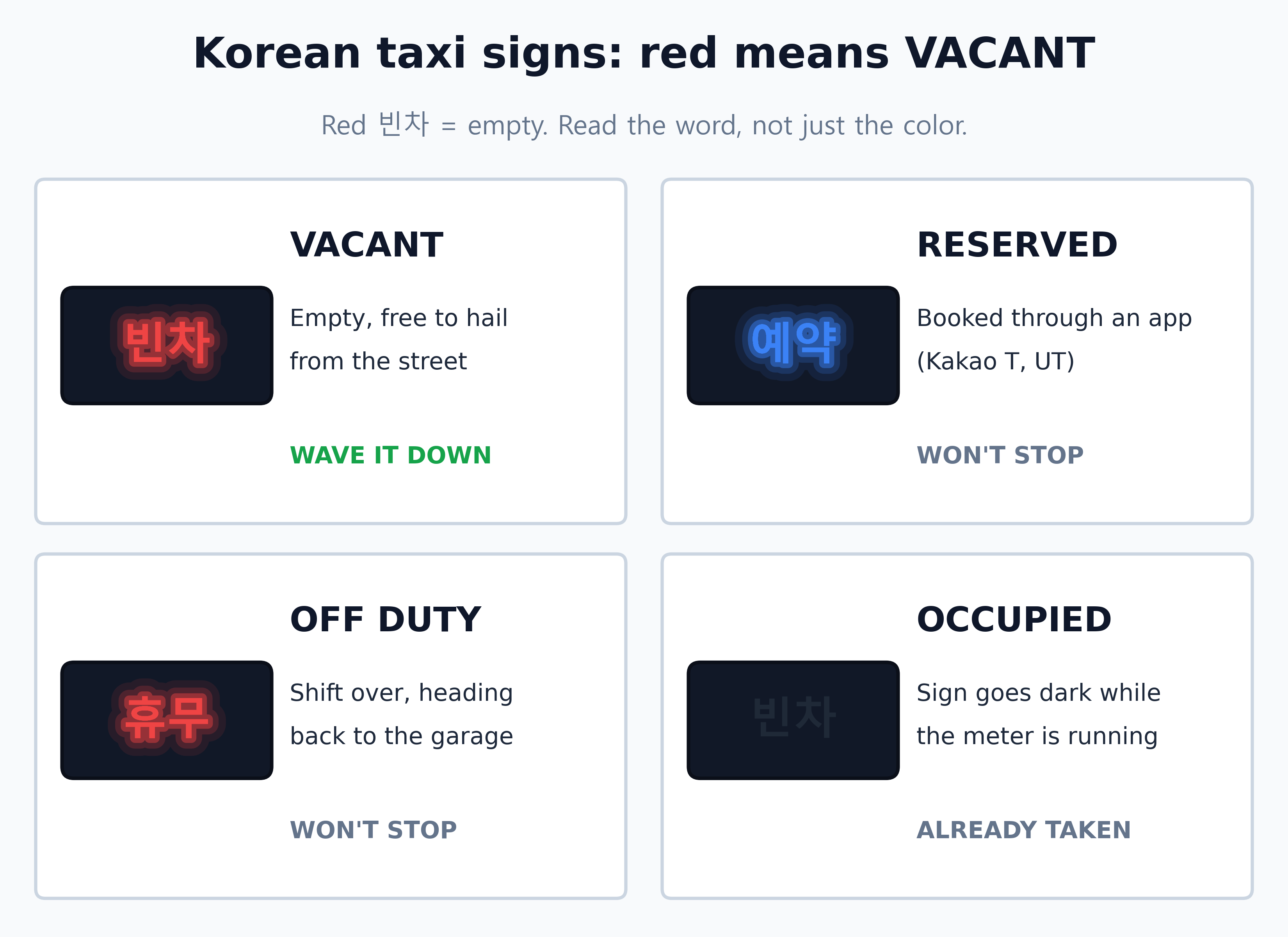
"A glowing red LED reading '빈차' (Bin-cha) confirms the cab is empty and open for street hails. Conversely, blue or unlit indicators signal that the driver cannot accept curbside passengers."
- 빈차 (Vacant - Red/Orange LED): The vehicle has no passengers aboard. Flag the driver down with a downward-angled hand wave.
- 예약 (Reserved - Blue/White LED): The cab is dispatched via mobility apps like Kakao T or UT. The driver will not stop for roadside hails.
- 휴무 (Off-Duty - Unlit or Red Banner): The shift is complete and the vehicle is en route to the garage.
- 탑승 (Occupied - Unlit): The meter is running with passengers inside; the exterior indicators remain dark.
Taxi Tiers: Comparing Fares, Vehicle Specs, and Dispatch Rules
Seoul operates distinct taxi categories regulated by the municipal government, differing by vehicle displacement, baseline fares, and surcharge schedules.
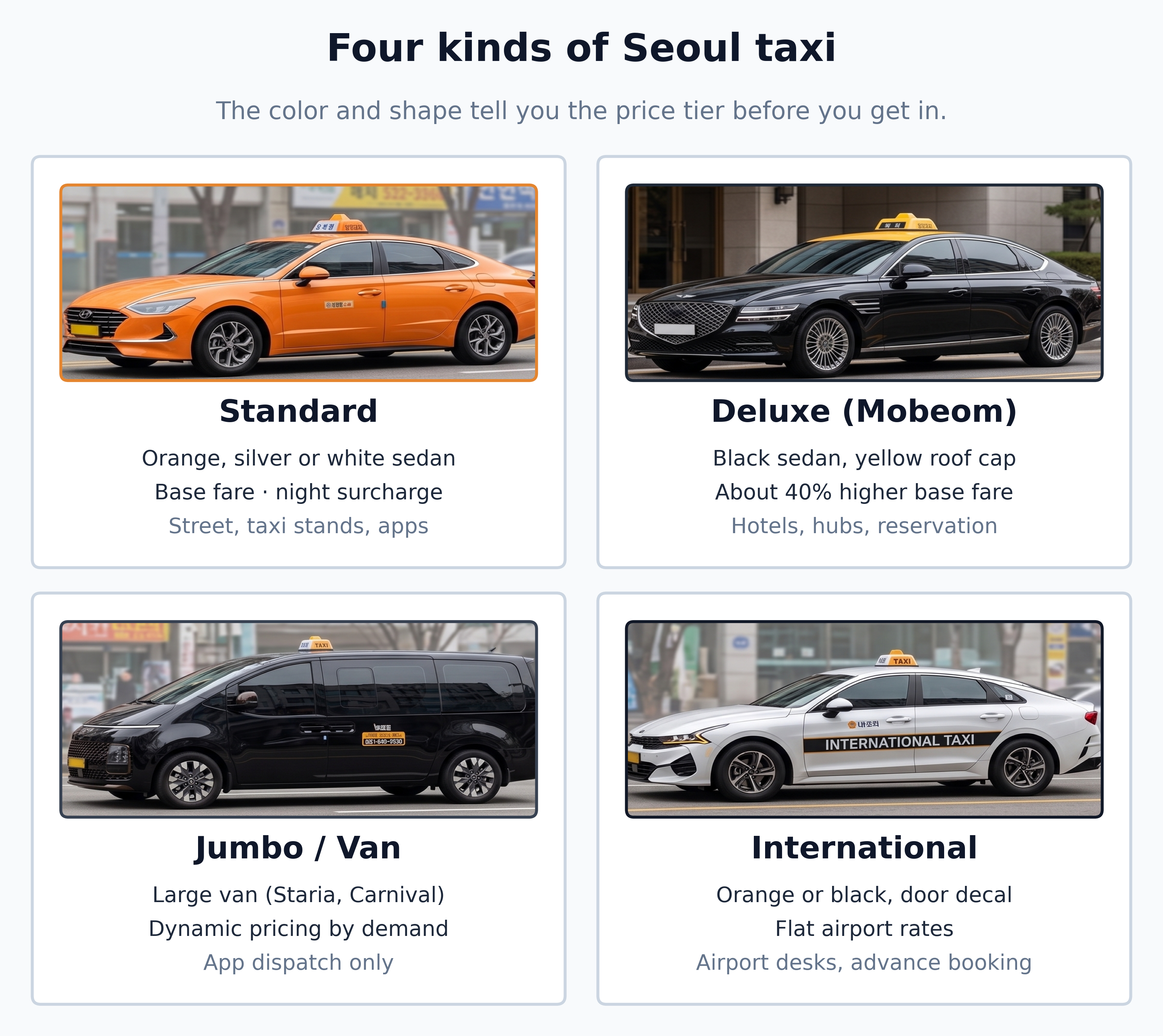
| Category | Exterior Visual Identifiers | Fare Structure & Surcharges | Hailing & Booking Methods |
|---|---|---|---|
| Standard Mid-Size | Orange (Seoul Mud), Silver, or White sedans | Base fare applies; 20–40% late-night surcharge (22:00–04:00) | Street hails, designated stands, or app calls |
| Deluxe (Mobeom) | Black sedans with yellow roof caps and gold door stripes | Roughly 40% higher base fare; no late-night surcharges | Five-star hotel stands, major transit hubs, phone/app reservation |
| Jumbo / Van (Venti, Tada) | Large passenger vans (Staria, Carnival) | Dynamic algorithm pricing based on localized real-time demand | App dispatch exclusive (Kakao T, Tada) |
| International Taxi | Orange or Black with "International" door decals | Flat rates for Incheon Airport transfers; metered city trips with English-speaking drivers | Incheon/Gimpo airport desks, online advance booking |
3-Step Execution Protocol for Street Hailing
Follow this sequence to streamline communication, eliminate navigation errors, and complete fare payments cleanly.
- Step 1: Communicate Landmarks and Metro Exits Instead of Street Addresses Do not read long Romanized street names or building addresses to the driver. State a major intersection, prominent landmark, or specific subway station and exit number (e.g., "Gangnam-yeok, I-beon chul-gu" for Gangnam Station Exit 2). Show the Korean destination address directly on a mobile map interface (Naver Map or KakaoMap) if the destination is situated inside residential alleys.
- Step 2: Manually Operate Vehicle Doors Unlike taxis in Japan, passenger doors in Korean cabs are purely manual. Wait for the vehicle to come to a complete halt, check the rear curb for passing scooters or cyclists, and pull the handle yourself. Pull the door firmly shut once seated; drivers will not activate automatic levers.
- Step 3: Tap Directly on the Console Terminal and Refuse Tipping When arriving at the destination, tap an international credit card (Visa, Mastercard, Amex) or transit smart card (T-money) directly against the payment terminal mounted on top of the center console between the front seats. Tipping is not practiced in South Korea. Leaving cash change behind is treated as accidental overpayment or lost property, prompting drivers to call after you to return the balance.