Ordering coffee in Korea is easier than most people expect, because the drinks are already in English. 아메리카노, 라떼, 카푸치노 — say them the Korean way and you're understood.
The words that trip people up are the ones around the drink. These ten cover a whole cafe visit.
At the counter
| Korean | Romanization | Meaning |
|---|---|---|
| 따뜻한 | tta-tteu-tan | hot |
| 사이즈 | sa-i-jeu | size |
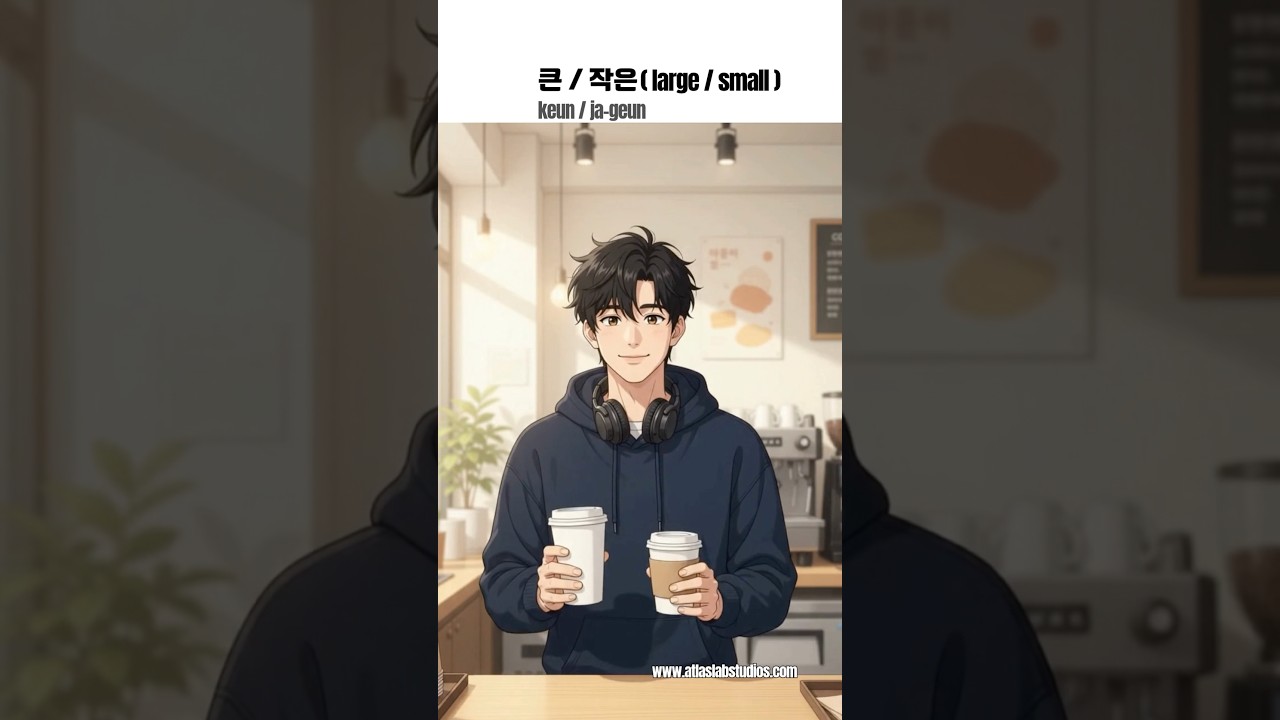
| 큰 / 작은 | keun / ja-geun | large / small |
| 포장 | po-jang | to go |
| 머그컵 | meo-geu-keop | mug |
따뜻한 is the one worth drilling. Iced is 아이스, which sounds like English, but hot is not "핫" — it's 따뜻한, and you'll be asked which one every time.
사이즈는요? is the second question you'll get. You don't need to know Korean size names; 큰 사이즈로 주세요 (large) or 작은 사이즈로 주세요 (small) handles it.
포장 means takeout, and it's the answer to the question every barista asks: 드시고 가세요, 아니면 가져가세요? If you're staying, you get a 머그컵 — a real ceramic mug, because single-use cups are restricted for in-store drinks.
At your table
| Korean | Romanization | Meaning |
|---|---|---|
| 콘센트 | kon-sen-teu | power outlet |
| 와이파이 | wa-i-pa-i | wifi |
| 화장실 | hwa-jang-sil | restroom |
콘센트 is the least guessable word on this list. It comes from "concentric plug," and it's the only word Koreans use for a wall socket. Ask 콘센트 자리 있어요? and you'll be pointed toward a wall.
와이파이 is English, but the Korean pronunciation flattens it enough that it's worth hearing once. The password is usually posted somewhere — check the counter and your receipt before asking.
화장실 literally means "makeup room." It's the standard word, not a euphemism. In many buildings the restroom is shared and locked, so it's worth also knowing: 비밀번호 눌러야 하나요? — "Do I need a code?"
On the way out
| Korean | Romanization | Meaning |
|---|---|---|
| 반납대 | ban-nap-dae | return station |
| 또 오세요 | tto o-se-yo | come again |
반납대 is where you take your cup. Korean cafes expect you to clear your own table, and the return station is usually near the register with a tray rack and a bin for lids.
또 오세요 is what you'll hear as you leave. You don't need to reply — a nod is enough — but recognizing it means you'll know someone just said something friendly rather than instructional.
The ones you don't need
Skip the drink names. 아메리카노, 라떼, 모카, 에스프레소, 바닐라 라떼 — all borrowed, all close enough to English that pronunciation is the only adjustment.
Same with 아이스. It sounds like what it is.
Learning the ten above gets you further than memorizing a menu.
Putting them together
Three sentences built from this list cover a normal cafe visit:
따뜻한 라떼 하나 주세요 — One hot latte, please 콘센트 자리 있어요? — Is there a seat with an outlet? 컵은 어디에 반납할까요? — Where do I return the cup?
Ten words is a small start, and it's enough for one specific place. K-PATTO covers 300+ expressions across a hundred everyday situations, told as a webtoon story set in Seoul with native audio on every line. The first ten episodes are free.