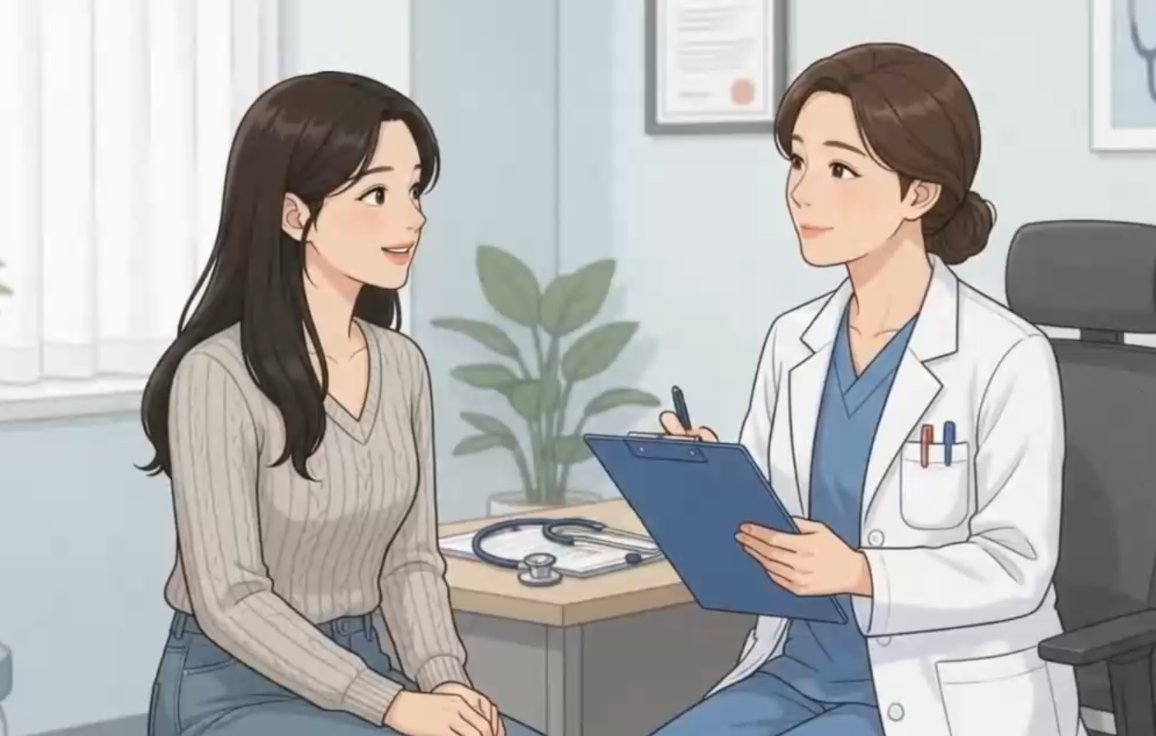
Seeing a doctor in Korea is usually quicker than visitors expect. Neighborhood clinics take walk-ins, waits are often short, and a basic visit at a small clinic is usually affordable. The conversation follows a fixed shape: reception, the doctor, the pharmacy.
Where to go
| Korean | Romanization | What it is |
|---|---|---|
| 의원 | uiwon | small neighborhood clinic |
| 병원 | byeongwon | clinic or hospital (general word) |
| 대학병원 | daehakbyeongwon | large university hospital |
| 응급실 | eunggeupsil | emergency room |
For anything ordinary, go to a small clinic. Large university hospitals are for serious cases and usually expect a referral. Clinic signs show the specialty:
| Korean | Specialty |
|---|---|
| 내과 | internal medicine (colds, fever, stomach) |
| 이비인후과 | ear, nose and throat |
| 피부과 | dermatology |
| 정형외과 | orthopedics |
| 치과 | dentist |
For a cold, stomach trouble or a fever, 내과 (naegwa) is the right door. In an emergency, call 119.
At reception
| Korean | Romanization | Meaning |
|---|---|---|
| 진료 받고 싶어요. | jillyo batgo sipeoyo | I'd like to see a doctor. |
| 예약 안 했어요. | yeyak an haesseoyo | I don't have an appointment. |
| 외국인이에요. | oegugineyo | I'm a foreigner. |
| 여권 여기 있어요. | yeogwon yeogi isseoyo | Here's my passport. |
You'll fill in a short form. Staff often help foreigners through it.
What staff and the doctor will ask
| You'll hear | Meaning | Answer |
|---|---|---|
| 처음 오셨어요? | Is this your first visit? | 네, 처음이에요. |
| 어디가 아프세요? | Where does it hurt? | 배가 아파요. |
| 언제부터 아프셨어요? | Since when? | 어제 저녁부터요. |
| 드시는 약 있으세요? | Are you taking any medicine? | 아니요, 없어요. |
| 알레르기 있으세요? | Any allergies? | 네, 페니실린이요. |
Describing symptoms
| Korean | Romanization | Meaning |
|---|---|---|
| 열이 나요. | yeori nayo | I have a fever. |
| 계속 기침이 나요. | gyesok gichimi nayo | I keep coughing. |
| 어지러워요. | eojireowoyo | I feel dizzy. |
| 토했어요. | tohaesseoyo | I threw up. |
| 삼 일 됐어요. | sam il dwaesseoyo | It's been three days. |
What you'll be told
| You'll hear | Meaning |
|---|---|
| 심하지 않아요. | It's not serious. |
| 푹 쉬세요. | Get plenty of rest. |
| 며칠은 매운 거 드시면 안 돼요. | No spicy food for a few days. |
| 처방전 드릴게요. | I'll give you a prescription. |
| 약국 가서 약 받으세요. | Get your medicine at the pharmacy. |
드시면 안 돼요 ("you mustn't eat/take") is how doctors phrase restrictions, so it's worth recognizing.
Paying and the pharmacy
You pay at the desk on the way out (카드로 할게요, "by card"), then take the prescription (처방전, cheobangjeon) to a pharmacy, often in the same building or next door. Ask for 영수증 (yeongsujeung, receipt) if you have travel insurance. The pharmacy guide covers the instructions you'll get there.
Polite or casual?
Medical staff speak to you with honorific -시- (아프세요?, 드세요). You only need polite -요. You'll never need casual speech here.
A full visit
You: 진료 받고 싶어요.
Reception: 어디가 아프세요?
You: 배가 아파요.
Doctor: 언제부터 아프셨어요?
You: 어제 저녁부터요.
Doctor: 며칠은 매운 거 드시면 안 돼요.
Health and safety guides
- Medicine: At a Korean pharmacy
- After hours: Late-night medicine and clinics
- Emergencies: Emergency numbers for tourists
- Living in Korea: National health insurance for foreigners