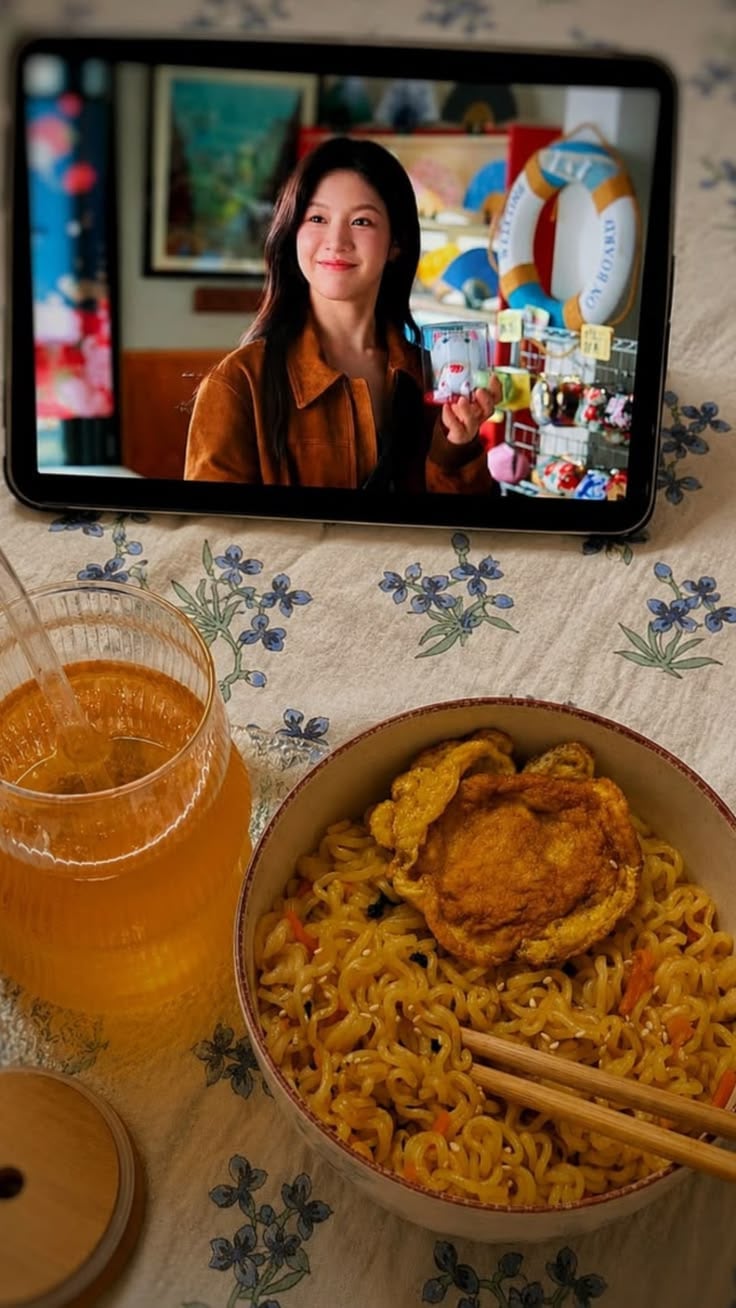
In Korean dramas, a bowl of noodles is rarely just dinner. It is a confession, an apology or a declaration of war.
Foreign viewers often joke that K-drama characters are always eating, and they are not wrong. Meals fill entire scenes: noodles slurped straight from the pot lid, soju poured under an orange tent, a lunchbox handed over with suspicious care. Food on Korean screens carries emotional weight, because in Korean life it carries the same weight. Once you know the code, every meal scene starts to say something.
Key Takeaways
- "Want to eat ramyeon?" is a famous flirtatious invitation, not a dinner plan
- Tent bars (포장마차) are where characters fall apart and tell the truth
- Lunchboxes (도시락) show devotion, especially from mothers and admirers
- "Have you eaten?" (밥 먹었어?) is how Koreans say "I care about you"
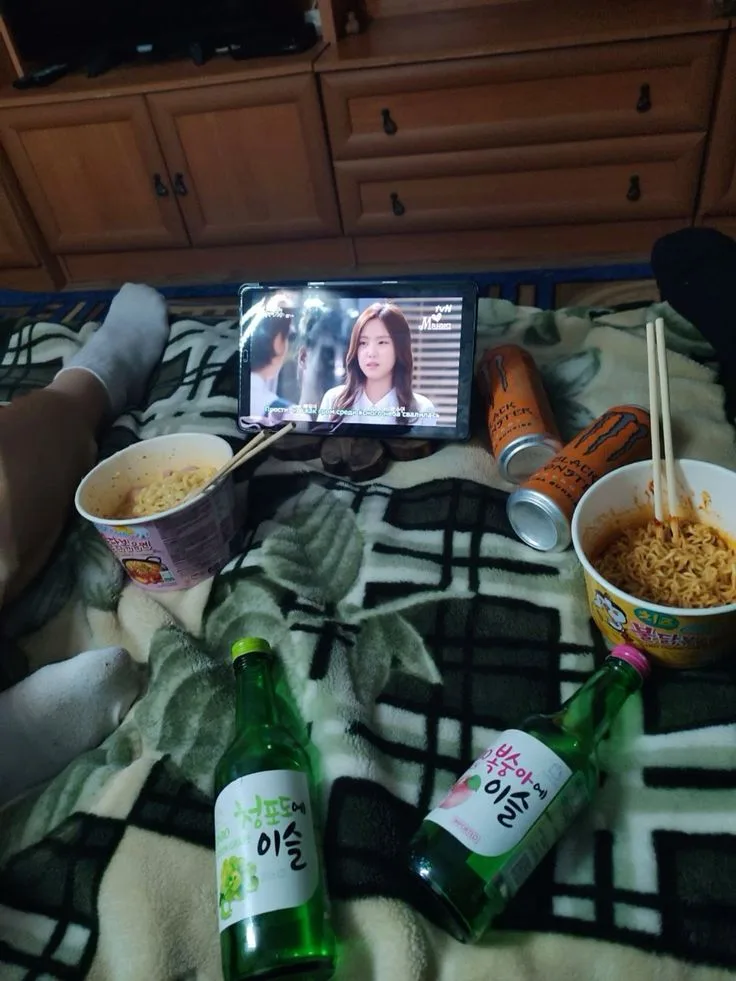
"Ramyeon meokgo gallae?"
The line 라면 먹고 갈래? (Do you want to come in and eat ramyeon?) became famous through the 2001 film One Fine Spring Day, and it has been a playful Korean euphemism ever since. Said at someone's front door late at night, it means exactly what "want to come up for coffee?" means in English. Dramas use it knowingly, sometimes straight, sometimes as a joke when the character really does just want noodles.
Ramyeon also appears for simpler reasons. It is the universal comfort food of tired students, broke office workers and people too sad to cook. Eating it from the pot lid instead of a bowl is a small, realistic detail: it cools faster, and nobody wants to wash another dish. If the scene made you hungry, our instant ramyeon upgrade guide shows how Koreans dress up a packet at home.
The tent bar where truths come out
The orange-tented street bar, the 포장마차 (pojangmacha), is K-drama shorthand for honesty. Characters go there after a breakup, a firing or a family fight, order soju and something hot like fish-cake soup or spicy chicken feet, and say the things they could not say sober. The cramped plastic stools force people to sit close, and strangers at the next table never seem to notice.
Real tent bars have become rarer in Seoul as street-vendor rules have tightened, and many "pocha" today are indoor bars styled to look like the classic tents. The drama version endures because the setting means something: outside the home, outside the office, a place where hierarchy loosens for an hour.
| Scene | Typical food | What it signals |
|---|---|---|
| Late-night door scene | Ramyeon | Flirtation, or comfort between close friends |
| Tent bar | Soju, fish-cake soup, grilled skewers | Heartbreak and honest confessions |
| Office rooftop | Canned coffee, triangle kimbap | A stolen break from hierarchy |
| Family dinner | Stews, banchan, rice | Power struggles over the table |
| Hospital visit | Rice porridge (juk) | Care and quiet apology |
Lunchboxes, porridge and the language of care
In Korea, feeding someone is one of the clearest ways to show love. The classic drama lunchbox, the 도시락 (dosirak), is packed by mothers for children studying late, by admirers hoping to be noticed, and by rivals trying to outdo each other. A fried egg on top of the rice, or a heart drawn in ketchup, is enough to make the whole office gossip.
The same logic explains why sick characters are always brought 죽 (juk), soft rice porridge, and why grandmothers keep pushing food onto plates. Even the everyday greeting 밥 먹었어? (Have you eaten?) is less about meals than about checking in. When a drama character asks it after a long silence, they are saying "I've been worried about you."
Watching the table, not just the actors
Pay attention to who serves and who eats first in a drama dinner scene. The youngest pours drinks and turns away to sip, the eldest picks up their spoon before anyone else, and a character who refuses food is often refusing the relationship. These small table rules come straight from real Korean table etiquette.
That is why the food in K-dramas feels so alive. It is not a backdrop but a second script, telling you who belongs, who is hurting and who is falling in love. And unlike the plot twists, it is the one part of the show you can actually recreate in your own kitchen.
Frequently Asked Questions
What does "want to eat ramyeon?" mean in Korean dramas? It is a well-known flirtatious invitation to come inside, popularized by the 2001 film One Fine Spring Day.
What is a pojangmacha? A tent-style street bar serving soju and simple hot dishes. Dramas use it as the place where characters speak honestly.
Why do Korean characters eat ramyeon from the pot lid? The lid cools the noodles faster and saves washing a bowl, which makes it a realistic, lived-in detail.
Why do Koreans ask "have you eaten?" It is a caring greeting, closer to "how are you doing?" than a question about food.