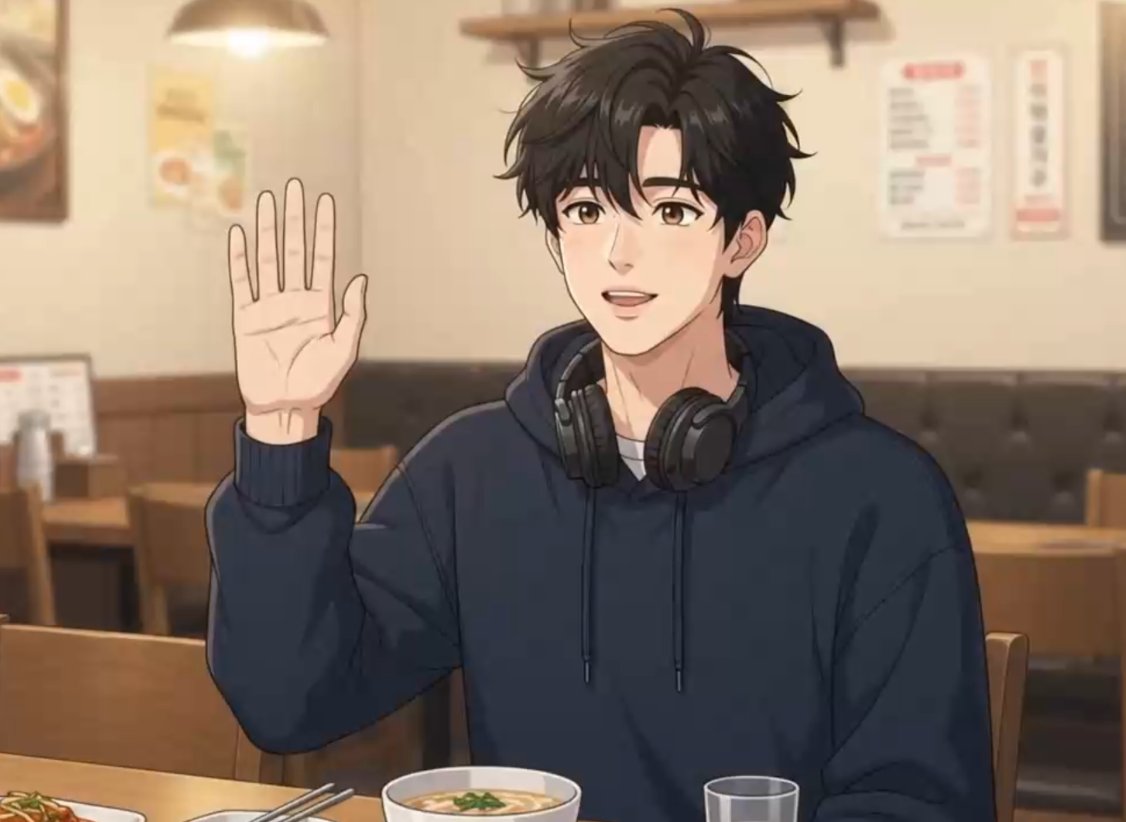
Restaurant Korean is more useful than cafe Korean because the exchange is longer. You get seated, you order, you ask for something mid-meal, and you pay. Four separate moments, each with its own phrases.
None of them are complicated. But if you only know 주세요, the middle two will catch you out.
Getting a table
Staff usually ask before you say anything:
몇 분이세요? — How many people?
- 두 명이요. — Two.
- 세 명이요. — Three.
- 혼자예요. — Just me.
명 is the counter for people. 한 명, 두 명, 세 명, 네 명.
If nobody comes to you: 자리 있어요? — Do you have a table?
Calling the staff
This is the part that feels rude to English speakers and is completely normal in Korea.
여기요! or 저기요! — said clearly across the room.
You are supposed to do this. Waiting quietly to be noticed can mean waiting a very long time. Many restaurants also have a call button on the table — press it and someone comes.
Ordering
- 김치찌개 주세요. — Kimchi jjigae, please.
- 저는 비빔밥으로 할게요. — I'll go with bibimbap.
- 삼겹살 이인분 주세요. — Two portions of samgyeopsal, please.
인분 is the portion counter for meals, and grilled meat is almost always ordered this way. Most meat dishes have a two-portion minimum.
If you need the menu adjusted:
- 덜 맵게 해 주세요. — Please make it less spicy.
- 고기 빼고 주세요. — Without the meat, please.
Mid-meal: the phrases nobody teaches
This is where restaurant Korean actually earns its keep.
반찬 좀 더 주세요. — More side dishes, please.
Side dishes are free and refillable. Asking for more is expected, not cheap. Some places have a self-service station instead — 반찬은 셀프예요 means help yourself.
물 좀 주세요. — Water, please. Also often self-service, in a dispenser by the wall.
앞접시 주세요. — A small plate, please. Useful when sharing.
가위 주세요. — Scissors, please. For cutting meat or noodles. Completely normal request.
Paying
In most Korean restaurants you pay at the counter on the way out, not at the table.
- 계산할게요. — I'll pay.
- 얼마예요? — How much is it?
- 카드로 할게요. — By card.
- 따로따로 계산해 주세요. — Separate bills, please.
- 같이 계산할게요. — Together.
Splitting is common among friends but one person paying for the group is also normal, especially if they invited you. If someone says 제가 살게요 — I'll pay — the polite response is a light protest and then thanks.
Table words
| Korean | Meaning |
|---|---|
| 반찬 | side dishes |
| 공기밥 | bowl of rice |
| 앞접시 | small plate |
| 수저 | spoon and chopsticks |
| 물티슈 | wet wipe |
| 셀프 | self-service |
| 포장 | takeaway |
수저 is worth knowing because it is one word for the pair. Cutlery is usually in a drawer under the table, not on it — check there before asking.
A full meal
Staff: 몇 분이세요? You: 두 명이요. You: 여기요! 김치찌개 하나, 된장찌개 하나 주세요. You: (later) 반찬 좀 더 주세요. You: (at the counter) 계산할게요. 카드로 할게요.
See it happen
Episode 5 of K-PATTO is set in a restaurant, where Emma orders for the first time without pointing at pictures. Every line has audio at natural speed, which matters here — restaurant staff speak fast and rarely repeat themselves.
The first ten episodes are free at K-PATTO.